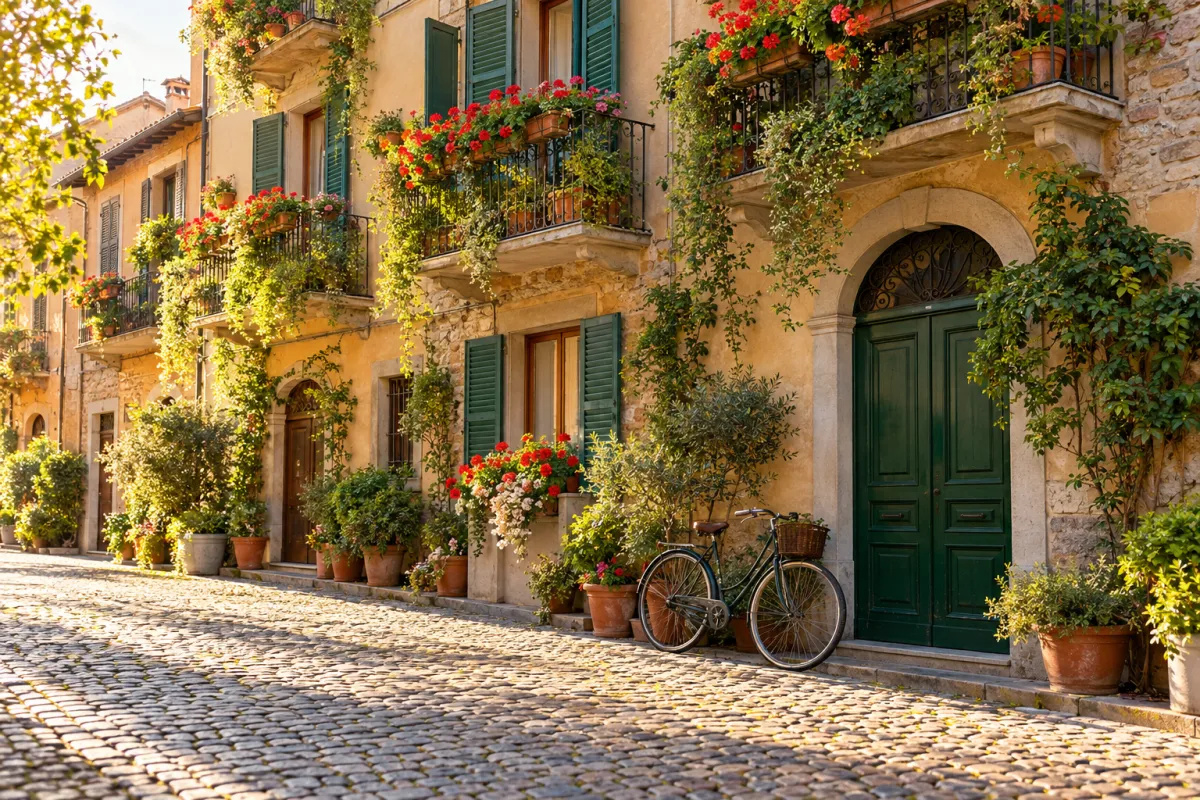
After a move, the person you see most often is rarely a colleague or a language partner. It is whoever lives across the landing. Learning how to make friends with your neighbours abroad is mostly about turning those short, repeated encounters by the lift, the bins and the post boxes into something slightly longer, at a pace your building is comfortable with.
I have done this twice. Once in a reserved block where it took months before anyone said more than hello, and once in a building where a neighbour asked me in for coffee within a fortnight. Both ended in real friendships. The difference was not luck. It was method: notice the local norms, make a few small, low-stakes contacts, then offer one specific, easy plan.
Below you will find a contact ladder with a worked example, copy-paste notes and door scripts, texting templates for your first plans, ideas for building a small community, and a 4-week plan you can start on your next trip down the stairs.
Why neighbours are the most underrated friends abroad
Most friendship advice for expats points you towards meetups, apps and language exchanges. Those work, but they all require you to turn up somewhere on purpose. Neighbours give you something no event can: repeated, unplanned contact that costs nothing. You see them carrying shopping, waiting for the lift, sorting the recycling. Every tiny encounter adds a little familiarity, and familiarity is what makes an eventual “fancy a coffee?” feel natural rather than odd.
It also helps to know the difficulty is not you. Fewer than half of expats worldwide say it is easy to make local friends in their host country, according to the Expat Insider survey run by InterNations. A neighbour is often the most reachable local you will ever meet, because you already share a front door, a postie and the same opinions about the boiler.
Neighbours are also a different crowd from your usual international circle: retirees who know every shop on the street, young families, locals in their thirties who have simply never thought of befriending the newcomer upstairs. If you keep ending up only with other foreigners, our guide to making friends with locals abroad covers the wider picture. This guide stays on your landing.

Read your building before you make a move
The same gesture lands differently in Madrid and in Munich. Before you knock on anything, spend a week or two watching how people behave in shared spaces. Do they greet each other on the stairs? Are there notes on the noticeboard? Do people chat by the post boxes, or nod and move on?
National patterns are real, but treat them as a first guess, not a rule. In the InterNations Ease of Settling In Index, Spain regularly ranks near the top for feeling welcome and building a social circle, while Germany and Austria tend to sit near the bottom, with expats describing locals as polite but private (InterNations). Polite but private does not mean unfriendly. It usually means slower, more planned, and more protective of routine and quiet.
| Where you live | What you will often notice | A good first move |
|---|---|---|
| Germany and Austria | Formal greetings, house rules and quiet hours taken seriously | A clear greeting every time and a polite note before anything noisy |
| Netherlands | Direct and friendly, but busy; plans made well in advance | Introduce yourself early and suggest a specific date rather than “sometime” |
| Spain and Portugal | More chat on the stairs, older neighbours who know everyone | Greet everyone, ask for local tips, go to the residents’ meeting if tenants are welcome |
| France | Reserved at first, warmer once introduced; some buildings hold shared gatherings | A short introduction note and showing up to any building get-together |
| Italy | Greetings matter; there is often a social hub, such as a long-time resident | Learn the greeting and ask the hub person for advice on the area |
| Ireland and the UK | Easy small talk, harder to move beyond it | Turn a good chat into one specific, dated plan |
| Czechia | Reserved with strangers, warmer after repeated contact | Consistency: the same greeting, at the same times, for weeks |
Building type matters as much as country. A six-flat walk-up with one shared stairwell is a village. A large new-build with a lobby and an underground car park behaves more like a hotel, where the shared moments happen in a few places: the lift, the bike storage, the courtyard, the bins. In bigger buildings you need to be in those places at regular times so faces become familiar.
The contact ladder: from hello to a first plan
Friendship with a neighbour almost never comes from one grand gesture. It comes from climbing a short ladder, one rung at a time, and letting the other person choose whether to climb with you. Skipping rungs is the most common reason neighbours back away.
Rung 1: the reliable greeting
Greet every neighbour, every time, in the local language. A clear “hallo”, “bom dia” or “buongiorno” with eye contact and a smile is enough. Keep it up for a week or two. You are building the sense that you are a normal, friendly fixture of the building rather than a stranger passing through. Our tips on being more approachable help here if you tend to look busy or closed off with headphones in.
Rung 2: the name exchange
Next time you are both waiting for the lift or at the post boxes, add one line: “I’m Sam, I’ve just moved into the second floor.” Ask their name and remember it. Note it in your phone afterwards if your memory is as bad as mine. Using someone’s name at the next encounter is a small but powerful signal that you see them as a person, not just “the woman from 3A”.
Rung 3: the small ask
Asking for a little help often builds connection faster than offering it, because it lets the other person be the expert. Ask where they buy bread, which pharmacy opens on Sundays, how the recycling works, or whether they would mind taking in a parcel. Keep it tiny and easy to say yes to. Then close the loop: “You were right about that bakery, thank you.” Reporting back is what turns a one-off favour into a thread.
Rung 4: the specific, low-pressure plan
After a few warm exchanges, suggest something short, close by and easy to decline: a coffee at the café on the corner, a walk to the weekend market, a cup of tea on your balcony once they already know you well. Name a day. “We should get a coffee sometime” almost never happens. If this is the step that freezes you, our scripts for asking someone to hang out as a friend give you plenty of wording to borrow.
Worked example: the parcel route
Here is how the ladder typically plays out. You move into an older building in Berlin. In week one you greet the woman across the landing every time and get a polite nod back. In week two you introduce yourself at the post boxes and learn her name. In week three one of your parcels ends up with her, so you knock to collect it and say thanks with a small bag of pastries. In week four you mention you plan to try the market on the next street on Saturday and ask if she has a favourite stall. She offers to show you. That walk is your first plan, and it came from a parcel, not a party.
This is an illustrative scenario, not a promise. Some neighbours will stay at a friendly nod, and that is fine. A building where you greet five people by name already feels very different from one where you know nobody.

Copy-paste notes and door scripts
Written notes are a gift for nervous people: they let you introduce yourself without putting anyone on the spot. In many European buildings a note on the noticeboard or slipped under a door is completely normal. Translate these into the local language with a translation app, add a line apologising for your grammar (it makes the note charming rather than awkward), and keep the English version underneath if you like. Swap in your own name, floor and home town.
Template 1: the moving-in note
Hello neighbours! My name is Sam and I have just moved into the flat on the second floor, on the left. I’m from Dublin and still learning Portuguese, so please forgive my mistakes. If my boxes or deliveries cause any trouble, please knock on my door. I’m also happy to take in parcels for anyone. Looking forward to meeting you. Sam, second floor
Template 2: the heads-up before having people over
Hello neighbours, I’m having a few friends over for lunch on Saturday afternoon. We will keep the noise down, and if anything bothers you, please knock and tell me. You are also very welcome to drop by for a coffee and a slice of cake. Sam, second floor
Template 3: the thank-you note
Thank you so much for taking in my parcel. These pastries are from the bakery you recommended, and you were completely right about it. Sam, second floor
Door scripts
- Introducing yourself: “Hi, sorry to bother you. I’m Sam, I’ve just moved in upstairs. I wanted to say hello and let you know my name in case you ever need anything, like a parcel taken in.”
- If they seem busy: “No problem at all, I’ll let you get on. Lovely to meet you.”
- Offering a favour back: “If you’re ever away, I’m happy to water plants or collect your post.”
- Asking for local knowledge: “You’ve lived here a while. Where would you go for a good, simple lunch round here?”
Once a conversation gets going, borrow lines from our list of conversation starters for expats. With neighbours, questions about the street and the area itself work best, because you both have a stake in it.
Texting templates to make plans with friends next door
Getting a number is the moment a neighbour shifts from a face on the stairs to a potential friend. The easiest way to ask is to tie it to something practical: “Shall we swap numbers in case a parcel turns up for one of us?” or “I can send you the name of that plumber. What’s your number?”
Once you have it, these texting templates to make plans with friends work just as well with neighbours. Each one names a day, keeps it short, and includes an easy way out.
- First coffee: “Hi Ana, it’s Sam from the second floor. I’m finally trying the café on the corner on Saturday morning. Fancy joining for a quick coffee? No worries if not.”
- Market walk: “I’m heading to the Sunday market around eleven. Any stalls you’d recommend? Happy to walk over together if you’re going.”
- Shared task: “I’m repotting my balcony plants this weekend and bought far too much soil. Would you like some for yours?”
- Follow-up after a first plan: “That was lovely, thanks for the market tips. Same again next month?”
- Mixing circles: “A couple of friends are coming round for Sunday lunch. Would you and Marco like to come up for dessert?”
- A graceful retry after a no: “No problem at all. Let me know if another weekend suits you better.”
- After a gap: “Haven’t seen you on the stairs for ages. Hope all is well. Coffee one of these weekends?”
Two rules keep this from feeling pushy. Send at most one follow-up if a message goes unanswered, then go back to friendly greetings and let them come to you. And alternate who suggests the plan: if you have invited twice in a row, wait to see whether they suggest the next one. When you reach the stage of regular plans, our guide to turning acquaintances into friends covers how to deepen things from there.
Turn your building into a small community
One-to-one friendships are the goal, but a building where people know each other makes every one of them easier. You do not need to become the unofficial social secretary. A few small moves are enough.
- Join or start the building chat. Many buildings already have a group chat. Ask a friendly neighbour: “Is there a building group? I’d love to be added.” If there is none, propose one with a note that gives it a practical purpose, such as deliveries, repairs and lost keys. Practical groups attract more people than “let’s all be friends” groups, and friendly chat follows naturally.
- Go to residents’ meetings. In Spain the comunidad de vecinos meets to discuss building matters, and similar owners’ or tenants’ meetings exist elsewhere. If tenants are welcome, showing up signals you are here to stay, and the chat afterwards on the stairs is often more useful than the meeting itself.
- Take part in shared events. In France, the Fête des voisins is an annual neighbours’ day when residents share food in courtyards and halls. Look out for a notice in your building and bring something homemade.
- Create a small shared thing. A swap box in the hall for books and kitchen odds and ends, a courtyard plant swap, or a seasonal treat left on doormats. Check the house rules about what can go in shared spaces first.
- Be quietly useful. Offer to help an older neighbour carry shopping up the stairs, or to water plants during holidays. Reliability is the currency of neighbourly trust.
A 4-week plan for how to make friends with your neighbours abroad
This plan assumes you have recently moved in and feel a bit shy. Adjust the pace to your building: faster where people chat freely, slower where they keep to themselves.
| Week | Focus | Concrete actions | You are done when |
|---|---|---|---|
| Week 1 | Observe and greet | Learn the local greeting, greet everyone every time, read the noticeboard, learn the bin and noise rules | A few neighbours greet you first |
| Week 2 | Introduce yourself | Post the moving-in note, swap names with two neighbours, ask one small question | You can greet at least two people by name |
| Week 3 | Small ask and give | Ask for a recommendation, offer to take in parcels, report back on their tip, ask about a building chat | You have one neighbour’s number or are in the group |
| Week 4 | First plan | Send one texting template for a coffee or market walk, join or suggest one shared moment | One plan has happened or is in the diary |
Be honest with yourself about what four weeks can deliver. You are aiming for a handful of neighbours you greet by name and perhaps one first plan, not a best friend. Many expats find it takes a long time to break through local social barriers, especially in more reserved countries (InterNations). The fix is repetition: keep greeting, keep closing loops on small favours, and suggest another plan every few weeks with whoever responds warmly. If you want a broader routine that covers work, hobbies and clubs as well, use our full 4-week plan for making friends abroad alongside this one.
Mistakes that put neighbours off
- Ignoring the house rules. Noise during quiet hours, bikes blocking the hall or wrong recycling will undo every friendly greeting. Being considerate is the foundation.
- Making your first contact a complaint. If something bothers you, wait until you have exchanged names before raising it, and do it in person and kindly.
- Coming on too strong. Three invitations in one week feels like pressure. One clear plan, then space.
- Only knocking when you need something. Balance every ask with a give, even a small one.
- Skipping straight to your flat. In more private cultures, an invitation into your home before a coffee outside can feel too much too soon.
- Hiding behind English. Even a few words of the local language show effort. Your neighbours are not expecting fluency, just willingness.
- Taking a no personally. People are busy, tired or shy. One no is information about that week, not a verdict on you.
Boundaries and safety with people you live near
Neighbours are a special case, because you cannot easily avoid someone who lives next door. That is a good reason to go slowly and keep things comfortable for both sides.
Simple safety habits
- Keep early plans in public places: a café, the market, a walk in the park.
- Tell a friend where you are going when you meet someone new, even if that person is a neighbour.
- Have your own way home if the plan is further away, rather than relying on a lift back.
- Leave any situation that feels uncomfortable. You owe nobody an explanation.
- Hold back on keys, your daily schedule and travel plans until real trust exists.
If a neighbour’s attention ever feels unwelcome, keep your greetings polite but brief, stop extending invitations, and speak to your landlord or building manager if it continues. Boundaries are also fine in friendly situations: saying “I’d love to, but I keep weekday evenings free” is perfectly reasonable.
When the building is quiet: widen the circle near home
Some buildings are full of short-term lets or people who simply keep to themselves. When that happens, apply the same ladder to your street: the same café at the same time, the bakery, the local gym, the dog park, the corner shop. Being a regular somewhere close to home creates the same repeated contact that makes neighbours easier to befriend.
Your classes count too. If you are working out how to make friends at language school, the ladder transfers almost exactly: sit in the same seat, greet classmates by name, ask a small question about the homework, then suggest a specific coffee after class. Classmates who live nearby are doubly valuable, because you see them in class and around the area. And if pub-centred socialising is not your thing, our list of ways to make friends without drinking has plenty of daytime plans that suit neighbours of every age.
Want to turn this into an actual plan? MeetNow is a free app for meeting people in person: a host posts a plan at a public place, says who pays (host pays, split, pay your own or free) and picks who joins. It is live on the web and works in your browser, starting in Malta. The Android app is on Google Play; the iPhone app is not in the App Store yet. Open MeetNow and see the plans posted in Malta.
FAQ
Is it weird to knock on a neighbour’s door to introduce yourself abroad?
In most European cities it is not weird if you keep it short and friendly. In more private cultures such as Germany or the Netherlands, a written note can feel less intrusive than a knock, and a brief introduction at the post boxes works too. Say your name, which flat you live in, offer help with parcels, then leave them to get on with their day.
How long does it take to become friends with your neighbours?
Longer than you would like, and it varies by country and building. Expect a few weeks to get to first names and a possible first coffee, and several months of repeated contact before anyone feels like a real friend. Expats in more reserved countries often report it takes a long time to break into local circles, so steady consistency matters more than any single gesture.
What if my neighbours don’t speak English?
That is often an advantage. Learn the greeting and a few neighbourhood phrases, write notes with a translation app, and apologise lightly for your mistakes. Many neighbours enjoy helping a newcomer with the language, and asking them to correct you is a small ask that builds connection, the same way it does when you make friends at language school.
Should I start a WhatsApp group for my building?
First ask whether one already exists, because many buildings have one. If not, propose it with a practical purpose, such as deliveries, repairs and lost keys, through a note in the stairwell. Practical groups get more people joining, and friendly chat tends to follow once people know each other’s names.
How do I befriend neighbours in Germany or the Netherlands, where people are more private?
Respect the house rules first, especially quiet hours and recycling, because being a considerate neighbour is the foundation of trust. Greet consistently, introduce yourself with a short note, and suggest specific plans with a clear date rather than spontaneous drop-ins. Progress is slower, but friendships built this way are usually solid.
Is it safe to invite a neighbour into my flat?
Get to know someone in public first: a coffee at a café, a walk to the market or a chat in the courtyard. Tell a friend when you are meeting someone new, keep your own way home if the plan is further away, and leave any situation that feels uncomfortable. Once you know a neighbour well, inviting them round is a natural next step, but there is no rush.