The short answer: Europe is a hugely popular destination for women travelling alone, and most trips are trouble-free. The habits that matter most are simple: research each country’s official travel advice before you go, choose well-reviewed accommodation in a central area, plan how you will get back at night, watch your drink, keep valuables split and secure, share your plans with someone at home, and know that 112 reaches emergency services across the EU. When meeting new people, start with group plans in public places. This checklist covers before, during and after your trip.
This guide is deliberately calm. The aim is not to make you anxious but to give you a small set of habits that let you relax and enjoy travelling alone, including the best part of solo travel: meeting people. Everything below is based on official government travel advice and common-sense practice rather than scare stories.
Before you go: the preparation checklist
- Read the official travel advice for each country. The UK government’s advice for women travelling abroad recommends checking the safety section of each country’s travel advice, plus guidebooks, forums and people who have visited. Irish travellers can use the Department of Foreign Affairs advice on ireland.ie.
- Get travel insurance that covers medical care and, ideally, evacuation, and check what it covers for theft.
- Plan your arrival. Know how you will get from the airport or station to your accommodation, especially if you land late.
- Share your itinerary with a trusted person: where you are staying, when you are moving on, and how to reach you.
- Save key numbers: 112 for emergencies in the EU, your accommodation, and your embassy or consulate. UK nationals can find embassies at gov.uk/world/embassies; the FCDO says its phone lines are open 24/7.
- Back up documents. Photos of your passport and cards in a secure cloud folder, and a paper copy separate from the originals.
- Bring a portable charger. A dead phone is the most common way small problems become big ones.
Choosing accommodation
- Read recent reviews from solo women where possible, looking for comments on location, staff and security.
- Prefer central, well-lit areas close to public transport, so getting home is easy.
- Consider women-only dorms in hostels if that makes you more comfortable; many hostels offer them.
- Check practicalities: 24-hour reception, lockers, a door that locks properly.
- Do not share your room number loudly at reception or with people you have just met.
Social accommodation (hostels with events, coliving) is also one of the best ways to meet people safely, because you meet them in a shared, staffed space. Our guide on how to make friends while travelling solo covers how to use it.

Getting around, especially at night
- Know your route home before you go out. Check last metro or tram times and save the address of your accommodation.
- Use licensed taxis or reputable ride apps. In Italy, for example, the FCDO advises using only officially licensed taxis with a roof sign, booked by phone or app or taken from an official rank.
- Sit near the driver or in busier carriages on late buses and trains.
- Share your live location with a friend for late journeys.
- Trust your gut. If a street, carriage or situation feels wrong, move somewhere busier or wait for the next one.
Theft and scams: the most common problem
For most travellers in Europe, the realistic risk is petty theft rather than violence. Official advice for popular destinations is consistent:
- France: the FCDO’s France advice says thieves and pickpockets operate on the Paris Métro, RER lines and at mainline stations, and that pickpockets can work in gangs, with one distracting you while another goes into your bag.
- Spain: the FCDO’s Spain advice warns that thieves use distraction techniques and often work in teams.
- Italy: the FCDO’s Italy advice reports higher levels of bag-snatching and pickpocketing in city centres, at major tourist attractions and on public transport.
Practical habits: carry your bag across your body and in front in crowds; split cards and cash between two places; keep your phone in an inside pocket on busy transport; be wary of anyone who suddenly asks for directions, a signature or help while crowding you; and use ATMs inside banks where possible.
Drink spiking and nights out
Drink spiking is a serious risk to be aware of, and it can happen with non-alcoholic drinks too. The FCDO’s guidance for women notes that the drugs used are often colourless and tasteless and can be added to coffee or tea as well as alcohol. Its advice is straightforward:
- Do not leave drinks unattended, and do not accept drinks from strangers.
- Buy your own drinks and keep them in sight.
- If you feel strange, sick or suddenly very drunk after a small amount, tell a trusted friend or staff immediately and get somewhere safe; contact the police or emergency services if needed.
The FCDO also notes that drinks served in bars in some countries, including France and Italy, are often stronger than in the UK. Pace yourself on your first nights in a new place.

Meeting people safely as a solo woman
Meeting people is one of the joys of travelling alone, and doing it safely is mostly about format and setting:
- Start with groups. Walking tours, hostel dinners, language exchanges, cooking classes and day trips let you get to know people with others around.
- Choose public places for one-to-one meetings. Busy cafés and restaurants, not someone’s flat or a remote spot.
- Tell someone. Share who you are meeting and where, and check in afterwards.
- Keep your own way home. Do not depend on a new acquaintance for transport or accommodation.
- Keep details private until you know someone: your accommodation, your room number, your plans for the next days.
- Leave whenever you want. You owe nobody an explanation. “I’m heading off, have a lovely evening” is enough.
Longer stays come with their own patterns. If you are working remotely, see our guide to the digital nomad scene in Lisbon; if you are studying, our Erasmus Barcelona guide includes student-specific safety tips.
Red flags: a quick reference
| Situation | Why it matters | What to do |
|---|---|---|
| A stranger insists on buying you a drink or carrying it for you | Increases spiking risk | Politely decline; buy your own and keep it in sight |
| Someone pushes to move you somewhere quieter | Removes the safety of a public setting | Stay where you are or leave; suggest a busier place |
| Crowding, bumping or a sudden request for help in a busy area | Common distraction technique for theft | Hold your bag, step away, keep moving |
| An unofficial taxi or driver approaching you at a station | Unlicensed, unaccountable | Use official ranks or reputable apps |
| A new acquaintance asking where you are staying or offering a bed | Shares information you cannot take back | Keep details vague; stick to your own booking |
| Feeling suddenly very drunk or unwell | Possible spiking | Tell staff or a trusted friend immediately; get to safety; call for help |
Packing for safety and confidence
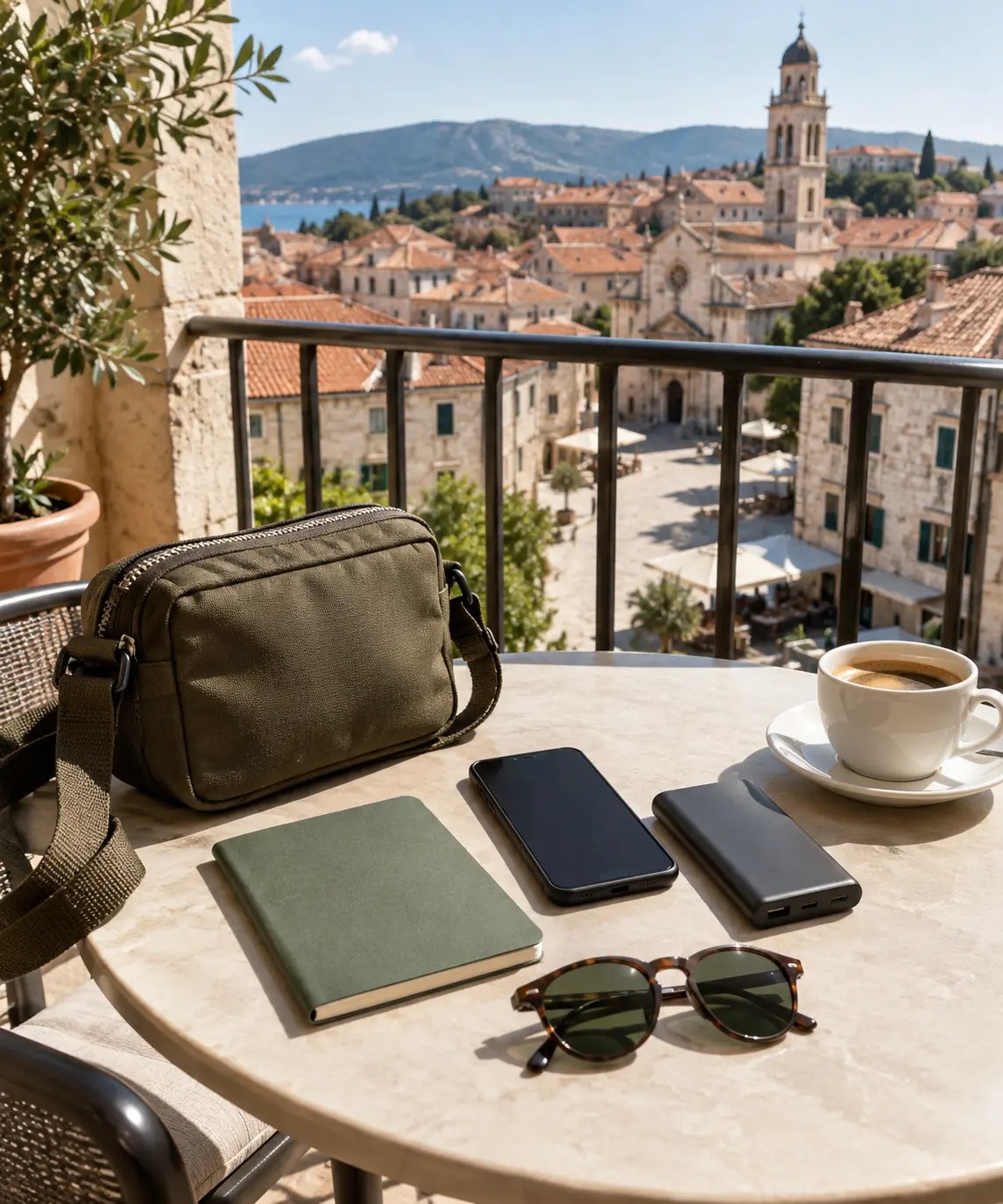
- A cross-body bag with a zip, worn in front in crowds.
- A small day wallet with one card and a little cash, separate from your main stash.
- A power bank and cable so your phone, maps and contacts never run out.
- A door wedge or travel lock if it helps you sleep better in unfamiliar rooms.
- Offline maps of each city downloaded before you arrive.
- Copies of key documents stored separately from the originals.
Blending in and local norms
You do not need to hide who you are, but looking confident and informed helps. Walk as if you know where you are going (check the map in a café, not in the middle of the pavement), and keep expensive jewellery and electronics low-key in busy areas. Cover shoulders and knees when visiting churches and other religious sites, where it is often expected. Learn a few phrases in the local language: “hello”, “thank you”, “help” and “leave me alone” go a long way, and locals respond warmly to the effort.
Eating alone with confidence
Dining solo is one of the pleasures of travelling alone, and in most European cities it is completely normal. Sit at the bar or a counter, where staff and neighbours make easy company; go to markets and food halls with shared tables; bring a book if you like. Lunch is often the best meal to eat out alone: busier, cheaper and with daylight for the walk back.
During your trip: daily habits
- Check in with someone at home once a day, even with a quick message.
- Keep your phone charged and carry a power bank.
- Carry a small amount of cash and one card; leave the rest locked away.
- Walk with purpose and look up from your phone in unfamiliar areas.
- Note the address of your accommodation in the local language.
If something goes wrong
Call 112 in any EU country for police, ambulance or fire. For theft, report it to the local police (you will usually need a report for insurance). If you are assaulted, the FCDO advises contacting the emergency services and the nearest British embassy, high commission or consulate, which it says will prioritise helping those who are vulnerable; other governments offer similar support to their citizens. Your travel insurer’s emergency line can help with medical care and practical arrangements.

After your trip
- Let your contact know you are home safely.
- Check your bank statements for any unusual activity.
- Leave honest reviews for accommodation and tours, especially about safety; it helps the next solo traveller.
- Keep in touch with the people you met: they are the best part of solo travel.
Safety box: the five habits
For the bigger picture of building a social life wherever you land, our guide on how to make friends abroad covers the method that works in any city.
Want to turn this into an actual plan? MeetNow is a free app for meeting people in person: a host posts a plan at a public place, says who pays (host pays, split, pay your own or free) and picks who joins. It works in your browser and on Android through Google Play, starting in Malta; the iPhone app is not in the App Store yet. Open MeetNow and see the plans posted in Malta. (MeetNow is our own app; see our disclosure.)
Frequently asked questions
Is Europe safe for solo female travellers?
Europe is a popular and generally safe region for women travelling alone, and most trips are trouble-free. The most common problem is petty theft in busy areas. Read each country’s official travel advice, plan your routes home at night, watch your drink and keep valuables secure.
What is the emergency number in Europe?
112 is the emergency number across the European Union for police, ambulance and fire. Many non-EU European countries also accept it, but check the local number before you travel.
How can I meet people safely while travelling alone as a woman?
Start with group activities such as walking tours, hostel events, language exchanges and day trips. Meet one-to-one only in busy public places, tell someone your plans, keep your accommodation details private and arrange your own way home.
How do I avoid drink spiking abroad?
Do not leave drinks unattended or accept drinks from strangers, buy your own and keep them in sight. Official UK advice notes spiking drugs are often colourless and tasteless and can be added to non-alcoholic drinks too. If you suddenly feel unwell, tell staff or a friend and get to safety.
Should I stay in a women-only hostel dorm?
It is a personal choice. Many hostels offer women-only dorms, which some solo travellers find more comfortable. Whatever you choose, check recent reviews, lockers and 24-hour reception.
What should I do if my phone or wallet is stolen abroad?
Move somewhere safe, call your bank to block cards, report the theft to the local police for an insurance report, and use another device to change key passwords. Your embassy can help if your passport was taken.
Official advice links checked October 2026. Always read the latest travel advice for your destination before you go.