The short answer: to make friends on an Erasmus in Barcelona, use the first three weeks hard: join your university’s ESN section and its welcome events, pick one weekly activity that is not a party (a sport, a language exchange or a club), and say yes to small plans with your flatmates and classmates. Then deliberately add some locals through intercambios, Catalan or Spanish classes and university clubs. Most Erasmus friend groups form in September (or February) and solidify by week six, so the start of the semester matters more than any other time.
Barcelona is one of Europe’s most popular Erasmus destinations, and the social life can be wonderful or oddly lonely depending on how you start. The city has more parties than you could ever attend, but parties alone rarely give you the friends you will still be messaging in ten years. This guide covers how the ESN scene works, what to do beyond the nightlife, how to meet locals, a sample first week, money and safety.
How Erasmus social life in Barcelona works
The Erasmus Student Network (ESN) is a volunteer-run student association with local sections at universities across Europe. In Barcelona, ESN sections are attached to the major universities; on ESN’s own activities portal you will find sections such as ESN Barcelona UB, ESN UAB Barcelona and ESN Barcelona UPF. They typically organise welcome events, city tours, trips, parties and cultural activities for incoming students.
Most sections sell the ESNcard, a membership card that gives you access to the section’s activities and to partner discounts across Europe (for example on some travel and accommodation brands, as listed on the ESNcard site). Ask your host university’s international office which ESN section covers your faculty, and follow it on social media before you arrive: the first events fill up fast.
Why the first three weeks matter so much
At the start of the semester, everyone is new and actively looking for friends. Groups form quickly around flats, orientation events and first trips, and by around the sixth week most people have settled into a circle. That does not mean it is too late afterwards, but it is never easier than in the first weeks. Say yes to as much as you can, then narrow down.

Before you arrive: a social checklist
- Find your ESN section through your host university’s international office and follow it on social media.
- Join the incoming-students group chat for your university or faculty; many cohorts set one up months in advance.
- Arrive for the welcome week, even if classes start later. Orientation events are where the first friendships form.
- Brush up your Spanish basics so you can follow menus, small talk and intercambios from day one.
- Plan one weekly activity you want to try (a sport, a choir, a volunteering project) and look up how to sign up.
Beyond the parties: where Erasmus friendships really form
Big Erasmus parties are fun and a great place to meet lots of people once. Friendships, though, come from seeing the same people repeatedly. Add at least one of these weekly anchors:
Sport
University sports services usually run teams and classes open to exchange students. Outside the university, community groups offer padel, beach volleyball, running and hiking; Keep Calm Barcelona, for example, is a volunteer-run community for English speakers aged 18+ with low-cost padel, beach volleyball, runs and monthly hikes. A weekly game with the same people is one of the quickest routes to a real friend group.
Language exchanges (intercambios)
Barcelona has intercambios almost every weeknight, full of local students and young professionals who want to practise English. They are the single best way for an Erasmus student to meet Barcelonans. Our guide to language exchanges in Barcelona lists verified weekly events with venues, times and prices.
Clubs, choirs and volunteering
Student associations, choirs, theatre groups and volunteering projects mix Erasmus students with locals. Volunteering in particular gives you a team and a purpose, and it is something to talk about other than last night’s party.
Trips
Group trips (organised by ESN or by friends) to the Costa Brava, Montserrat, the Pyrenees or other Spanish cities compress weeks of friendship into a weekend. A shared bus, a hostel dorm and a long lunch do a lot of bonding.
How to make friends with locals on Erasmus
The most common Erasmus regret is ending up in an international bubble without a single local friend. A few ways to avoid it:
- Take a language seriously. A Spanish or Catalan class gives you vocabulary and confidence; the free Catalan conversation programme Voluntariat per la llengua pairs learners with fluent speakers (you need a basic level first).
- Go to intercambios weekly, not once.
- Join a mixed activity: a university sports team, a choir, a volunteering group.
- Talk to classmates. Sit next to local students, ask about class notes, suggest a coffee after a seminar.
- Accept that local students have existing lives. They are friendly but may be busy with family, jobs and long-standing friends. Invitations to specific, small plans work better than “let’s hang out sometime”.
For the wider city picture, including Catalan courses, volunteering and local social norms such as late dinners, see our guide on how to meet people in Barcelona.
Neighbourhoods for a social semester
- Gràcia: village-like squares with terraces; easy to bump into people and become a regular.
- Sant Antoni and Poble-sec: lively, food-focused and well connected, with plenty of bars for small groups.
- El Born and Sant Pere: central, historic and close to the Ciutadella park and the beach.
- Eixample: convenient and central, close to several university buildings and many exchanges.
Living near your faculty or near friends matters more than the “best” district: the easier it is to say yes, the more often you will.
Student housing and flatmates
Where you live shapes your social life. In a student residence you will have built-in neighbours and often organised activities; in a shared flat, your flatmates may become your closest friends (or not). Either way:
- Cook together in the first week. A shared dinner breaks the ice faster than anything.
- Create a flat group chat and invite flatmates to your plans.
- Introduce flatmates to your course and ESN friends. Mixing circles makes them stronger.
A sample first week for a new Erasmus student
| Day | Daytime | Evening |
|---|---|---|
| Monday | University welcome session; register with the international office | Flat or residence dinner |
| Tuesday | ESN city tour or welcome activity | Language exchange |
| Wednesday | Sign up for a university sport or club | ESN welcome event |
| Thursday | First classes; coffee with a classmate | Intercambio or a low-key bar with your new group |
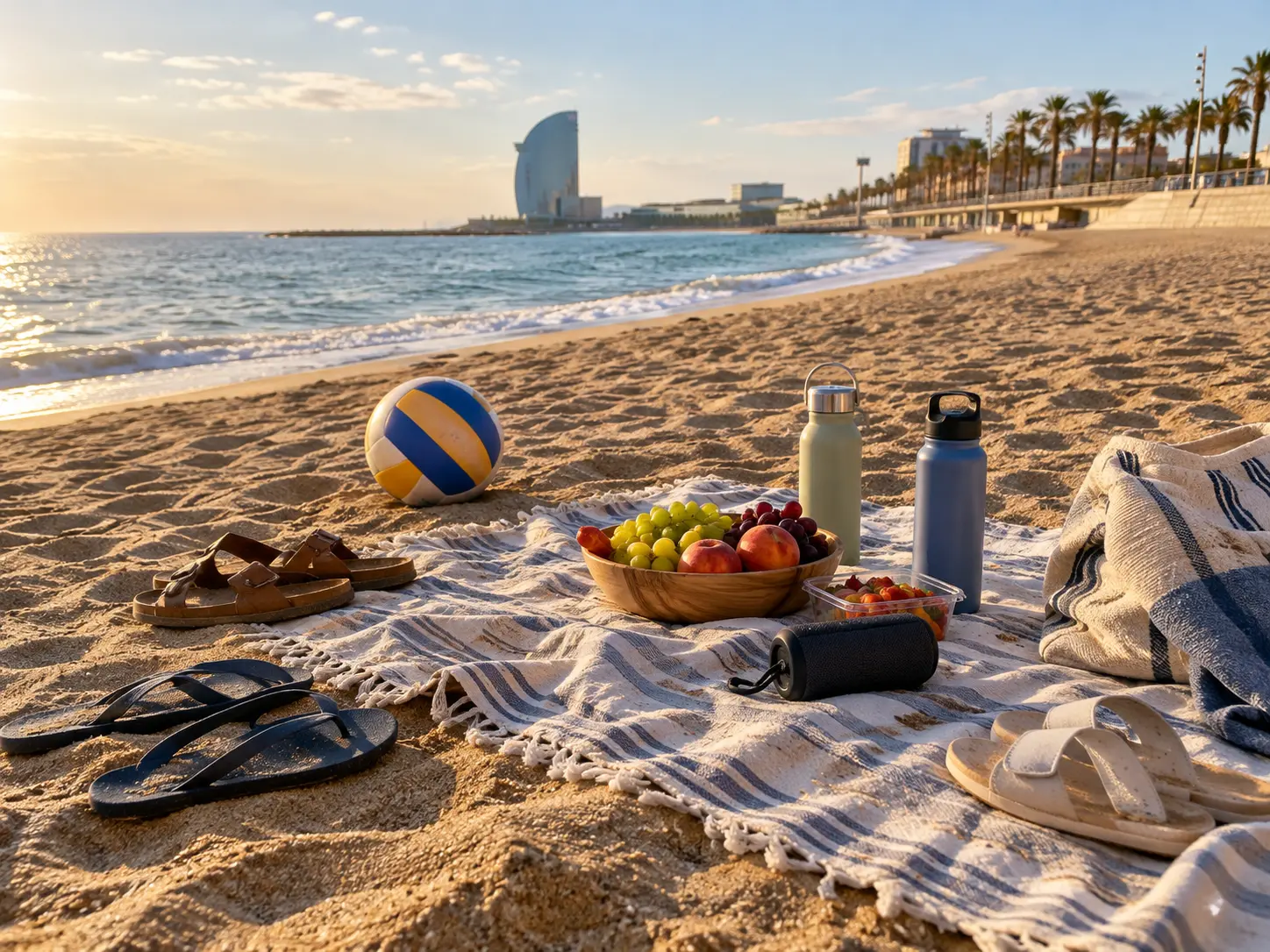
| Friday | Beach afternoon at Barceloneta with people from the week | Party (optional) |
| Saturday | Hike to the Bunkers del Carmel viewpoint or a day trip | Long dinner, Barcelona style (late) |
| Sunday | Market, park or rest | Call home; plan next week |
You do not need to do everything. Two or three anchors a week, repeated, matter more than a packed first week followed by burnout.

Making friends on Erasmus without partying
Not into big nights out? You are far from alone, and Barcelona makes it easy:
- Daytime plans: beach afternoons, hikes in Collserola, markets, museums (many have free entry at certain times).
- Sport and classes: padel, climbing, yoga, dance.
- Food: cooking dinners at home, tapas crawls that end early, Sunday vermut.
- Language and culture: intercambios, conversation pairs, cinema clubs.
Say plainly that you are not a party person but would love to join the daytime plan. Most people respect it, and many are relieved.
Budget: being social without overspending
- Cook and host. Dinner at the flat costs a fraction of a restaurant and is often more fun.
- Use free and low-cost activities: beaches, viewpoints, parks, community sports groups with low court fees, free-entry exchanges where you only buy a drink.
- Use student and ESN discounts on travel and accommodation where they exist.
- Split fairly. Agree how the bill works before ordering; splitting equally is common among friends in Spain, but say if you are on a tight budget.
Safety in Barcelona

Mid-semester: keeping your group going
Around the middle of the semester, the welcome-event energy fades, exams appear and some groups drift. A few habits keep friendships alive:
- Fix a weekly ritual: a Sunday dinner, a Wednesday intercambio, a Saturday hike. Rituals survive busy weeks.
- Study together. A shared library session followed by food counts as social time.
- Keep inviting new people. Some of the best Erasmus friendships start in month three.
- Plan one bigger trip together for later in the semester; it gives the group a shared goal.
Saying goodbye and staying in touch
The end of Erasmus is famously emotional. Before everyone scatters, make a shared photo album, put dates in the diary for a reunion, and agree who is visiting whom first. Friends spread across Europe are one of the best things an Erasmus gives you: they are also the best excuse for future trips.
When Erasmus feels lonely
Social media makes Erasmus look like a non-stop party, which makes the quiet weeks feel worse. Homesickness and loneliness are common, especially in the first month and after the first wave of excitement fades. If you are struggling, tell your international office or student services, talk to people at home, and keep one or two weekly routines going even when you do not feel like it. Our guide to expat loneliness has a gentle four-week plan and support numbers, including Spain’s free 024 line.
If you are travelling around Spain or Europe during your semester, the tactics in how to make friends while travelling solo work well on weekend trips too.
Want to turn this into an actual plan? MeetNow is a free app for meeting people in person: a host posts a plan at a public place, says who pays (host pays, split, pay your own or free) and picks who joins. It works in your browser and on Android through Google Play, starting in Malta; the iPhone app is not in the App Store yet. Open MeetNow and see the plans posted in Malta. (MeetNow is our own app; see our disclosure.)
Frequently asked questions
How do I make friends on Erasmus in Barcelona?
Go to your university’s ESN welcome events in the first weeks, cook with your flatmates, join one weekly activity such as a sport or a language exchange, and suggest small plans to classmates. Repetition with the same people is what turns early contacts into friends.
How can I make local friends during Erasmus?
Attend intercambios every week, take Spanish or Catalan classes, join a university sports team or club, volunteer, and sit with local classmates. Invite people to specific, small plans rather than vague ones.
Can I enjoy Erasmus without partying?
Yes. Barcelona has plenty of daytime and low-key options: beaches, hikes, markets, museums, sports, cooking dinners and language exchanges. Many students prefer these, so you will find like-minded people.
What is ESN and do I need the ESNcard?
ESN (the Erasmus Student Network) is a volunteer-run student association with sections at many universities, including in Barcelona. The ESNcard is its membership card, giving access to section activities and partner discounts. It is optional but useful if you plan to join ESN trips and events.
Is Barcelona safe for Erasmus students?
Generally yes, but pickpocketing is a known problem in busy areas and on public transport, so keep valuables secure. Watch your drink on nights out, travel home with friends and call 112 in an emergency.
Is it too late to make friends if I missed the welcome week?
No. It is easier in the first weeks, but people keep joining groups all semester. Go to weekly activities such as intercambios, sports and ESN events, and invite people to small plans; many students are glad to widen their circle.
Last checked October 2026. Information on ESN sections and discounts changes each year; confirm with your host university.