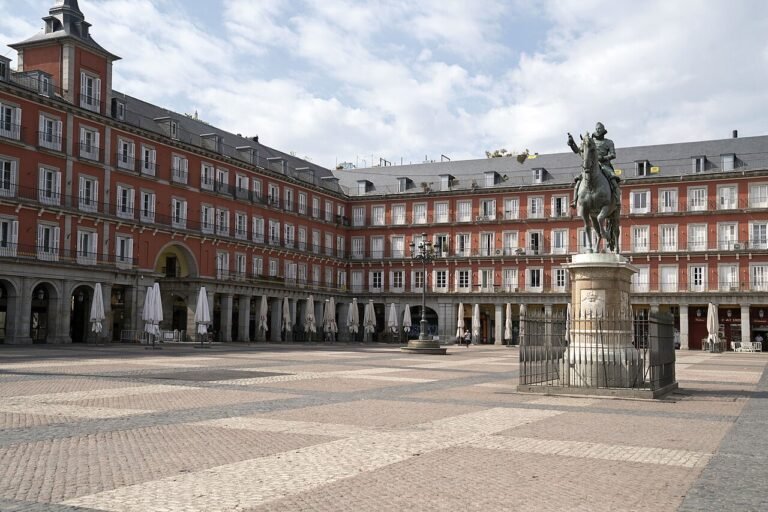
An Erasmus in Madrid semester gives you one of the easiest social starts in Europe: six ESN sections, a city that eats and goes out late, cheap youth transport and thousands of other exchange students arriving at the same time as you.
The catch is that the first fortnight is a blur of huge parties, and many people end the semester with 400 Instagram followers and three real friends. The short answer: get your ESNcard from your own university’s section, go to the welcome week, then pick two recurring things (a sport, an intercambio or a volunteering slot) and keep showing up. This 2026 guide covers how ESN works in Madrid, the WhatsApp-group trap, trips, housing pointers, a weekly plan, a budget and the safety basics.
The first month usually sets the pattern for the rest of the stay. Madrid is generous to newcomers, but it rewards the people who become regulars somewhere, not the ones who chase every event.
ESN in Madrid: the six sections and what they do
The Erasmus Student Network (ESN) is a volunteer-run student association with local sections at universities across Europe. In Madrid, the sections work together under the ESN Madrid umbrella, but you normally get your ESNcard and join activities through the section at your own university.
| Section | University | Where | Website |
|---|---|---|---|
| ESN UCM | Universidad Complutense de Madrid | Ciudad Universitaria | esnucm.org |
| ESN UAM | Universidad Autónoma de Madrid | Cantoblanco campus | esnuam.org |
| ESN UC3M | Universidad Carlos III de Madrid | Office in Getafe | esnuc3m.org |
| ESN UPM | Universidad Politécnica de Madrid | Ciudad Universitaria | esnupm.org |
| ESN URJC | Universidad Rey Juan Carlos | Vicálvaro, Móstoles, Alcorcón, Fuenlabrada and other campuses | Via ESN Madrid |
| ESN Alcalá | Universidad de Alcalá | Alcalá de Henares | Via ESN Madrid |
Source: ESN Madrid and section websites, last checked October 2026.
According to ESN Madrid, the Complutense section alone serves more than 1,000 Erasmus students a year, URJC more than 1,100, UC3M more than 800 and UPM around 650. That scale is the good news and the bad news: there is always something on, but big events make it easy to stay anonymous.
The ESNcard in Madrid: is it worth it
For most students, yes. ESN Madrid describes the card as proof of membership and the thing you need for ESN events, trips and partner discounts. You request it through the section of your host university. The real value is not the discounts; it is that the card gets you into the trips and smaller activities where friendships form. Check your section’s site for the current price and how to collect it.
Volunteer with ESN, not just attend
The fastest way into a friendship group in Madrid is to help run things. Sections are always looking for volunteers and buddies, and local Spanish students run them. Helping at a welcome desk or a cultural event puts you in a small team that meets every week, which is exactly what big parties do not do.
Your first two weeks of Erasmus in Madrid
Welcome weeks usually run at the start of each semester (September and late January/February). Expect city tours, tapas nights, a few large parties and information sessions. Use them like this:
- Go to the daytime events, not only the parties. City tours, picnics in the Retiro and museum visits are where you can actually hear people.
- Collect people from your faculty. Someone you will see in class twice a week is worth more than ten people from a nightclub.
- Suggest a follow-up within 48 hours. “We should get lunch near campus on Thursday” works better than “let’s hang out sometime”.
- Sign up for the first trip early. Popular ESN trips fill quickly, and a shared bus ride is an excellent friendship accelerator.
One easy first-week plan that costs nothing: suggest meeting at the Templo de Debod, the ancient Egyptian temple in the Parque del Oeste, to watch the sun go down. It is a popular spot, it is public and busy, and it is an easy invitation to send to a group chat.

Madrid’s timetable takes getting used to. Lunch often starts at 14:00 or later and dinner at 21:00 or 22:00; nights out begin late. If you are not a night owl, that is fine: afternoon plans, terraces and weekend daytime trips are just as social.
Campus life: where the quieter friendships start
Parties get the photos, but classes are where many of the friendships that last are made. Spanish university classes can be large, so it helps to make yourself visible. Sit in roughly the same place every week, arrive a few minutes early and talk to the people around you before the lecture starts. Group projects are a gift: they force you to meet local students outside class, often in a library café or someone’s flat.
A few things that tend to work:
- Ask a classmate for the notes after your first week. It is a practical reason to swap numbers, and most people are happy to help.
- Join the faculty’s student association or delegation if it welcomes exchange students. They organise faculty parties, trips and sports tournaments.
- Use the campus cafeteria at the same time each day. Regular faces turn into lunch companions surprisingly quickly.
- Say yes to study sessions, even if your Spanish is shaky. Nobody expects perfection, and the effort is noticed.
If you are studying at a campus outside the centre, such as Cantoblanco, Getafe or Móstoles, you will spend more time on trains. Treat the commute as social time: travelling with classmates after a late lecture is often when people actually get talking.
Erasmus Madrid WhatsApp groups: useful, with caveats
Search for “Erasmus Madrid WhatsApp group” and you will find dozens, because every intake of Erasmus Madrid students creates new ones. Some are run by ESN sections, some by students, many by party promoters and housing agents. A few rules:
- Prefer groups linked from your section’s official channels or from your university’s international office.
- Mute the big ones. Groups with hundreds of members become a stream of ticket promotions. Use them to spot events, not to make friends.
- Create a small group yourself with the five or six people you actually liked from welcome week. Small groups make plans; big groups forward flyers.
- Be careful with housing offers posted in groups (more on this below).
Making friends beyond the Erasmus bubble
Most Erasmus students say the same thing at the end of their semester: they wish they had made more Spanish friends. It takes effort, because local students already have their friends from school and home, but Madrid has good routes in.
Intercambios (language exchanges)
Madrid has weekly language exchanges in bars and cafés where Spanish speakers want to practise English and you want to practise Spanish. Our guide to language exchanges in Madrid lists the ones we verified and what a first visit is like.
University sport and clubs
Every big Madrid university has sports programmes and student associations. Joining a team, a choir, a theatre group or a hiking club puts you next to Spanish students every week. Ask your international office which activities are open to exchange students.
Buddy programmes
Many sections and universities pair incoming students with a local buddy. Even if your buddy is busy, they can introduce you to their friends, which is often how the first Spanish connections happen.
City-wide groups
For groups that are not student-only (board games, running, hiking, volunteering), see our wider guide on how to make friends in Madrid. Mixing with young professionals and long-term expats also gives you friends who will still be in Madrid after your semester ends.
Trips and weekends away
ESN trips are one of the best parts of an Erasmus in Madrid. Sections organise day trips and weekends to places such as Toledo, Segovia and further afield, and weekend trips to the mountains around Madrid. You can also travel independently: Madrid is the centre of Spain’s high-speed rail network and bus routes, so cities like Toledo and Segovia are easy day trips.
Trips work socially because you share rooms, meals and long journeys with the same people. Go with one friend, but sit with someone new on the way back.
An Erasmus Madrid weekly social plan
Here is a realistic Erasmus Madrid week that balances classes, Erasmus life and local friendships. Adapt the days to your timetable.
| Day | Plan | Why it helps |
|---|---|---|
| Monday | Lunch with classmates near campus | Turns faculty faces into friends |
| Tuesday | University sport or club session | Same people every week, mostly Spanish |
| Wednesday | Intercambio in the evening | Practise Spanish, meet locals |
| Thursday | ESN event or volunteering shift | Erasmus community and a small team |
| Friday | Night out or dinner with your small group | Shared experiences |
| Saturday | Day trip, museum or Retiro picnic | Daytime plans for people who skip parties |
| Sunday | El Rastro market in the morning, then rest | Low-key time with one or two friends |
Notice that only one night is a party. That is deliberate. The people who make the deepest friendships in Madrid tend to be the ones with a routine, not the ones who go out every night.

Budget, transport and housing pointers
Transport: the Abono Joven
If you are 25 or under, the Consorcio Regional de Transportes de Madrid’s Abono Joven is the best deal in the city. The consortium lists it at €10 for 30 days of unlimited travel (last checked November 2026), but discounted fares are reviewed periodically, so check the current rate before you budget. You need a personal public transport card (Tarjeta Transporte Público) to load it.
Everyday social costs
Madrid is generally cheaper than Barcelona or Paris for eating out, and many bars still serve a small tapa with a drink. The cheapest ways to socialise are free: parks, the Retiro, free museum hours, ESN cultural events and intercambios where you only pay for your drink. When friends eat together, splitting the bill evenly or paying your own is normal; agree before you order if your group has different budgets.
Housing pointers
Where you live affects your social life. Shared flats in central neighbourhoods such as Malasaña, Lavapiés, La Latina or Chamberí put you within walking distance of most plans, while living near a suburban campus means more travel at night. Whatever you choose:
- Never pay a deposit before seeing the flat or a video call with the landlord.
- Be wary of listings in WhatsApp and Facebook groups that ask for money urgently.
- Ask your international office whether they have a housing service or trusted partners.
- Flatmates are friends-in-waiting: a shared dinner in week one sets the tone for the whole semester.
Safety box for Madrid nights
Madrid is generally a safe city, and plenty of students walk home in groups late at night. Our guide to solo female travel safety in Europe has more detail on nights out and getting home.
Common Erasmus Madrid mistakes (and what to do instead)
- Only speaking English. It is easy to spend a whole semester in an English-speaking Erasmus bubble. Do at least one weekly activity in Spanish, even if you only understand half of it at first.
- Living far from everything to save money. A cheaper room an hour from the centre can cost you more in missed plans than it saves. Think about where your classes and friends will be.
- Peaking in September. Many students go out every night in the first fortnight and then burn out. Pace yourself; the people you meet in October and November are often the ones who stick.
- Waiting to be invited. Everyone is new, and everyone is waiting for someone else to suggest a plan. Be the person who says “Anyone up for a walk round the Retiro on Sunday?”
- Going home every other weekend. Cheap flights make it tempting, but weekends are when Madrid friendships are built.
From Erasmus acquaintances to real friends
The difference between a fun semester and one with friends you will visit for years usually comes down to small steps: inviting people to something small, remembering what they told you, and following up. If you have done Erasmus elsewhere, the pattern will feel familiar from our guides to Erasmus in Barcelona and Erasmus in Lisbon: the people you see weekly become your people.
Want to turn this into an actual plan? MeetNow is a free app for meeting people in person: a host posts a plan at a public place, says who pays (host pays, split, pay your own or free) and picks who joins. It works in your browser and is starting in Malta, so there are no Madrid plans on it yet; if you are in Malta, Open MeetNow and see the plans there. (MeetNow is our own app.)
Frequently asked questions (FAQ)
How do I join ESN in Madrid?
Go to the ESN section of your host university (UCM, UAM, UC3M, UPM, URJC or Alcalá), request your ESNcard through it and follow its channels for welcome week. ESN Madrid’s website links to every section.
Is it easy to make friends on Erasmus in Madrid?
Making Erasmus friends is easy because there are so many exchange students and events. Making Spanish friends takes more effort: join a university sport or club, go to intercambios and say yes to your buddy’s invitations.
Are Erasmus Madrid WhatsApp groups worth joining?
They are useful for finding events, but large groups are full of promotions and occasional housing scams. Join the ones linked from official ESN or university channels and start your own small group with people you like.
How much does transport cost for students in Madrid?
Under-26s can use the Abono Joven, which the transport consortium lists at €10 for 30 days of unlimited travel (last checked November 2026). Check its site for the latest price.
Which neighbourhoods are best for Erasmus social life?
Central areas such as Malasaña, Lavapiés, La Latina and Chamberí keep you close to bars, intercambios and friends. If your campus is outside the centre, weigh the commute against the social benefits.