The short answer: the Berlin expat community is less one scene than a set of overlapping networks: big online groups, English-language media and venues, official newcomer services, international clubs and the neighbourhoods where newcomers tend to land. Start with three of them in your first month, then move from being a member to being a regular.
This guide maps the community itself: who is in it, where it gathers online and offline, which organisations help with the paperwork, and how to plug in. If you are looking for specific friendship methods (run clubs, language exchanges, a four-week starter plan), our step-by-step guide to making friends in Berlin covers those. This one is the map; that one is the route.
Who is in the Berlin expat community?
Berlin’s population depends on people arriving from abroad. According to the state statistics office, Amt für Statistik Berlin-Brandenburg, 111,064 people moved to Berlin from abroad in 2025 and 78,883 left for abroad, a net gain of 32,181. Since 2018, international migration has added roughly 330,000 people to the city, and the office notes that without it Berlin’s population would have shrunk.
In practice, “expat” in Berlin covers very different lives:
- Tech and start-up workers who arrived on a work contract, often with English as the office language.
- Students and researchers at the city’s universities and institutes, many on fixed-term contracts.
- Creative freelancers: artists, musicians, writers and designers, a group Berlin has attracted for decades.
- EU movers who came for a partner, a job or simply the city, and who often do not think of themselves as expats at all.
- People who arrived as refugees or through family reunification, who are often served by different organisations from those used by work migrants, though the official advice services are open to everyone.
Why this matters to you: the “community” you find depends on which of these groups you join. A Meetup event full of start-up workers and a Kreuzberg theatre night are both “the Berlin expat community”, but they feel nothing alike. Most people end up with a mix.
The main hubs at a glance
Here is a short, checked list of places that newcomers actually use. We have only included organisations with a working website; communities change, so check each link before you rely on it.
| Name | What it is | Best for | Cost | Link |
|---|---|---|---|---|
| Willkommenszentrum Berlin | The State of Berlin’s welcome centre: free, multilingual, individual advice for newcomers, plus an information portal | Paperwork, rights, German courses, where to get help | Free | willkommenszentrum.berlin.de |
| The Berliner (formerly Exberliner) | English-language city magazine, “Berlin in English since 2002”, with event guides and a newsletter | Knowing what is on, in English | Free online; print subscription available | the-berliner.com |
| English Theatre Berlin | International performing arts centre in Kreuzberg with English-language theatre, comedy, concerts and readings | Culture nights; it also lists volunteering | Ticket prices vary | etberlin.de |
| Internationals in Berlin (Meetup) | Large Meetup group for internationals, locals and visitors, mostly English-language events | Trying lots of events quickly | Varies by event | meetup.com |
| InterNations Berlin | Global expat network with a Berlin community and events | Professionals who like organised events | Free basic membership; paid Premium membership for more access | internations.org |
| Berlin International Women’s Club | Club for internationally minded, English-speaking women, active since 1992 | Women wanting a structured club | Membership; see club site | biwc.de |
| r/berlin and r/berlinsocialclub | Reddit communities: city questions and news, and a long-running social meetup community | Quick answers; meeting people with no agenda | Free | reddit.com/r/berlin |
Size alone does not make a group good; look at how many people turned up to recent events, not how many joined years ago.
Online groups: where newcomers actually ask questions
The online side of the Berlin expat community is where you will spend your first weeks, mostly asking how to do things. Use it for that, but do not mistake scrolling for belonging.
r/berlin is a busy general city subreddit, and r/germany is where many questions about visas, health insurance and bureaucracy end up. Both have rules and wikis; read them before posting, because the same questions about flats and registration come up every week and regulars notice. The separate r/berlinsocialclub community exists for exactly what its name says: meeting people. Check its pinned post for current meetups rather than trusting old threads.
Facebook and WhatsApp groups
Berlin has many Facebook and WhatsApp groups for internationals: by nationality, by profession, by neighbourhood and by life stage (new parents, students, people looking for flats). They are useful but uneven. Three quick checks before you invest time in one: when was the last post from an admin, are there rules against spam and flat scams, and do members organise real meetups or only ask questions? Our guide to ways to meet other expats compared explains how to vet groups like these.
Meetup and InterNations
Meetup is still widely used in Berlin for hobby groups: hiking, photography, board games, book clubs and language practice. InterNations runs a more formal network with its own events; some are free for members and some cost extra. If you are trying to decide whether paying for it makes sense, read our honest review of whether InterNations is worth it before you sign up.

Offline hubs: clubs, venues and English-language culture
Online groups get you information. Offline hubs get you faces you see again, which is how community actually forms.
English-language culture
English Theatre Berlin, in a courtyard on Fidicinstraße in Kreuzberg, calls itself an international performing arts centre. Alongside its own productions it hosts international shows, comedy, concerts and literature events, and it advertises volunteering. Regular audiences and volunteers are a classic way into the English-speaking creative scene.
The city’s English-language magazine, The Berliner (the old Exberliner address now redirects there), publishes weekend event guides, walking tours and film screenings in English. Subscribing to its newsletter is the simplest way to know what the international crowd is doing each week.
International clubs
Clubs with membership, regular meetings and volunteer roles are where people move from acquaintances to a support network. The Berlin International Women’s Club has been active since 1992. Alumni associations from your university or home country, chambers of commerce and professional associations also run Berlin chapters; a quick search for your nationality or profession plus “Berlin” usually finds one.
Mixed spaces where expats and Berliners meet
The most useful hubs are not purely “expat” at all. Sports clubs (Vereine), Volkshochschule courses, volunteering projects and language exchanges all mix newcomers with locals. A German-language regulars’ table is a good example; see our guide to the German Stammtisch in Berlin for beginners if you want to try one. These are where an expat community stops being a bubble and becomes part of the city.
Newcomer help: Anmeldung, advice and courses
A big part of any expat community is people helping each other with paperwork. Here are the official starting points, so you are not relying on rumours from group chats.
Registering your address (Anmeldung)
When you move into a flat in Berlin, you must register your address within 14 days, according to the city’s official Service-Portal. Registration is free. You need the registration form, a valid passport or ID card, and a move-in confirmation signed by your landlord (Wohnungsgeberbestätigung); the portal is explicit that a rental contract does not replace that confirmation. Appointments can be hard to get, which is why “Anmeldung” is one of the most common topics in Berlin expat groups.
The Welcome Center Berlin
The Willkommenszentrum Berlin is the State of Berlin’s welcome centre for newcomers. Its on-site advice is described as free, multilingual and individual, and its portal (available in German, English, Russian, Turkish and Arabic) covers residence, housing, German courses, work, education, family and health, plus a list of other advice centres. If a group chat gives you conflicting answers about your situation, this is where to check.
German courses as community
Every Berlin district has a Volkshochschule (adult education centre) offering German courses at different levels. A course is useful twice: you learn the language, and you get a small group that meets at the same time every week. Many lasting friendships in the expat community started in a German class.

Neighbourhoods where newcomers land
Where you live shapes which part of the Berlin expat community is on your doorstep. These are broad patterns, not rules, and rents and availability matter more than preferences for most people.
- Neukölln (especially the north): young, very international, lots of bars, cafés and English heard on the street. Easy to meet people; easy to stay in an English-speaking bubble.
- Kreuzberg: mixed and lively, with long-established Turkish-German communities alongside newer arrivals, canal-side cafés and many cultural venues, including English Theatre Berlin.
- Friedrichshain: students and young professionals, weekly markets, a busy nightlife scene and lots of community sport.
- Prenzlauer Berg: calmer and greener, popular with families and international parents; strong for parent groups and daytime activities.
- Mitte and Wedding: Mitte is central and expensive, with many offices; Wedding is more affordable and increasingly popular with newcomers looking for space.
- Charlottenburg and the west: quieter, more established, with long-standing international clubs and many families who have lived in Berlin for years.
A practical tip: whatever district you land in, find its weekly market or canal-side walk. Regular stalls and the same faces every Saturday are a small but real form of neighbourhood community.

Finding your corner of the community
The Berlin expat community is easier to navigate once you stop looking for “the expats” and start looking for people in your situation. A few starting points by life stage:
Students and young researchers
Universities, student unions and exchange networks run welcome weeks, trips and regular socials, and they are the fastest route into a peer group. If you are on exchange, our guide to Erasmus social life in Berlin covers the student side in detail. Researchers often find their community through institute socials and postdoc networks, which are worth asking about in your first week.
People who moved for work
Your office may be your first community, especially in companies where English is the working language. Use it, but do not let it be your only one: job changes are common in Berlin, and a circle that exists only at work can disappear with a contract. Pair work friends with one hub outside the office from the table above.
Parents and partners
International parents tend to find each other through nurseries (Kitas), schools, playgrounds and parent groups, many organised by neighbourhood on Facebook or WhatsApp. If you moved for a partner’s job and do not have a workplace of your own, a structured club or a regular course matters even more, because it gives your week a fixed social anchor.
Creatives and freelancers
Freelancers have the most freedom and the least built-in structure. Coworking spaces, open studios, theatre and music scenes, and volunteering at venues are where this part of the community gathers. Treat one of them as your “office” and show up on the same days each week.
A first-month community checklist
- Week 1: sort the paperwork you can (address registration, bank account) and bookmark the Welcome Center portal. Join one well-moderated online group and read before you post.
- Week 2: subscribe to an English-language event newsletter and pick one event to attend. Go even if you go alone.
- Week 3: choose one recurring in-person thing: a club, a German course, a weekly social or a volunteering slot. Book it for the next four weeks.
- Week 4: go back to the same thing, learn three names, and suggest one small plan afterwards. That second visit is where community starts.
From group member to friend
Joining groups is easy in Berlin. Turning membership into a community you can rely on takes a bit of intention. These steps tend to work.
Pick three hubs, not ten
In your first month, choose one information hub (a subreddit or a well-run Facebook group), one recurring in-person thing (a club, a class, a weekly social) and one culture hub (a venue or a newsletter). Ten groups you never go back to are worth less than three you show up to every week.
Become useful
Communities run on volunteers. Offer to help at an event, answer a question in the group chat once you know the answer, or volunteer at a venue. People remember the person who helped set up chairs far more than the person who stood at the edge.
Make the first small plan
After you have seen the same people two or three times, suggest something small and specific: “A few of us are getting coffee after Saturday’s event, want to come?” Specific beats vague every time.
Mix the bubble
Expat groups are a landing pad, not a permanent home. Germans can take longer to open up, but friendships tend to be durable once they form; our guide to making friends in Germany as a foreigner explains the codes. Language exchanges, where Berliners practise English while you practise German, are the easiest bridge once you have settled in.
Meeting people from online groups safely
When you meet someone from an online group for the first time, choose a public place, tell a friend where you are going, plan your own way home, and leave if anything feels off. Good communities will never mind you being careful.
Berlin expat community: frequently asked questions (FAQ)
How big is the Berlin expat community?
There is no single count of “expats”, but Berlin’s statistics office reports that 111,064 people moved to the city from abroad in 2025 and that international migration added roughly 330,000 people to Berlin’s population between 2018 and 2025.
Where do expats live in Berlin?
Newcomers are spread across the city, but Neukölln, Kreuzberg, Friedrichshain, Prenzlauer Berg, Mitte and Wedding are especially popular with internationals. Which one suits you depends on rent, commute and whether you want nightlife or a quieter, family-friendly area.
What are the best Berlin expat groups online?
Reddit’s r/berlin and r/germany are the busiest places for practical questions, and r/berlinsocialclub is focused on meeting people. Meetup’s Internationals in Berlin and the InterNations Berlin community run events. Facebook and WhatsApp groups are useful, but check that they are active and moderated before relying on them.
Where can I get official help as a newcomer in Berlin?
The Willkommenszentrum Berlin offers free, multilingual advice for newcomers and an online portal in several languages. For address registration, the official Service-Portal Berlin explains the rules: register within 14 days of moving in, free of charge, with a landlord’s move-in confirmation.
Can I live in Berlin in English?
Many people do, especially in tech, academia and the creative scene, and there are English-language media, venues and groups. Learning German still makes daily life and friendships with Berliners much easier, and a Volkshochschule course is a good way to start.
Is InterNations worth it in Berlin?
It depends on what you want. It suits professionals who like organised events, but many free alternatives exist, from Meetup groups to Reddit meetups and club activities. Compare what you would actually attend before paying for a membership.
How do I go from expat groups to real friends in Berlin?
Choose a few groups and show up repeatedly, volunteer to help, and suggest small, specific plans with people you have met two or three times. Mixing expat groups with activities that include Berliners, such as clubs, classes and language exchanges, helps friendships last.
Heading to Malta at some point? MeetNow is our free web app for meeting people in person, starting in Malta: a host posts a plan at a public place, says who pays (host pays, split, pay your own or free) and picks who joins from the people who ask. It works in your browser; plans are in Malta for now, not in Berlin. Open MeetNow to see how it works.
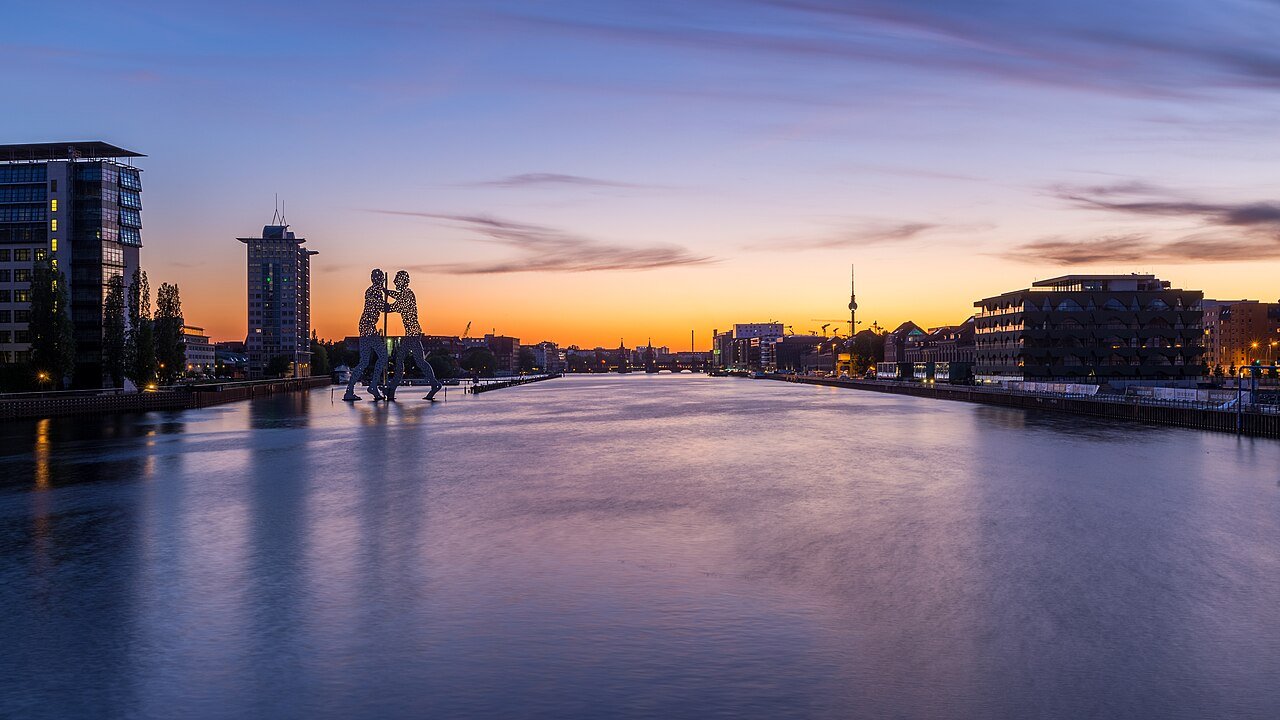
Organisations, links and official rules in this guide were last checked in November 2026. Spotted a group that has closed or a new one we should check? Let us know through the contact page. Featured photo: the Spree at sunset by Ansgar Koreng, CC BY-SA 4.0, via Wikimedia Commons.