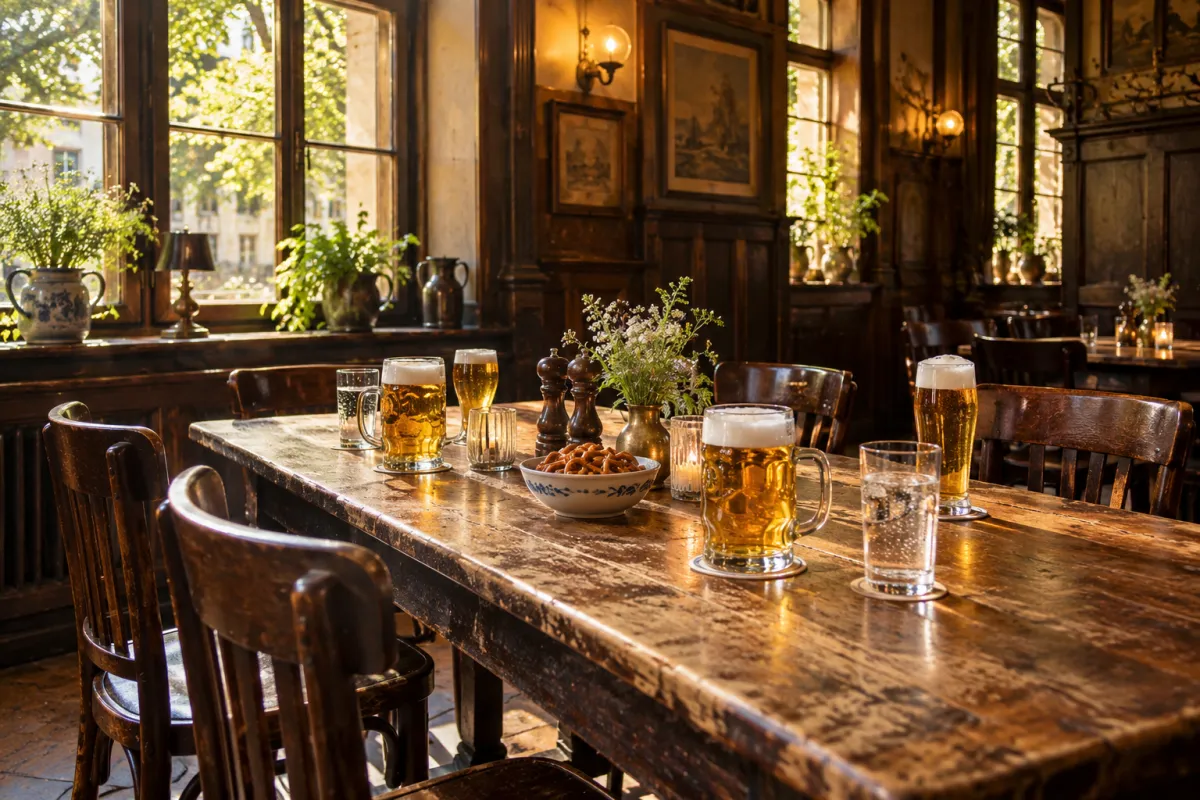
If you have typed “German Stammtisch Berlin for beginners” into a search bar, you probably want two things at once: to speak German out loud without freezing, and to meet people you will still be seeing next season. A Stammtisch can do both, because it is not a one-off event. It is a regular table with the same rough crowd coming back, which is exactly what new friendships need.
I went to my first one with shaky A2 German and a rehearsed introduction that lasted about one sentence. Nobody minded. The woman next to me had lived in Berlin for years and still mixed up her articles, and the organiser spent the whole session steering quieter people into conversations. That is the real advantage of a learner Stammtisch: someone is in charge of making it work, so you do not have to.
Below you will find only meetups we could confirm on the organisers’ own pages, a table to compare them, advice on choosing by level, and a step-by-step walkthrough of your first visit, so you know what happens from the moment you walk in.
What a Stammtisch is and why it suits beginners
The word breaks down neatly: Stamm means regular or core, and Tisch means table. The traditional Stammtisch is a group of regulars who meet at the same pub or restaurant on a fixed day, often at a table the landlord keeps for them. Learner Stammtische borrow that rhythm and add a purpose: German conversation in a relaxed setting, with people at very different levels sitting together.
For beginners, three things make this format easier than a big drop-in language exchange:
- Repetition. Because it recurs, you see the same faces again, and the second conversation with someone is always easier than the first. Friendships abroad are built on this kind of repeated, low-effort contact.
- Someone in charge. The school-run tables below have coordinators or hosts, so you are not left standing at the bar wondering which group is the right one.
- Lower stakes. Nobody is grading you. Mistakes are the whole point, and most people around the table are making them too.
If you also want the bigger, busier swap-style events, our verified list of weekly language exchanges in Berlin covers the drop-in options. A Stammtisch is the smaller, steadier cousin, and plenty of newcomers end up doing both: the big event for variety, the Stammtisch for continuity.
German Stammtisch Berlin for beginners: the verified directory
Every entry here comes from the organiser’s own page or listing. Where a detail such as start time or exact price was not published in our sources, we have left it out rather than guess, so check the linked page before you go.
| Meetup | Area | Schedule | Cost | Level | How to join |
|---|---|---|---|---|---|
| Sprachenatelier Berlin Stammtisch | Friedrichshain | Bi-weekly, on Fridays (Meetup listing) | Not stated in our source; check the event page | German learners and international participants | RSVP through the school’s Meetup group |
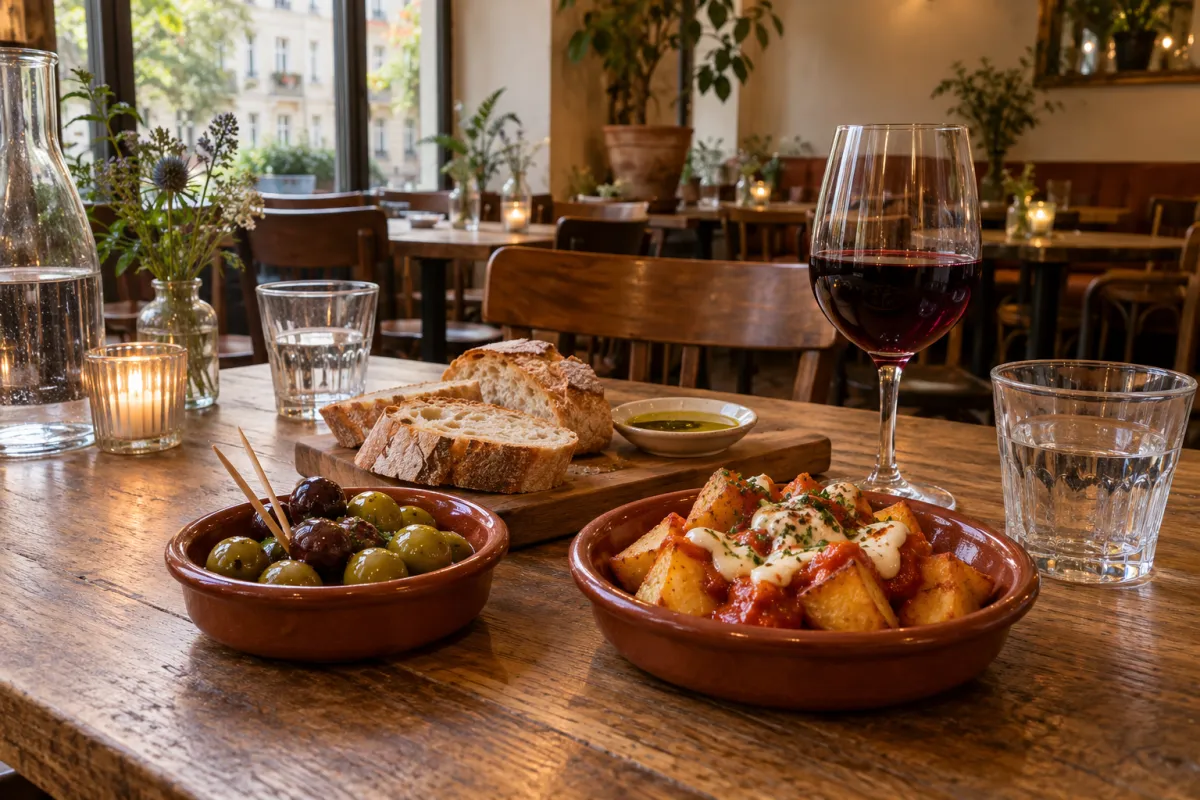
| Prenzl’Berg Sprachschule German practice meetup | Prenzlauer Berg, at venues such as Tres Tapas | Every second Thursday of the month (Prenzl’Berg Sprachschule) | Free to attend; you pay for your own food and drinks | All levels | Check the school’s website for the current venue |
| DeutschAkademie German Conversation Clubs | Berlin | Running continuously | Check the current price on the school’s website | From A1.2 up to B2.1 (DeutschAkademie) | Book through DeutschAkademie |
| Goethe-Institut Berlin tandem partnerships | One-to-one, arranged by the institute | Agreed between partners | Free (Goethe-Institut) | International course participants | Ask through your Goethe-Institut course |
| University tandem programmes (FU Berlin, ASH Berlin) | University-based | Through the university | Check with your university | Students and newcomers linked to the university | University tandem programme or online forum |
Last checked May 2026. Venues and schedules can change, so confirm on the organiser’s page before each visit.
Sprachenatelier Berlin Stammtisch (Friedrichshain)
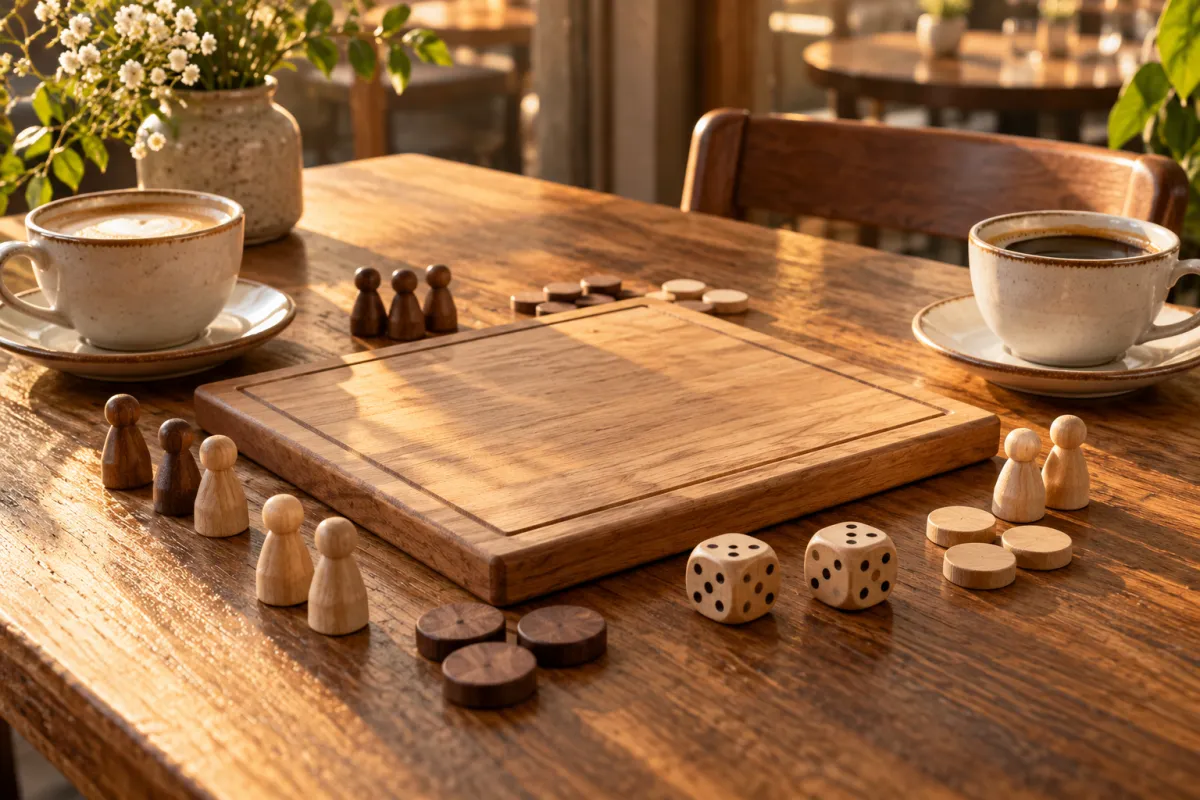
Sprachenatelier is a well-known language and culture school in Friedrichshain whose culture team runs an official bi-weekly Friday Stammtisch designed to build a community of German learners (Sprachenatelier on Meetup). The format leans playful: conversation practice is mixed with table games and quizzes, and school coordinators keep things moving.
What to expect: games are a gift if you are shy. A quiz question gives you something concrete to say, and being on a team means you are part of the group before you have managed a single full sentence. Expect to be placed at a table with other learners, with coordinators drifting between groups.
How to join: find the school’s group on Meetup, RSVP to the next date so the coordinators can plan numbers, and read the listing for the venue and start time.
Prenzl’Berg Sprachschule German practice meetup (Prenzlauer Berg)
Prenzl’Berg Sprachschule hosts an open German practice meetup every second Thursday of the month at a local venue such as Tres Tapas in Prenzlauer Berg, open to all levels and free to attend, with each person paying only for their own food and drinks (Prenzl’Berg Sprachschule).
What to expect: a relaxed, welcoming table in a neighbourhood restaurant rather than a classroom. The restaurant setting is quietly useful for beginners: ordering, asking about the menu and sorting out the bill are all real German practice before the conversation even starts.
How to join: check the school’s website for the current date and venue, since the meetup is held at local venues rather than always in one fixed spot. Because it is described as open, you do not need to be enrolled at the school to come along.
DeutschAkademie German Conversation Clubs
If pub tables feel too unstructured, DeutschAkademie runs German Conversation Clubs continuously across levels from A1.2 up to B2.1, designed to build speaking confidence and correct spoken errors (DeutschAkademie).
This is not a Stammtisch in the traditional sense, but it solves the biggest beginner complaint about mixed tables: ending up next to someone fluent and losing the thread. Because the clubs are grouped by level, everyone is roughly where you are. A good rhythm is a club for structure and corrections, plus a Stammtisch for the social side.
How to join: check the current schedule and price on the DeutschAkademie website and book the club that matches your level.
Goethe-Institut Berlin tandem partnerships
Goethe-Institut Berlin arranges free language tandem partnerships between native German speakers and international course participants (Goethe-Institut). If you are already on one of their courses, ask your course office how to sign up.
A tandem is one-to-one: you help your partner with your language, they help you with German, and you usually meet in a café. For people who freeze in groups, it is often the gentlest start. Our guide to finding a tandem partner in person in Europe covers how to split the time, what to talk about and how to end a pairing politely if it is not working.
University tandem programmes (FU Berlin, ASH Berlin)
Berlin universities, including Freie Universität Berlin and Alice Salomon Hochschule, run their own tandem programmes and online forums to help international students and newcomers find German-speaking partners. If you are studying, this is usually the lowest-effort route: ask your international office or language centre where the current tandem forum lives, then add a Stammtisch once you have a little confidence.
Which table to choose for your level
There is no wrong first choice, but matching the format to where you are makes the first visit far less draining.
- Complete beginner: start with the Prenzl’Berg meetup, which welcomes all levels, or a DeutschAkademie club at your level. Prepare a short self-introduction and lean on listening.
- Some German, but small talk is hard: try Sprachenatelier’s Friday table. The games and quizzes carry the conversation when your vocabulary runs out.
- You want someone to correct you: DeutschAkademie’s clubs are built for that. At a social Stammtisch, people often let mistakes slide to keep the chat flowing.
- You freeze in groups: begin with a Goethe-Institut or university tandem, then bring your partner along to a Stammtisch as a familiar face.
- You are an international student: sign up for your university’s tandem programme first, because it costs you nothing to try, then add a Stammtisch for a wider circle.
My honest advice: pick one and commit to going back a few times before judging it. The first visit is always the awkward one. The difference between people who make friends at a Stammtisch and people who do not is mostly whether they returned.
Your first visit: a step-by-step walkthrough
Here is what a first visit usually looks like, and how to make each stage easier.
- Check the listing a few days before. Confirm the date, the venue and the start time on the organiser’s page. Some meetups move between local venues, and nothing is worse than sitting alone at the wrong restaurant.
- Prepare a short introduction in German. Your name, where you are from, why you moved to Berlin, what you do and one thing you like about the city. Practise it out loud a couple of times. You will use it many times in the first hour.
- Arrive close to the start. Early arrivals get the easiest conversations, because the table is small and the host has time for you. Arriving late means walking into conversations already in full flow.
- Find the host and say you are new. Tell them your rough level. Good hosts will seat you next to someone patient or someone at a similar level.
- Order something. At restaurant-based meetups you pay for your own consumption, so order, then relax. When the bill comes, it is normal in Germany to pay separately; the word you will hear is getrennt.
- Talk slowly and accept the gaps. If you get stuck, ask for the word, use it, and carry on. A quick English rescue is fine at learner tables, but steer back to German as soon as you can.
- Join the game or quiz if there is one. Teams are a shortcut to belonging. You do not need the right answer, just a willingness to guess.
- Leave well. Say goodbye to the host, tell them you plan to come back, and swap contact details with one person you clicked with. One is plenty.
- Follow up within a few days. Send a short message to that person, mention something you talked about, and say you will see them at the next session.
Beginner tip: write down three new words you heard during the session on your way home. Use them at the next Stammtisch. Regulars notice progress, and it gives you an easy conversation opener.
Stammtisch etiquette and practical tips
Learner Stammtische are forgiving, but a few habits make you the kind of newcomer people are glad to see again.
- Share the airtime. Confident speakers can dominate a table without meaning to. If you are one of them, ask quieter people questions. If you are the quiet one, ask questions too: it is the easiest way to take part without needing much vocabulary.
- Correct only when asked. Some people want corrections, others want flow. If you are unsure, ask how they prefer it.
- Expect informal address. At learner meetups, most people use the informal du with each other. If a native speaker uses the formal Sie, follow their lead.
- Pay your own way. Order what you like and settle your own bill. Rounding up is a common way to tip in Germany.
- Carry some cash. Smaller Berlin bars and restaurants do not always take cards, so having a little cash avoids an awkward end to the session.
- Keep it friendly, not flirty. A Stammtisch is a community, not a dating event. People who treat it as one tend not to be welcomed back.
- Come back. The single most important bit of etiquette is consistency. Being a familiar face is what turns a group of strangers into your group.
Meeting new people safely
School-run Stammtische are about as low-risk as meeting strangers gets, but the usual common sense still applies, especially when a conversation moves on to a second location or a one-to-one meet-up.
- Meet in public places: the venue itself, a café or a busy park. Keep first one-to-one tandem sessions somewhere public too.
- Tell a friend or flatmate where you are going and who you are meeting.
- Plan your own way home, and know your last convenient transport connection before you go.
- Leave if anything makes you uncomfortable. You do not owe anyone an explanation, and a good host will understand.
From regular face to actual friend
A Stammtisch gives you acquaintances quickly. Friendship takes one extra step: seeing someone outside the fixed meetup. The trick is to make that step small and specific. Instead of a vague “we should hang out”, suggest a coffee before the next session or a walk around a neighbourhood you both want to explore. Our guide on how to turn acquaintances into friends has scripts for exactly that moment.
It also helps to stack a second recurring activity on top of your Stammtisch. Many learners find that sport or games lower the language pressure even further, because you are doing something together rather than just talking. Berlin has plenty of options: try one of the free social running clubs in Berlin, or pick up a copy of a German board game at one of the board game cafés and open game nights in Berlin. Invite a Stammtisch regular along and you have a ready-made second meeting.
Be honest with yourself about the timeline. It takes a while for any of this to feel natural, and the early sessions can feel like hard work. That is normal, not a sign you are doing it wrong.
Social clubs for expats beyond Berlin
The principle behind a good Stammtisch travels well: a recurring time, a host who welcomes newcomers, and an activity that gives you something to talk about. When you look for social clubs for expats in any city, use that as your filter.
If you are moving on from Berlin or comparing cities, Amsterdam is a good example of how this plays out beyond language practice. Sports clubs in Amsterdam for expats, from running groups to team sports, work on the same repeat-attendance logic, and our expat guide to making friends in Amsterdam covers the clubs worth trying there. If your next stop is the Czech capital, apply the same test when you choose a language exchange in Prague: favour tables run by a language school or university, because those come with a host, a regular schedule and a steady crowd.
Want to turn this into an actual plan? MeetNow is a free app for meeting people in person: a host posts a plan at a public place, says who pays (host pays, split, pay your own or free) and picks who joins. It is live on the web and works in your browser, starting in Malta. The Android app is on Google Play; the iPhone app is not in the App Store yet. Open MeetNow and see the plans posted in Malta.
Whichever table you choose, the German Stammtisch Berlin for beginners scene rewards the same thing: turning up, saying your slightly wobbly introduction, and coming back. Pick one meetup from the directory, put the next date in your calendar and treat the first visit as practice, not a test.
FAQ
Do I need to speak German before going to a Stammtisch in Berlin?
No. The Prenzl’Berg Sprachschule meetup is open to all levels, and DeutschAkademie runs level-based conversation clubs that start at beginner level. Prepare a short introduction about yourself, speak slowly, and let more confident speakers carry the conversation while you listen and add what you can.
How much does a German Stammtisch in Berlin cost?
Many learner Stammtische are free to attend and you simply pay for what you eat and drink, which is how the Prenzl’Berg Sprachschule meetup works. Structured conversation clubs such as DeutschAkademie’s may be priced differently, so check the current price on the school’s website before booking.
What is the difference between a Stammtisch and a tandem?
A Stammtisch is a recurring group meetup at a café, bar or restaurant, usually with mixed levels and a host. A tandem is a one-to-one exchange where you help someone with your language and they help you with German. Goethe-Institut Berlin and several Berlin universities arrange tandems, and many learners use both formats.
Is it okay to go to a Stammtisch on my own?
Yes, most people arrive alone, especially on their first visit. Tell the organiser you are new, sit near the middle of the table, and you will be pulled into conversation. Meet in the public venue, let a friend know where you are, and plan your own way home.
How do I turn Stammtisch acquaintances into real friends?
Keep going back to the same table so people recognise you, then suggest one small, specific plan with someone you clicked with, such as a coffee or a walk before the next session. Recurring contact plus a low-pressure invitation is what turns a regular face into a friend.