The short answer: how to make friends in Germany as a foreigner comes down to structure and patience. Germans tend to make friends through recurring, organised settings (sports clubs, choirs, volunteer groups, regular pub tables) rather than spontaneous chats, and friendships often take months to form but are loyal once they do. In your first 90 days: build routines and join one international group (weeks 1–2), commit to a Verein or class that meets weekly (weeks 3–6), then suggest specific, planned meetings with the people you keep seeing (weeks 7–12).
When I first lived in Germany, a colleague told me something I have repeated to every newcomer since: “Germans are like coconuts. Hard on the outside, soft on the inside.” It is a cliché, and like all clichés it is only partly true. Plenty of Germans are warm from the first minute. But the broad pattern many newcomers notice is real: small talk with strangers is less common, the line between colleagues and friends is clearer, and social plans are made in advance. Once you understand that, it stops feeling like rejection and starts feeling like a system you can use. This guide explains the system and gives you a week-by-week plan.
How to make friends in Germany as a foreigner: what it actually feels like
Many newcomers describe a similar arc. The first weeks are full of practical tasks: registering your address (Anmeldung), opening a bank account, finding a flat. Colleagues are polite and helpful but go home at five. Neighbours say “Hallo” on the stairs and little else. You go to an international meetup and have nice conversations, but nobody follows up. If work is where you spend most of your week, our guide to making friends at work abroad covers how colleagues can become friends.
Around the second month, it can feel as though everyone already has their friends. In many cases they do: Germans often keep close friendships from school, university or their home town, and many live near family. That is not a closed door; it just means you need to find the places where new connections are expected, rather than hoping for chance encounters.
The good news is that Germany has an unusually rich infrastructure for exactly this. According to the German Olympic Sports Confederation’s 2025 membership survey, sports clubs alone counted about 29.3 million memberships across roughly 86,000 clubs (DOSB Bestandserhebung 2025). Add choirs, volunteer fire brigades, allotment associations, hiking clubs and carnival societies, and you have a country where joining something is the normal way to meet people.
German friendship norms: a country-norms box
None of these are rules that apply to every German, and city life (especially in Berlin, Hamburg and Munich) is very international. But knowing the general pattern helps you choose tactics that work with it rather than against it.
Weeks 1–2: routines and first contacts
Your goal in the first fortnight is to build structure and meet a handful of people, not to make close friends.
Weeks 1–2 checklist
- Do your Anmeldung early. Many practical things (bank account, tax ID, some memberships) depend on it, and getting admin done frees your energy for people.
- Choose three daily anchors: the same bakery in the morning, the same route for a walk or run, the same supermarket. Being recognised by the baker is a small but real comfort.
- Go to one international event: a language exchange, an expat meetup or a newcomers’ evening. Everyone there is open to meeting people.
- Introduce yourself to neighbours with a short “Hallo, ich bin neu hier” (Hello, I’m new here).
- Make a list of five Vereine or classes near you to try in weeks 3–6: a sports club, a choir, a volunteer group, a Volkshochschule course.
If you are in Berlin, our Berlin language exchange guide lists verified weekly events, which are an easy first step.
Weeks 3–6: join a Verein (or something like one)
This is the phase that makes the biggest difference, and it is where Germany’s club culture works in your favour.
How Vereine work
A Verein is a registered association, recognisable by the letters “e.V.” after its name. Sports clubs, choirs, hiking groups, chess clubs and volunteer organisations are often Vereine. You become a member, pay a membership fee and take part in regular activities with the same people. Many clubs let you try a session or two first (Probetraining). The social side (the drink after training, the summer party, the Christmas celebration) is a big part of club life.
Which one to choose
- A sports club if you want regular, low-pressure contact. Running, football, volleyball, rowing, climbing and table tennis are all popular. In Berlin, our guide to running clubs in Berlin explains how crews and Vereine differ.
- A choir or music group if you sing or play. Rehearsals plus concerts create a strong group bond.
- A volunteer group if you want meaningful work with locals: food banks, refugee support, environmental groups.
- A Volkshochschule (VHS) course. Germany’s network of adult education centres runs affordable courses in languages, cooking, crafts, fitness and more. A ten-week course means the same faces every week. See volkshochschule.de to find your local centre.
- A Stammtisch. Search for international, language or hobby Stammtische in your city. They meet regularly at the same venue, which makes them easy to return to.
Weeks 3–6 checklist
- Two or three trial sessions in week three
- One weekly commitment chosen by week four (plus one international group if you like)
- Stayed for the drink or coffee afterwards at least twice
- Learned five names and one fact about each person
- Switched to du with at least one person (when invited)

Weeks 7–12: from Bekannte to Freunde
By now you should have people you see every week. The next step is to meet them outside the club or class, and in Germany the key is to be specific and to plan ahead.
How to invite people in a German way
- Suggest a specific day and time: “Hast du nächsten Samstag Lust auf einen Kaffee nach dem Training?” (Do you fancy a coffee after training next Saturday?)
- Offer a clear plan: a walk in the park, a visit to a market, a beer garden, a museum. Concrete plans get more yeses than vague ones.
- Accept a “no” without taking it personally. Ask again another time with a different date.
- Follow through. If you say you will be there, be there and be on time. Reliability builds trust.
Host something
Around week ten, invite three to five people for something easy: a picnic, a games evening, a dinner where everyone brings a dish. In Germany, being invited to someone’s home is a meaningful step, so hosting signals that you value the connection.
Weeks 7–12 checklist
- Two specific invitations made for a set date
- One small gathering hosted
- Weekly club or class still attended
- One person you message without a practical reason
If the first months feel heavy, our week-by-week guide for when you feel lonely after moving abroad covers what to expect and when to seek support.
Learning German: how much do you need?
In big cities you can build a social life in English, especially in international groups and workplaces. But German makes a huge difference to local friendships. Even basic German shows effort, which many Germans appreciate, and it lets you join clubs and groups where English is not the default. A practical approach: take a weekly course from your first month, practise at language exchanges, and use your club as a low-pressure place to try out new phrases. People will often switch to English to help; it is fine to ask them to stay in German.
Beyond Berlin: Munich, Hamburg and Cologne
Berlin is the most international German city and has its own scene, covered in our Berlin friendship guide. Elsewhere, the same principles apply with local flavour:
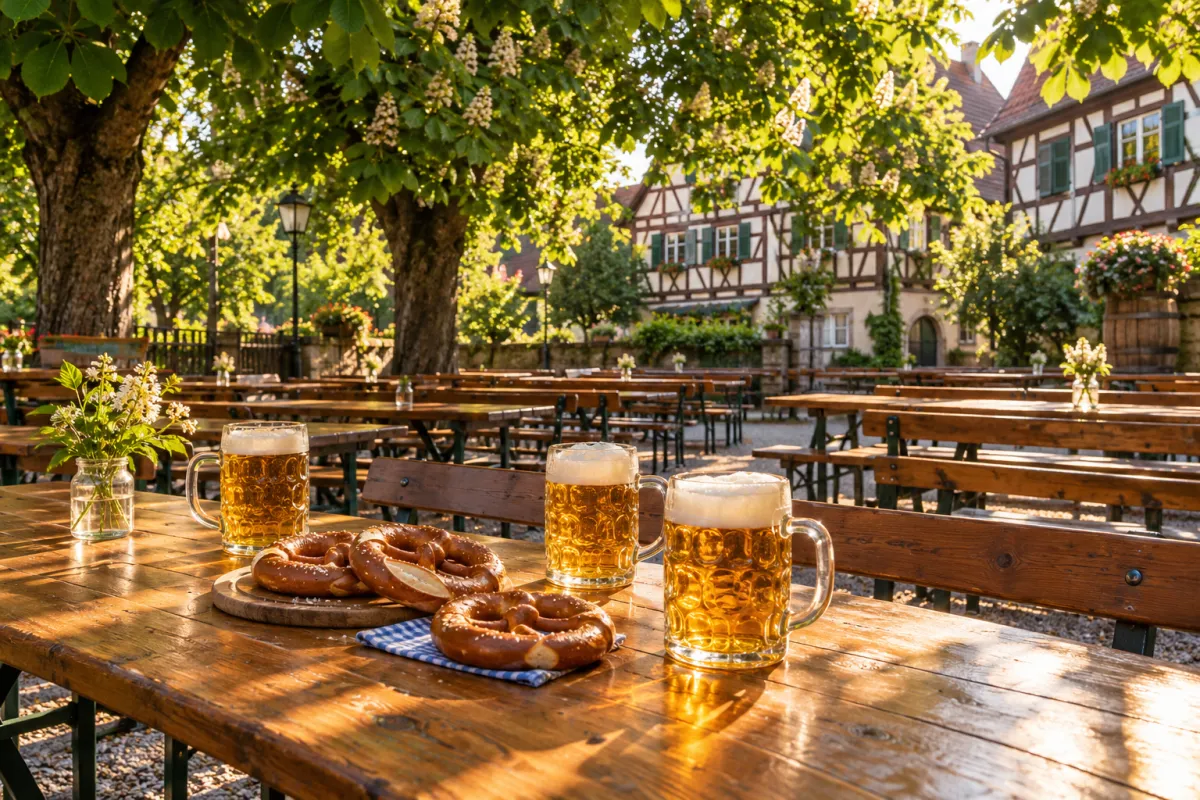
- Munich: beer gardens with long shared tables, a strong outdoor and mountain-sports culture, and many international companies. Hiking and skiing clubs are popular ways to meet people.
- Hamburg: a port city with a reputation for being reserved at first. Sailing, rowing and running around the Alster are classic social activities.
- Cologne: known for an open, sociable atmosphere and its carnival season. Carnival societies and neighbourhood pubs are traditional ways into local life.

Common mistakes foreigners make in Germany
| Mistake | Better approach |
|---|---|
| Waiting for spontaneous invitations | Suggest a specific plan with a date |
| Taking directness as rudeness | Treat it as honest information |
| Only going to one-off expat events | Join a weekly club, class or Stammtisch |
| Expecting colleagues to become instant friends | Build friendships through shared activities outside work |
| Arriving late to plans | Be on time; it builds trust |
| Giving up after a few months | Expect friendships to take time; they are often lasting |
Your next step
This week, find one Verein, course or Stammtisch near you and book a trial session. That single step, repeated weekly, is what turns Germany from a place you live into a place you belong. For the full 90-day framework, see our pillar guide to moving abroad alone.
Staying safe when meeting new people
Meet new people in public places, tell a friend where you are going, arrange your own way home and leave if anything feels off. In an emergency, call 112.
Want to turn this into an actual plan? MeetNow is a free app for meeting people in person: a host posts a plan at a public place, says who pays (host pays, split, pay your own or free) and picks who joins. It is live on the web now, starting in Malta, with the phone apps on the way: open MeetNow and see the plans near you. (MeetNow is our own app.)
FAQ: how to make friends in Germany as a foreigner
Is it hard to make friends in Germany as a foreigner?
It can take longer than in some countries, because Germans often make friends through organised, recurring settings and keep long-standing friendships. Newcomers who join a club or class and plan meetings in advance usually find friendships form over a few months and tend to last.
What is a Verein?
A Verein is a registered association, marked “e.V.”. Sports clubs, choirs, hiking groups and volunteer organisations are often Vereine. Members pay a fee and take part in regular activities, which makes them one of the best ways to meet people in Germany.
What is a Stammtisch?
A Stammtisch is a regular table where the same group meets at a pub or restaurant on a set day. Many cities have international, language or hobby Stammtische that welcome newcomers.
Do I need to speak German to make friends in Germany?
In big cities you can start in English, but German makes local friendships much easier. Even basic German shows effort, and clubs and courses are good places to practise.
How do I invite a German person to hang out?
Be specific and plan ahead: suggest a day, a time and an activity, such as a coffee after training next Saturday. If they say no, ask again another time with a different date.
Why do Germans separate work and private life?
Many Germans keep a clearer line between colleagues and friends than people in the UK or Ireland. Friendships with colleagues are possible but often develop slowly through activities outside work.