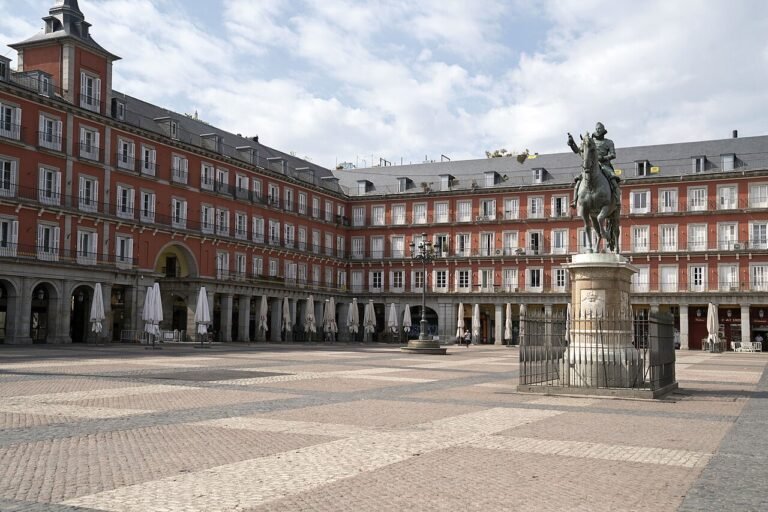
Madrid does not have one tidy nomad scene the way some smaller cities do. The digital nomad Madrid community is spread across coworking spaces in Malasaña and Chamberí, language exchanges in the back rooms of bars, university Erasmus networks and long lunches that stretch well into the afternoon. That spread is good news. Once you know where to look, there are more ways in than you would expect from a city that can feel very Spanish-speaking during your first week.
I have moved abroad twice. Both times, the pattern that worked was the same: one anchor place you return to every week, one recurring event, and the habit of asking people to do a second thing with you. Madrid rewards exactly that. People here are sociable but busy, and plans tend to form around food, terraces and walks rather than around formal networking.
Below you will find where nomads and international students actually meet, how solo dining abroad works in a city that eats late, a weekly plan for your first month, the visa rules that shape how long you can stay, and the safety basics for meeting people you do not know yet.
What the digital nomad Madrid community looks like in 2026
Think of the digital nomad Madrid community as three overlapping circles rather than one club. The first circle is longer-stay remote workers: people employed by foreign companies or freelancing for foreign clients who have chosen Madrid as a base for a year or more. They tend to rent proper flats, join a gym and look for friends who will still be around next season.
The second circle is short-stay nomads who move between Spanish cities, spending a month or two in Madrid before heading to the coast. They are easy to meet, because they are actively looking for company, but harder to keep. The third circle is international students on Erasmus or exchange programmes, plus master’s students at Madrid’s universities and business schools. Students are often the most socially organised group in the city, because their universities and ESN sections plan things for them.
On top of that, Madrid has a large community of Spanish-speaking professionals from Latin America, and plenty of Spaniards from other regions who moved to the capital for work. Many of them are newcomers too, and they are often more open to new friendships than people who grew up in the city. If you only look for other English speakers, you miss half of the people who are in exactly your situation.
Compared with a beach city, Madrid feels less like a nomad bubble and more like a real capital where you happen to work remotely. If you want something smaller and more concentrated, our guide to the digital nomad scene in Valencia is a useful comparison. If you want a big city with depth, Madrid is hard to beat.

Neighbourhoods where nomads and students base themselves
Where you live changes who you bump into. Madrid is walkable in the centre, so a well-chosen neighbourhood turns casual run-ins into a social life.
- Malasaña: independent cafés, vintage shops and a young, creative crowd. Plenty of laptop-friendly cafés, and an easy place to meet people on a terrace after work.
- Lavapiés: the most multicultural part of the centre, with a strong neighbourhood feel. Mercado de San Fernando is a lively spot to grab food and drinks at shared counters.
- Chamberí: residential, calmer and very local. Good if you want routine, a regular café and neighbours who recognise you. Mercado de Vallehermoso is a pleasant market to eat in.
- La Latina: the classic Sunday neighbourhood, next to El Rastro flea market, full of people having a long vermouth and tapas in the early afternoon.
- Chueca: central, social and well connected, with a busy café and terrace culture.
Students often live further out, near their campus, which makes the centre feel far away at first. If that is you, treat the centre as your weekend base and your campus as your weekday one.
Coworking spaces: your weekday anchor
For remote workers, a coworking space is the single most reliable way into the digital nomad Madrid community. Cafés are fine for focus, but you rarely talk to the person at the next table. In a coworking space, you see the same faces every day, and there is usually someone whose job it is to introduce people.
Established names include Impact Hub Madrid, which is built around social impact and community programmes, Talent Garden Madrid, which leans towards tech, digital and startup people, and Utopicus, a Spanish coworking brand with several sites in the city. Locations, event calendars and prices change, so check each space’s own website before you commit, and ask for a day pass or trial first.
How to pick a coworking for the people, not the desk
- Ask about the event calendar first. A space with regular community breakfasts, lunches or talks is worth more socially than a cheaper space with nothing on.
- Sit in the shared area. Private booths are great for calls, but the shared kitchen and open desks are where conversations start.
- Go to the first event you see. Even if the topic is not your field, go. You are there for the people around the coffee machine afterwards.
- Tell the community manager what you are looking for. Say you are new to Madrid and want to meet people. Good community managers will introduce you to two or three members within a week.
- Keep the same schedule. Coming in on the same days at the same time means the same people see you repeatedly, which is the whole point.
If you came to Madrid from Lisbon or plan to spend time there, the logic is identical: the space with the best community beats the space with the best chairs.
Meetups, language exchanges and Erasmus networks
Language exchanges (intercambios)
Language exchanges are the most underrated social tool in Madrid. Locals who want to practise English sit with newcomers who want to practise Spanish, usually in a bar or café on a weekday evening, and the format pushes everyone to talk. You come away with Spanish-speaking contacts, which is what separates people who stay in an expat bubble from people who build a life here. Our guide to language exchanges in Madrid covers the intercambios worth trying and how to get the most out of your first one.
A practical tip: go to the same exchange three weeks in a row before deciding whether it works for you. The first visit is always awkward. By the third, the regulars recognise you and the conversations get better.
How to make friends as an international student in Madrid
If you are wondering how to make friends as an international student, start with the structures your university already offers. The Erasmus Student Network has several sections attached to Madrid universities, and your international office can tell you which one serves your campus. ESN sections typically run welcome events, city tours, trips and buddy programmes that pair you with a local student.
- Sign up for the buddy programme early. A local buddy shows you how the city works and often introduces you to their own friends.
- Book one trip in your first month. A weekend away with a group is the fastest way to go from strangers to friends, because you spend real time together.
- Join one university club that is not about partying. Sports, hiking, music or volunteering groups meet regularly and attract locals as well as internationals.
- Mix circles on purpose. Erasmus groups are fun but temporary. Pair them with a language exchange or a club where people will still be in Madrid after the semester ends.
Remote workers can join some ESN events too, depending on the section, but the student scene is where students naturally belong. Nomads in their late twenties and thirties usually find a better fit through coworking and language exchanges.
Meetup, InterNations and nomad groups
Platforms such as Meetup and InterNations list events for internationals in Madrid, from hiking groups and board games to professional talks. The quality varies a lot. Look for groups that meet regularly and show recent past events with real attendance, and skip anything that looks like a sales pitch dressed up as a social. Recurring groups beat one-off events, for the same reason your coworking schedule matters: you need to see people more than once.
Running and walking groups also work well, especially around Retiro Park and Madrid Río, which are busy with runners on weekend mornings. Search the apps you already use for local groups rather than relying on a single list.
Solo dining abroad: how to eat alone in Madrid and enjoy it
Solo dining abroad worries a lot of newcomers, and Madrid has a reputation for big group meals. In practice, it is one of the easiest cities in Europe to eat alone, as long as you understand the rhythm.
- Make lunch your main meal. Spanish lunches start later than in the UK or Ireland, and many restaurants offer a menú del día on weekdays: a set lunch with several courses. Workers eat it alone all the time, so you will not stand out.
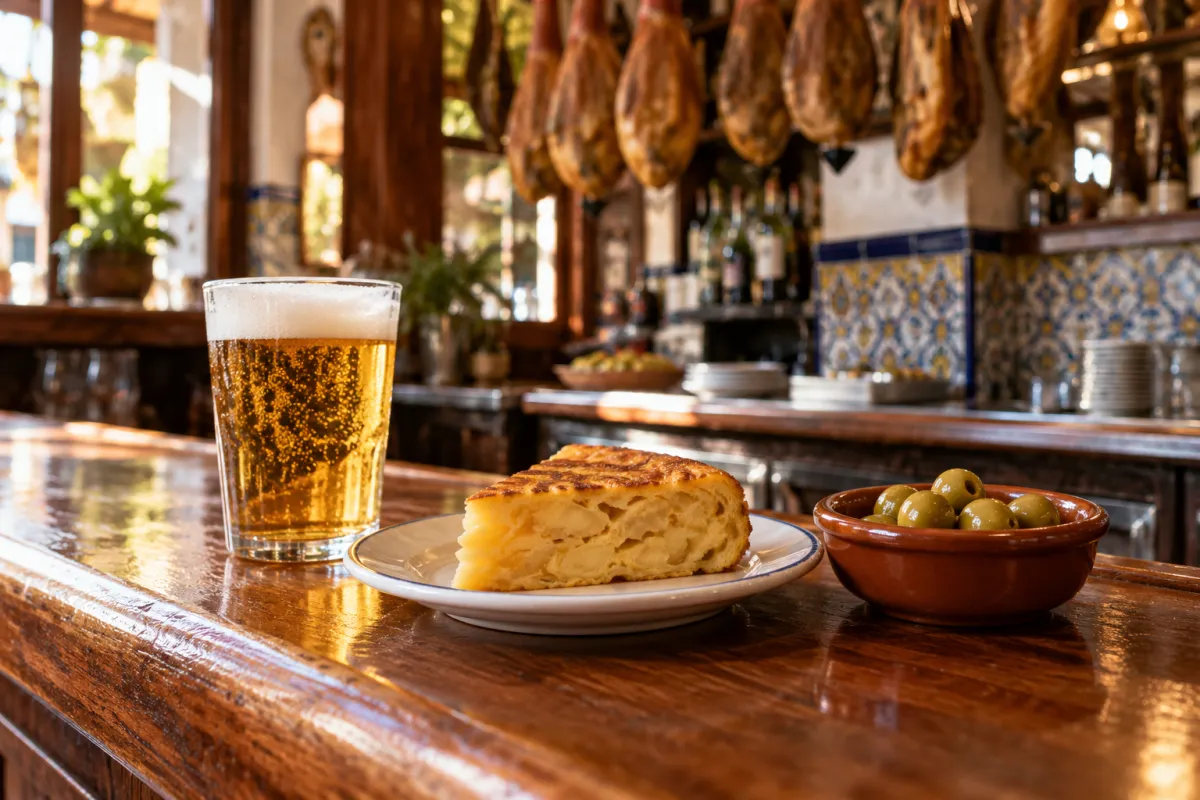
- Sit at the bar. The counter (la barra) is made for solo eaters. Order a drink and a tapa or a ración, and you are part of the room instantly. Bar staff and people next to you often chat.
- Use the markets. Mercado de San Fernando, Mercado de Antón Martín and Mercado de Vallehermoso have stalls with counters where eating alone is normal. Mercado de San Miguel is beautiful but very touristy, so treat it as a one-off.
- Eat a little later than you think. Arrive too early for dinner and the restaurant will be empty. Arrive when locals do and solo dining feels natural, not lonely.
- Bring a book, not just a phone. A book makes you look relaxed and approachable rather than busy.
Eating alone also gives you something to invite people to later. Once you have found a good menú del día spot, it becomes the easiest possible plan to suggest to a coworking neighbour: lunch on Wednesday at the place you like.
A weekly social plan for your first month
This is an example rhythm, not a rule. The idea is simple: one anchor, one recurring event and one weekend habit, repeated every week so the digital nomad Madrid community starts recognising you. Swap days to fit your work schedule and check each event’s current times before you go.
| Day | Plan | Why it works |
|---|---|---|
| Monday | Work from your coworking space, sit in the shared area, go to any community breakfast or lunch | Sets the week’s routine and puts you in front of the same people |
| Tuesday | Language exchange after work | Meets locals and other newcomers in a format built for talking |
| Wednesday | Menú del día lunch, alone or with one coworking neighbour | Low-pressure one-to-one time, the first step from acquaintance to friend |
| Thursday | ESN event if you are a student, or a Meetup group or coworking talk if you work remotely | Adds a second circle beyond your workplace |
| Friday | Early evening terrace drink with people from the week | Turns weekday faces into weekend plans |
| Saturday | Morning run, walk or group hike around Retiro Park or Madrid Río | Active plans make conversation easy and keep the weekend healthy |
| Sunday | El Rastro in the morning, then vermouth and tapas in La Latina | A classic Madrid ritual that is easy to invite anyone to |
In week one, just turn up. In week two, learn names. In week three, suggest one plan to someone you have met twice. By week four, you should have two or three people you would message on a free Saturday.
Visa rules that shape your social life
Your visa decides how long you can stay, and how long you can stay decides how much you invest in friendships. People on a short tourist stay often float between events, while people with a residence permit start building a proper circle. Spain’s international telework visa is the route many remote workers use to settle in Madrid, so it is worth knowing the basics.
- As a single applicant, you need to show financial resources of at least 200% of Spain’s monthly minimum wage, known as the SMI, according to the Spanish Ministry of Foreign Affairs.
- Freelancers can work for companies based in Spain, but that work cannot exceed 20% of their total professional activity, per the Spanish Ministry of Foreign Affairs. That leaves room for some local clients, which is a useful way to meet Madrid professionals.
- Your working relationship with your foreign employer or clients must have existed for at least 3 months before you apply, as the Spanish Ministry of Foreign Affairs sets out.
- Applying through a Spanish consulate abroad gives you a visa of up to 1 year, while applying from inside Spain through the UGE-CE can give you a residence permit of up to 3 years, according to the Spanish Ministry of Foreign Affairs.
Rules and thresholds change, so check the ministry’s official pages and speak to a qualified adviser before you apply. From a social point of view, the main takeaway is this: if you know you will be in Madrid for a year or more, act like it from week one. Join the club, sign up for the course, say yes to the second coffee.
Safety box: meeting new people in Madrid
Meeting someone new? Keep these four habits:
- Meet in a public place. A café, market, busy terrace or coworking event. Avoid first meetings at someone’s flat.
- Tell a friend. Share where you are going, who you are meeting and roughly when you expect to be done.
- Plan your own way home. Know your Metro line or bus route, and keep your phone charged and some money on you.
- Leave if you feel uncomfortable. You do not owe anyone an explanation. Pay for what you ordered and go.
Madrid is generally a safe city, but pickpockets work busy areas such as Sol, Gran Vía and crowded Metro carriages. Keep your bag zipped and in front of you. Women travelling or living alone can find more detail in our solo female travel safety checklist for Europe.
Turning Madrid acquaintances into real friends
The hardest step is not meeting people. It is moving from “nice to see you again” to “let’s do something”. Most newcomers wait for the other person to suggest a plan, and the other person waits too. Be the one who asks. A specific, low-stakes invitation works best: lunch at a market on Wednesday, a walk in Retiro on Saturday morning, the Rastro on Sunday.
If you find this part awkward, our guide on how to turn acquaintances into friends breaks it into steps, and these scripts for asking someone to hang out as a friend give you exact wording you can adapt. For people splitting time between Madrid and other cities, our guide to making friends while travelling solo covers how to keep momentum while you move.
Be honest with yourself about timing. Real friendships usually take months, not weeks. The digital nomad Madrid community has a lot of turnover, so keep meeting new people even after your first circle forms. Some will leave, and the ones who stay become the friends who make Madrid feel like home.
Want to turn this into an actual plan? MeetNow is a free app for meeting people in person: a host posts a plan at a public place, says who pays (host pays, split, pay your own or free) and picks who joins. It is live on the web and works in your browser, starting in Malta. The Android app is on Google Play; the iPhone app is not in the App Store yet. Open MeetNow and see the plans posted in Malta.
Frequently asked questions
Is there a strong digital nomad community in Madrid?
Yes, but it is spread out rather than concentrated in one area. The digital nomad Madrid community meets in coworking spaces, at language exchanges, through Meetup and InterNations groups, and alongside the large international student scene. You need to pick a few places and return to them regularly to feel part of it.
Where do digital nomads work in Madrid?
Many work from coworking spaces such as Impact Hub Madrid, Talent Garden Madrid and Utopicus, or from laptop-friendly cafés in neighbourhoods like Malasaña and Chamberí. For meeting people, a coworking space with a regular event calendar works much better than cafés. Check each space’s website for current locations and prices.
How do I make friends as an international student in Madrid?
Start with your university’s international office and the ESN section that serves your campus. Join the buddy programme, book one group trip early, and join a club that meets every week. Add a language exchange so you also meet locals who will still be in Madrid after the semester ends.
Is solo dining normal in Madrid?
Yes. Workers eat the weekday menú del día alone all the time, and sitting at the bar with a drink and a tapa is completely normal. Markets such as Mercado de San Fernando and Mercado de Antón Martín have counters where eating alone feels natural. Just eat at local times rather than very early.
How long does it take to make friends in Madrid?
Expect a few weeks to build a circle of familiar faces and a few months for real friendships. Keeping the same weekly routine speeds things up, because people need to see you several times before they invite you to things. Suggesting specific, simple plans yourself makes the biggest difference.