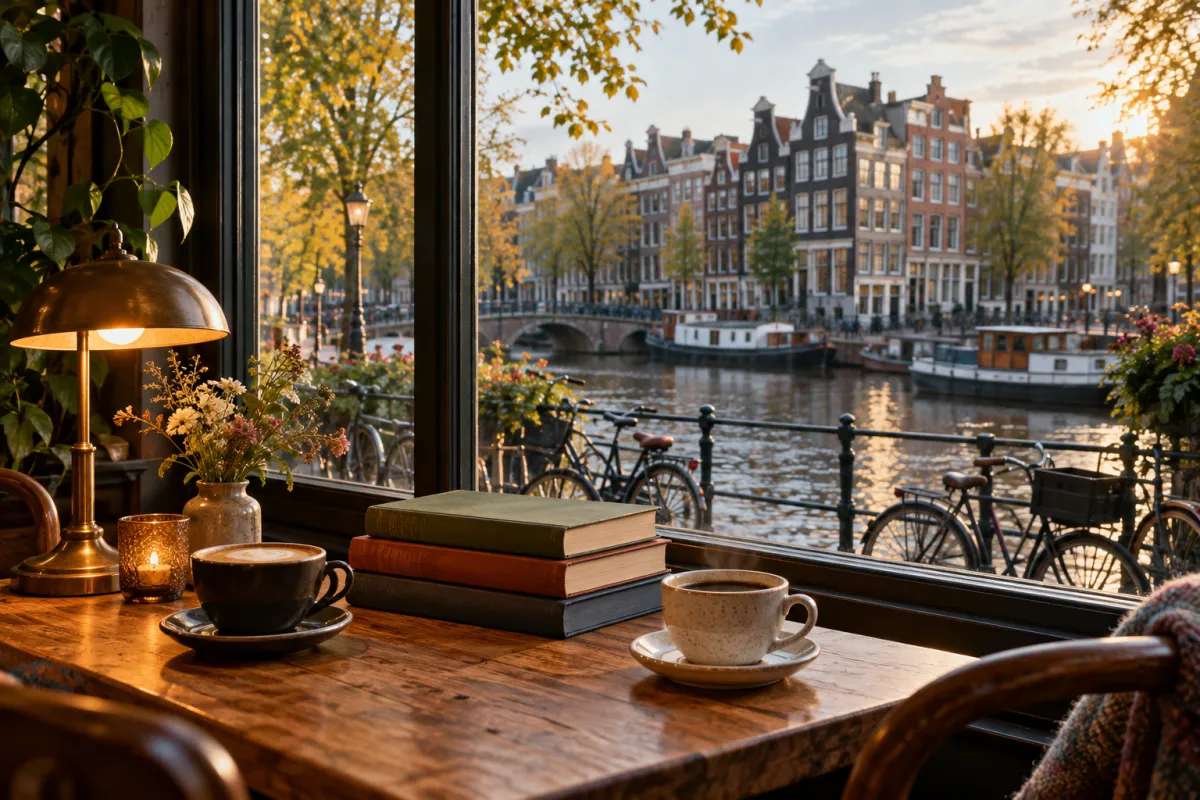
If you type “English book club Amsterdam” into a search bar after your first grey month in the city, you will find that the answer clusters around a handful of addresses in the canal ring: a big independent bookshop on Spui, a small one on Singel, a public library by the IJ and a long-running independent club that meets in cafés. I joined my first English book club in Amsterdam mostly to have somewhere to be on a weekday evening. I stayed because it was the first group where people asked me a follow-up question about something I had said.
Book clubs work unusually well for newcomers. You get a built-in topic, so there is no small-talk panic. You meet the same faces each month, which is what friendship actually runs on. And readers tend to be curious people who like a long conversation over a coffee. The catch is that a book club only does half the work. The other half, turning “the person who loved the ending” into someone you message on a Sunday, is on you, and we cover that too.
This guide lists the places we could verify, what each one is like, how to start your own group if none of them fit, and the Dutch social habits that will help you along.
The main places to find an English book club in Amsterdam are the American Book Center on Spui (events in its Treehouse space), The English Bookshop on Singel (a monthly club), the independent Amsterdam Book Club (meetups via its website and Meetup), and the OBA central library, where self-organised groups gather. Go to the same group three or four times in a row and suggest a coffee with one regular afterwards: that is where friendships start.
Where to find an English book club in Amsterdam
There is no single central listing for English-language reading groups in the city, so the trick is to know the hubs. Each one below either hosts its own gatherings or is a well-used meeting point for independent clubs.
The American Book Center and its Treehouse
The American Book Center, known to everyone as ABC, is a large independent English-language bookshop at Spui 12 (American Book Center). It is the closest thing Amsterdam has to a clubhouse for English readers. Beyond the shelves, ABC regularly hosts community events, author sessions and collaborative literary get-togethers in its dedicated Treehouse space.
Why it matters for you: events at ABC attract a steady crowd of international readers, and people who turn up to an author talk are often the same people who run or join book clubs. If you cannot find a group that fits, go to a couple of ABC events, stay for the chat at the end and ask who else reads in a group. Check the events listings on the ABC site for what is coming up, and do not assume an event is free or ticketed until you have read the listing.
The English Bookshop on Singel
The English Bookshop is a much smaller independent store at Singel 221, and it hosts a dedicated monthly book club alongside literary quizzes and events (Eating Europe). Small shops make for small groups, which is exactly what you want if large rooms make you go quiet. A monthly rhythm is also ideal for newcomers: often enough to recognise faces, not so often that you fall behind on the reading.
The quizzes are worth a look too. A literary quiz is an easy way to sit next to strangers with a shared task, and the teammates you pick up there may become the people you sit with at the book club the following month.
The Amsterdam Book Club
The Amsterdam Book Club is an independent English-language reading and social community that gathers regularly in local cafés for curated monthly reads and relaxed discussions, with meetups listed on amsterdambookclub.com and on Meetup. Because it meets in cafés rather than a fixed shop, the atmosphere tends to be social first and seminar second, which suits people who want conversation as much as literary analysis.
If you are already using Meetup to explore the city, our checked list of English-speaking meetup groups in Amsterdam covers other interest groups you can combine with a reading habit.
OBA, the central public library
The Openbare Bibliotheek Amsterdam, or OBA, has its flagship central library at Oosterdokskade 143, a short walk from Centraal Station (OBA). It holds an extensive English-language collection, and its top-floor café and open seating areas are heavily used by independent, self-organised English book clubs. OBA also hosts language cafés, including Dutch Taalcafés, which are a gentle way to practise Dutch with other learners.
OBA is the place to go if you want to start your own group (more on that below) or if you would rather meet in a calm, daytime-friendly setting than a café.
Waterstones on Kalverstraat
Waterstones runs a central English bookshop on Kalverstraat with a well-curated range of contemporary fiction and non-fiction. We could not verify a regular book club there, so treat it as a place to pick up your monthly read and ask staff for recommendations rather than as a group in itself. Noticeboards and staff picks in English bookshops are also an underrated way of finding out what other reading groups are tackling.
From reading group to real plan: the hardest step is usually the first one-to-one meetup after a group session. MeetNow, a free app that works in your browser, starting in Malta (the Android app is on Google Play; the iPhone app is not in the App Store yet), is built around exactly that kind of plan: someone posts a coffee or a dinner at a public place, says who pays, and picks who joins. There is more about it near the end of this guide.

Quick comparison table
Use this as a starting point and always check the source link for the latest dates and any costs before you go. Where we could not verify a price, we say so rather than guess.
| Name | What | When | Cost | Link |
|---|---|---|---|---|
| The English Bookshop | Small independent shop on Singel with its own book club, literary quizzes and events | Monthly book club | Check with the shop | Eating Europe |
| Amsterdam Book Club | Independent English-language reading and social club meeting in cafés | Regular meetups around a monthly read | See the meetup listing | amsterdambookclub.com |
| American Book Center (Treehouse) | Large independent English bookshop on Spui; community events, author sessions, literary get-togethers | See events listings | Varies by event | abc.nl |
| OBA central library | Public library with English collection; space used by self-organised book clubs; Dutch Taalcafés | Depends on the group | Check with the organiser | oba.nl |
Table last checked June 2026. Schedules and prices change, so confirm on the linked page before you go.
Starting your own reading group
If the existing clubs are full, meet at awkward times or pick books you would never read, starting your own is less work than it sounds. Some of my best Amsterdam friendships came from a group of five that began with a single message.
A simple setup that works
- Pick a niche. “Translated fiction”, “short books only”, “non-fiction about cities” or “books under 300 pages” gives people a reason to choose your group over a general one. A clear theme also makes conversation easier.
- Choose a fixed, public venue. OBA’s café and open seating are already used by self-organised English clubs, which makes it a natural, neutral spot. A quiet café near a tram stop works too.
- Fix the rhythm early. Same week of the month, same time. Dutch calendars fill up weeks ahead, so a predictable slot is what keeps people coming.
- Cap the size. Six to eight people means everyone talks. If it grows, split into two groups rather than letting it become a lecture.
- Rotate the pick. Let each member choose a book in turn. It spreads ownership and keeps the host from burning out.
Where to find your first members
Ask at the bookshops above, mention it at an ABC event, post in workplace or university channels, and invite people you meet at language cafés. Colleagues and classmates are often keen but just need someone else to organise. If you are new and still mapping the city, our broader guide to making friends in Amsterdam covers sports clubs, volunteering and neighbourhood groups that can feed into your reading circle.
What to expect at your first meeting
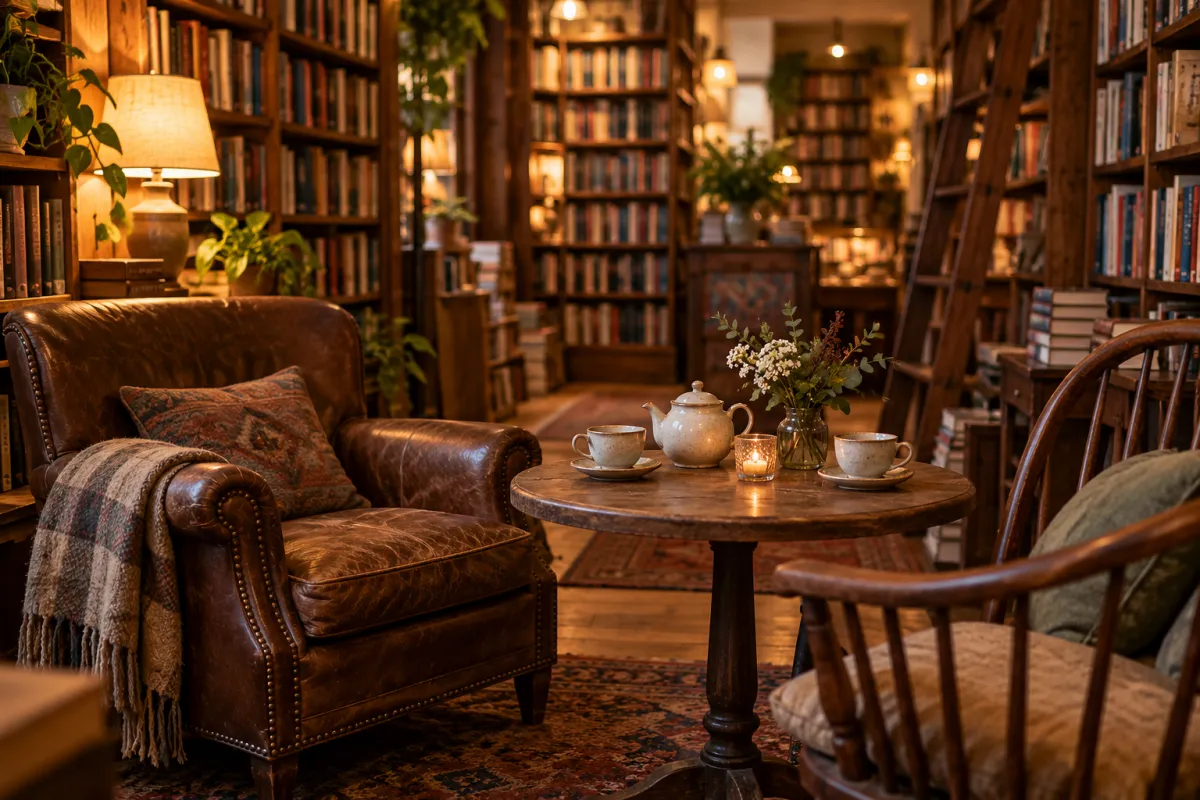
Most English-language clubs in Amsterdam are mixed groups of expats, international students and Dutch people who enjoy reading in English. Expect a range of accents and a fairly direct style of discussion: people will say they hated a book, and that is fine.
- Finish the book if you can, but go anyway if you cannot. Most groups would rather have you there half-read than not at all. Just say so at the start.
- Bring one specific thought. A character you could not stand or a line that stuck with you is enough to get you into the conversation.
- Buy your own drink. In cafés, people usually order and pay for themselves.
- Arrive on time. Punctuality matters here, and late arrivals mid-discussion are noticed.
- Stay for the end. The ten minutes after the formal discussion is where the real social life happens.
One thing nobody tells you: the first session can feel slightly formal. That fades by the third. Commit to three sessions before you judge a group.
Turning book club regulars into friends
A book club gives you repeated contact, which is the raw material of friendship. What it does not give you is time together outside the group. You have to create that, and it is easier than it feels.
Use the book as your bridge
The easiest invitation is one that continues the conversation: “I still want to talk about that ending, fancy a coffee before next month’s session?” It is low-stakes, specific and has an obvious topic. Our guide with scripts for asking someone to hang out as a friend has more lines you can adapt, including ones for people you have only met a couple of times.
Move from group to small group
If one-to-one feels too much, suggest something for two or three regulars: a browse at ABC, a walk to a book market, or an author event together. Small groups are a comfortable middle step between “club acquaintance” and “friend”.
Keep it going
The gap between acquaintance and friend is mostly about follow-up: a message about a book you think they would like, a second invitation after the first one went well. We break this into steps in how to turn acquaintances into friends. Honest timeline from my own two moves: expect a few months of monthly sessions before you have someone you would call a friend. That is normal, not a sign the method is failing.
Local norms: how Amsterdammers socialise
- The agenda rules. Many people plan social time well in advance. A spontaneous “shall we grab a drink?” may get a friendly “let me check my agenda”. Suggest a date a week or two ahead.
- Directness is not rudeness. Strong opinions about a book, or a frank “no, I’m not free”, are normal. Do not take it personally.
- Paying your own way is standard. In casual settings, everyone usually pays for what they ordered. Offering to split is never odd.
- Bikes shape plans. People often cycle to meetups, so central, easy-to-reach venues get better turnout.
- Dutch friends take time, then stick. Dutch social circles can feel settled, but once you are invited in, the friendship tends to be steady. Showing up consistently counts for a lot.
- Trying Dutch is appreciated. Even if the club is in English, a few words of Dutch, or a session at an OBA Taalcafé, signals that you are here to stay.
Meeting new people safely
Book clubs are among the gentler ways to meet people, but the usual common sense applies when you move from the group to a one-to-one meetup with someone you do not know well yet:
- Meet in a public place such as a café, a bookshop or the library.
- Tell a friend or flatmate where you are going and who you are meeting.
- Have your own way home sorted, whether that is your bike, a tram or a taxi.
- Leave if you feel uncomfortable at any point. You do not owe anyone an explanation.
If a group organiser or member makes you uneasy, it is completely fine to stop attending and try a different club instead.
Moving on? Book clubs and groups in other cities
Plenty of readers here are on their second or third European city, and the book club habit travels well. If your next move is to Spain, our guide to Barcelona expat groups and clubs covers reading circles, language exchanges and sports clubs, and it is a good place to start if you are looking specifically for expat women groups in Barcelona, where many readers ask for women-focused meetups. Heading to Italy instead? Our guide to the Milan expat community explains how to make friends in Milan through clubs, aperitivo culture and English-language meetups.
The pattern is the same everywhere: find the English-language bookshops, find the library, find the one independent club that meets in cafés, and go back often enough that people learn your name.
Want to turn this into an actual plan? MeetNow is a free app for meeting people in person: a host posts a plan at a public place, says who pays (host pays, split, pay your own or free) and picks who joins. It is live on the web and works in your browser, starting in Malta. The Android app is on Google Play; the iPhone app is not in the App Store yet. Open MeetNow and see the plans posted in Malta.
FAQ
Is there a free English book club in Amsterdam?
Costs vary by group and change over time, so check each listing before you go. The cheapest option is starting your own group in a public space such as the OBA central library, where your only cost is whatever you order at the café.
Where do English book clubs meet in Amsterdam?
The main hubs are the American Book Center on Spui with its Treehouse event space, The English Bookshop on Singel with its monthly club, local cafés used by the Amsterdam Book Club, and the top-floor café and seating areas at the OBA central library, where self-organised clubs gather.
Do I need to finish the book before going?
It helps, but most groups would rather you came half-read than stayed home. Mention it at the start so people know to warn you about spoilers, and bring one specific thought about the part you did read.
How do I start my own English book club in Amsterdam?
Pick a clear theme, choose a fixed public venue such as OBA or a central café, set a regular monthly slot, keep it to six to eight people and rotate who picks the book. Find members through bookshops, ABC events, work or university channels and language cafés.
Is a book club a good way to make friends as an expat?
Yes, because you see the same people regularly and always have something to talk about. It works best if you commit to several sessions in a row and invite one or two regulars for a coffee outside the group.
Can I practise Dutch through book clubs in Amsterdam?
Most of the groups in this guide run in English, but the OBA library also hosts Dutch language cafés called Taalcafés. Combining an English book club with a Taalcafé gives you both an easy social circle and a way to build your Dutch.