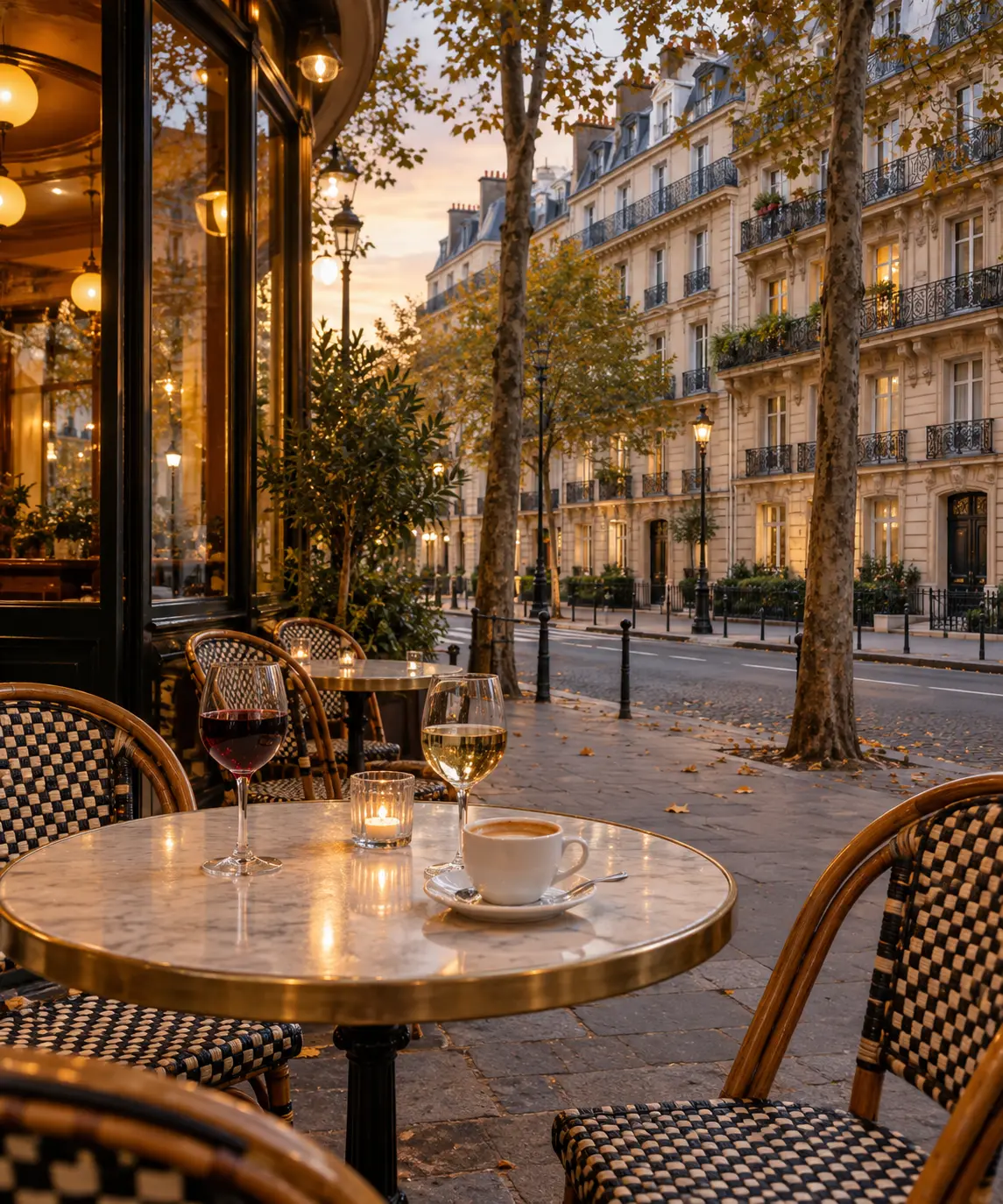
The short answer: Paris has free and low-cost language exchanges most nights of the week. Verified starting points in October 2026: the Polyglot Club Paris evenings on Tuesdays and Saturdays from 20:00 at Le Baratin on Boulevard Saint-Marcel (free entry, buy a drink), the free Mundo Lingo meetup on Wednesdays from 19:00 in the Oberkampf area, and small, structured French–English sessions such as TalkTime (€10) and Furamori (€5, groups of four to six). Pick one, go weekly, and use the French greeting rules below to make a good first impression.
Paris can feel reserved to newcomers, but language exchanges are where that reserve melts. Parisians who want to practise English are actively looking for conversation partners, and the format gives everyone a reason to talk. This guide lists exchanges I verified on organisers’ pages, explains what a first visit looks like, and covers the etiquette, from the bise to tu and vous, that helps you fit in.
Language exchange in Paris: verified options
I checked each of these in October 2026. Schedules change, so confirm on the event page before you go.
| Event | Venue | Day/time | Cost | Link |
|---|---|---|---|---|
| Polyglot Club Paris | Le Baratin, 41 Boulevard Saint-Marcel (near Gare d’Austerlitz and Place d’Italie) | Tuesdays and Saturdays, from 20:00 | Free entry; buy at least one drink | meetup.com |
| Mundo Lingo Paris | Bar in the Oberkampf area (see listing) | Wednesdays, 19:00–23:00 | Free entry | mundolingo.org |
| TalkTime English/French Conversation Exchange | Folie’s Café, 16 rue Geoffroy-Marie (Grands Boulevards) | Evening sessions at 19:00 every few weeks (check the next date) | €10 | meetup.com |
| Furamori French–English Language Café | A Paris café, confirmed the night before | Weekly sessions; day and time confirmed when you book | €5 via the organiser’s website; drinks extra | furamori.com |
The Polyglot Club Paris Meetup group has more than 24,000 members, and its evenings are large and multilingual. Mundo Lingo is part of an international network of free weekly language socials. TalkTime and Furamori are smaller and more structured, which suits people who prefer focused conversation over a busy bar. Many other groups exist; use this table as a reliable first step.

Which format suits you?
Big multilingual evenings
Polyglot Club and Mundo Lingo nights are lively and full of people practising many languages. Great for meeting lots of people quickly and for finding a regular crowd. Arrive early if you want quieter conversations.
Structured small-group sessions
Paid formats such as TalkTime and Furamori balance French and English speakers and keep groups small, so everyone speaks. Better if you are shy, a beginner, or tired of shouting over music.
University tandems
If you are studying or working at a Paris university, ask about its tandem scheme. At Sorbonne Université, the student association Parismus runs a tandem programme with the university’s support, and PSL University runs a tandem programme for its students, staff and researchers with autumn and spring registration windows. For setting up a one-to-one swap yourself, see our guide to finding a tandem partner in person.
Your first visit: what happens
- Register if required. Paid sessions need booking; free evenings usually let you just turn up, but RSVPs help.
- Greet people properly. A “bonjour” (or “bonsoir” in the evening) when you arrive matters in France more than almost anywhere.
- Buy a drink at bar-based exchanges. Soft drinks and coffee are fine.
- Find a mixed table and say which language you want to practise.
- Switch languages regularly so French and English speakers both benefit.
- Circulate. Move tables after a while to meet more people.
- Before leaving, ask: “Tu reviens la semaine prochaine ?” (Are you coming back next week?)
Useful French for your first exchange
- Bonsoir, c’est ma première fois ici. Good evening, it’s my first time here.
- J’apprends le français depuis six mois. I’ve been learning French for six months.
- Tu peux parler un peu plus lentement ? Can you speak a little more slowly?
- Comment on dit … en français ? How do you say … in French?
- On prend un café la semaine prochaine ? Shall we get a coffee next week?
French social etiquette worth knowing

Common first-timer worries
- “My French is too basic.” Everyone at an exchange is learning something. Say so up front (“Je suis débutant(e)”) and people will adapt.
- “Parisians will switch to English.” They often do, to be helpful. Smile and ask to stay in French: “On peut continuer en français ? J’ai besoin de pratiquer.”
- “I won’t know anyone.” Organisers expect newcomers every week. Arrive early and introduce yourself to the host.
- “Big bars are overwhelming.” Start with a small structured session, or arrive at the beginning of a free evening before it gets busy.
Who you will meet
Paris exchanges mix French students and young professionals practising English, international students and workers learning French, and travellers passing through. Large free evenings attract a very international crowd; paid small-group sessions tend to balance French and English speakers more evenly. Regulars who come every week are the people to get to know: they know where everyone goes afterwards.
Conversation topics that work
- Your quartier: favourite bakery, market or café, and the best view in your arrondissement.
- Food: the eternal debates (croissant or pain au chocolat, which boulangerie is best).
- Culture: films, exhibitions, series and books you are into.
- Comparisons: how things work in your country versus France (administration is always a crowd-pleaser).
- Plans: weekend ideas, day trips, upcoming festivals.
Paris’s social calendar
- La rentrée (September): the return after summer, when groups restart and newcomers arrive. One of the best times to start.
- Nuit Blanche (early June): an all-night arts event across the city, ideal for a group outing.
- Fête de la Musique (21 June): free concerts on streets and squares everywhere.
- August: many Parisians leave the city, so some groups pause or shrink.
Arrondissement tips for exchanges and meeting people
- 11th (Oberkampf, Bastille): bars, young crowds and some of the city’s liveliest exchange nights.
- 10th (Canal Saint-Martin): canal-side cafés and picnics; easy for a coffee after an exchange.
- 5th and 13th (Latin Quarter, Saint-Marcel): student areas near universities, with plenty of affordable bars.
- 9th and 2nd (Grands Boulevards): central and well connected, with many after-work venues.
- 18th (Montmartre, Pigalle): characterful and social, with a strong neighbourhood feel up the hill.
Practical tips for Paris exchanges
- Check the Métro times before late evenings, and plan your route home.
- Book paid sessions early; small groups fill quickly, and RSVPs on Meetup may not guarantee a place.
- Bring a notebook or use your phone to note new words and names straight after the session.
- Follow up within a day with anyone you want to see again.
- Mix formats: one big evening for meeting people, one small session or tandem for depth.
Just visiting?
If you are in Paris for a short stay, the big free evenings are the easiest way to meet locals and other travellers in one go. Pair them with a walking tour or a museum visit with someone you meet, and you will leave with new contacts as well as better French.
From exchange partner to friend
Exchanges are the door; friendship happens when you meet outside them. A few ways to make the jump:
- Suggest a coffee before the next session. Low stakes, built-in reason to meet.
- Propose a one-to-one tandem with someone you click with.
- Invite people to a free Paris plan: a museum on a free-entry day, a walk along the Seine, a picnic by the canal.
- Start a small group chat with your regular table.
Many exchanges happen in bars, but if you prefer not to drink, order a coffee or soft drink, or choose café-based sessions; our guide on how to make friends without drinking has more ideas.
Learning French alongside exchanges
Exchanges are great for confidence and listening, but most people progress fastest with a course as well. Paris has everything from intensive language schools to evening classes run by the city and associations. A weekly class also gives you a second social group of fellow newcomers, which is often where the first friendships form. When choosing, look at class size, how often the group meets and whether the school runs social activities such as conversation evenings, cinema clubs or outings; those extras are where classmates turn into friends. Evening and weekend courses suit people with day jobs, while intensive morning courses are popular with students and recent arrivals.
How Paris compares
Compared with Spanish cities, where intercambios are loud, late and spontaneous, Paris has a wider mix of free bar evenings and paid, structured sessions. If you are comparing cities, see our guides to language exchanges in Madrid and in Barcelona. For the overall method of building a social life after a move, see how to make friends abroad.

A first month of Paris exchanges
- Week 1: try a big free evening (Polyglot Club or Mundo Lingo) and one small structured session.
- Week 2: return to the one you preferred; learn three names.
- Week 3: suggest a coffee or a walk to one person.
- Week 4: set up a weekly tandem, or invite two or three regulars to a picnic or museum visit.
Staying safe
Exchanges are public and friendly. When meeting someone one-to-one, choose a busy café, tell a friend where you are going, arrange your own way home and leave if anything feels off. Official UK travel advice notes that pickpockets operate on the Métro, RER lines and at mainline stations, so keep your phone and wallet secure on the way.
Want to turn this into an actual plan? MeetNow is a free app for meeting people in person: a host posts a plan at a public place, says who pays (host pays, split, pay your own or free) and picks who joins. It is live on the web now, starting in Malta, with the phone apps on the way: open MeetNow and see the plans near you. (MeetNow is our own app; see our disclosure.)
Frequently asked questions
Are language exchanges in Paris free?
Many are. Polyglot Club Paris and Mundo Lingo evenings have free entry; you are asked to buy a drink. Structured small-group sessions such as TalkTime (€10) and Furamori (€5) charge a small fee.
Do I need to speak French to go to a language exchange in Paris?
No. Beginners are welcome, and many French speakers come to practise English. Small structured sessions can be easier for beginners than large bar evenings.
Should I greet people with la bise at a language exchange?
Not necessarily at a first meeting. A “bonsoir” with a handshake or a smile is fine; follow the other person’s lead. Among friends, cheek kisses are common.
Tu or vous at a language exchange?
Tu is normal at exchanges and among younger people. Use vous in formal settings or with older people until they suggest switching.
How do I make friends at a Paris language exchange?
Go to the same event every week, sit with regulars, and suggest coffee, a walk or a museum visit outside the exchange. A one-to-one tandem is the fastest route from exchange partner to friend.
When is the best time to start going to language exchanges in Paris?
Any time, but September (la rentrée) and January are especially good, as groups fill up with newcomers. August can be quieter because many Parisians are on holiday.
Schedules and prices last checked October 2026.