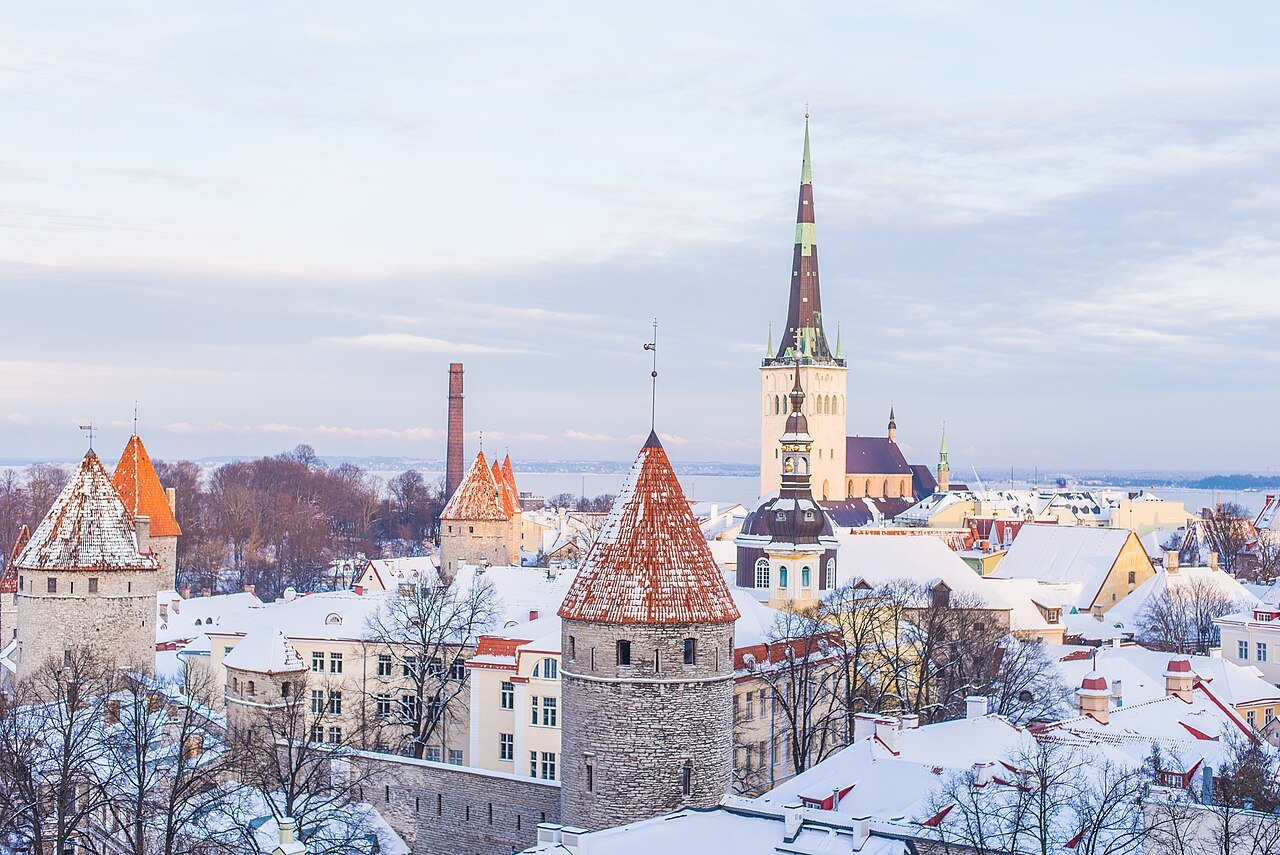
The short answer: the main digital nomad visa countries in Europe in 2026 include Spain, Portugal, Croatia, Greece, Estonia, Malta and Italy. Each lets non-EU remote workers live there while working for employers or clients abroad, as long as you prove a steady income, which ranges from about €2,400 a month (Spain) to €4,500 a month (Estonia) in this list. Lengths of stay run from one year to 18 months, often with a renewal or residence-permit route. Every figure below comes from an official government page and was last checked in November 2026.
I’ve moved countries twice, and the visa was the easy part to research and the hard part to trust: blog posts quoting old thresholds, forums arguing about gross versus net. So this guide sticks to what governments themselves say, then covers the bit official pages never mention: how to actually build a life and a social circle once you’ve landed.
Digital nomad visa countries in Europe compared (2026)
| Country | Scheme | Income you need to show | Length of stay | Official source |
|---|---|---|---|---|
| Spain | Telework (digital nomad) visa | 200% of the monthly minimum wage: about €2,442/month in 2026 | Visa valid 1 year; residence permit route in Spain | Spanish consulate, Houston |
| Portugal | Residence visa for remote work | Average of at least 4× the Portuguese monthly minimum wage over the last 3 months | Residence visa (a temporary-stay version also exists) | vistos.mne.gov.pt |
| Croatia | Temporary stay of digital nomads | €3,622.50/month in 2026, or €43,470 in savings for 12 months | Up to 18 months | Ministry of the Interior |
| Greece | Digital nomad national visa | €3,500/month | National visa, with a residence permit option | Greek Embassy, London |
| Estonia | Digital nomad visa (C or D) | €4,500/month gross | Up to 1 year | e-Residency (Estonian government) |
| Malta | Nomad Residence Permit | €42,000/year gross | 1 year, renewable at Residency Malta’s discretion | Residency Malta Agency |
| Italy | Digital nomad / remote worker visa | For highly qualified workers; minimum income set by law, confirm the euro figure with your consulate | Check with the consulate | vistoperitalia.esteri.it |
Last checked: November 2026. Thresholds change, often every January when minimum wages or average salaries are updated. Always confirm on the official page for your nationality and the consulate that serves you.
Country by country
Spain
Spain’s telework visa is for people working remotely for companies outside Spain. According to the Spanish consulate in Houston, you need to show 200% of the monthly minimum wage (SMI), which it gives as about €2,442 a month for 2026, plus 75% of the SMI for a first family member and 25% for each additional one. You need a university degree or at least three years of experience in your field. Employees must work for companies outside Spain; self-employed applicants can take Spanish clients for up to 20% of their work. The visa is valid for a year, and you can also apply for a telework residence permit from inside Spain.
Portugal
Portugal’s official visa portal, vistos.mne.gov.pt, lists a residence visa for remote professional activity. You must prove average monthly income over the last three months of at least four times the Portuguese monthly minimum wage, plus a work contract or employer declaration (employees) or service contracts (freelancers), and proof of tax residence. There is also a temporary-stay version for shorter periods. Portugal is a favourite for good reason; our guides to being a digital nomad in Lisbon and coworking spaces in Lisbon cover the social side.
Croatia
Croatia’s Ministry of the Interior grants temporary stay to digital nomads for up to 18 months. For 2026 you need at least €3,622.50 a month (2.5 times the previous year’s average net salary), shown with six months of bank statements or payslips, or a lump sum of €43,470 for a 12-month stay. The amount rises by 10% of the average net salary for each family member.

Greece
The Greek Embassy in London’s official page on its digital nomad visa (on mfa.gr) says applicants must show a steady income of €3,500 a month during their stay, with more required for family members. You apply through the Greek consulate that covers where you live, and holders can move on to a digital nomad residence permit.
Estonia
Estonia was one of the first countries with a dedicated scheme. The government’s e-Residency programme states a monthly income threshold of €4,500 gross. You can apply for a short-stay (C) or long-stay (D) visa, and the scheme allows stays of up to a year.
Malta
Malta’s Nomad Residence Permit is run by the Residency Malta Agency, whose eligibility page (nomad.residencymalta.gov.mt) sets the bar clearly. Applicants need a minimum gross yearly income of €42,000. The permit is issued for one year and can be renewed at the agency’s discretion.
Italy
Italy now has a visa for highly qualified remote workers and digital nomads. Requirements, including the minimum income, are set nationally but the paperwork goes through your local Italian consulate, and published euro figures vary between consulates. Start with the foreign ministry’s Visto per l’Italia portal and confirm the current figure with the consulate that serves you.
Other European countries, including Hungary, Cyprus, Iceland and Romania, also run remote-worker schemes. Check their official immigration pages directly, as details change often.
What applications usually ask for
Each country has its own list, but most digital nomad visa countries ask for some version of:
- A valid passport, usually with plenty of validity left.
- Proof of remote work: an employment contract, employer letter or client contracts.
- Proof of income: bank statements or payslips, often for the last three to six months.
- Health insurance valid in the country.
- A criminal record certificate from your home country, sometimes apostilled and translated.
- Proof of accommodation, at least for the first weeks.
Start gathering documents early. Certificates and translations take longer than the application itself.
Tax and the 90/180 rule
Two things trip people up. First, a digital nomad visa doesn’t decide where you pay tax. In many countries, spending more than about half the year there can make you tax resident, so talk to a qualified tax adviser before you go. Second, without a visa, non-EU visitors in the Schengen area are generally limited to 90 days in any 180-day period. A nomad visa is what lets you stay longer legally.
If you’re an EU or EEA citizen, you don’t need any of these visas: free movement covers you, though you may still need to register locally.

How to choose among digital nomad visa countries (beyond the visa)
The cheapest threshold isn’t always the best fit. Ask yourself:
- Is there a community? Cities with lots of coworking spaces, language exchanges and nomad meet-ups make the first months much less lonely. Our guide to choosing a digital nomad hub compares six European options.
- What’s the time zone? If your team is in New York, Lisbon’s evenings will suit you better than Tallinn’s.
- Can you afford a year, not a month? Rent in popular hubs has risen sharply; budget for winter as well as summer.
- Does the season suit you? A Croatian seaside town is wonderful in May and very quiet in January.
Spain’s coastal cities are a popular compromise; our guide to digital nomad life in Valencia covers coworking, meet-ups and how people make friends there.
Your first-month social plan
The visa gets you in; people make you stay. Here’s a simple weekly rhythm that works in almost any city:
| Day | Plan |
|---|---|
| Monday | Work from a coworking space, not your flat. Say hello at the coffee machine. |
| Wednesday | Go to a language exchange or a nomad meet-up. |
| Friday | Invite one person you’ve met for lunch or a drink. |
| Saturday | Join a group activity: a hike, a running club, a walking tour. |
| Sunday | Rest, call home, plan next week. |
Loneliness is the part of nomad life nobody advertises. If it hits, our honest guide to digital nomad loneliness has a week-by-week plan.
Safety box
- Use official government websites for applications; be wary of agencies promising “guaranteed” visas.
- Keep copies of your passport, visa and insurance in the cloud and on paper.
- When meeting new people, choose public places, tell a friend where you’re going, sort your own way home and leave if anything feels off.
- Save the local emergency number (112 works across the EU).
Want to turn this into an actual plan? MeetNow is a free app for meeting people in person: a host posts a plan at a public place, says who pays (host pays, split, pay your own or free) and picks who joins. It is live on the web now, starting in Malta: open MeetNow in your browser and see the plans posted in Malta. (MeetNow is our own app.)
Frequently asked questions (FAQ)
Which European country has the lowest income requirement for a digital nomad visa?
Of the countries in this guide, Spain’s is among the lowest: 200% of the Spanish monthly minimum wage, which Spain’s consulate in Houston puts at about €2,442 a month for 2026. Thresholds change, so check the official page before you apply.
Can I work for local companies on a digital nomad visa?
Usually not, or only a little. Most schemes require your employer or clients to be outside the country. Spain, for example, lets self-employed applicants earn no more than 20% of their work from Spanish companies.
Do I pay tax in the country that gives me a digital nomad visa?
It depends on the country and how long you stay. In many countries, spending more than about half the year there can make you tax resident. A visa does not settle your tax position, so get advice from a qualified tax adviser.
How long can I stay on a digital nomad visa in Europe?
It varies: Croatia allows up to 18 months, Estonia up to a year, and Malta issues a one-year permit that can be renewed at Residency Malta’s discretion. Spain’s visa is valid for a year, with a residence permit route from inside the country.
Do EU citizens need a digital nomad visa?
No. EU and EEA citizens can generally live and work in other EU countries under free movement rules, though they may still need to register their residence. Digital nomad visas are aimed at non-EU nationals.