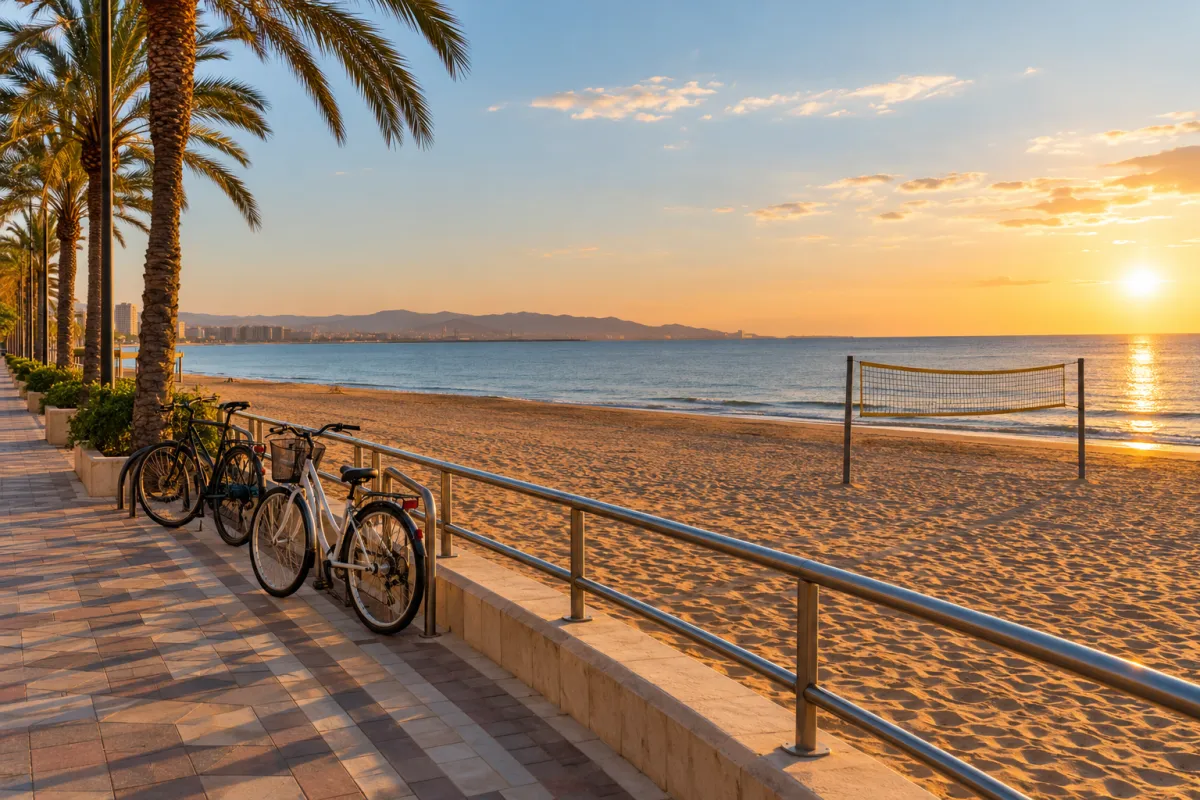
The short answer: the Valencia expat community is large, friendly and easy to plug into, and the best way in is through things that repeat every week. Verified in October 2026: Valencia Language Exchange runs language exchanges most evenings plus a Sunday beach-volleyball meet-up at Playa de las Arenas; Valencia Runner Club has run Saturday-morning “Run & Coffee” social runs from the Turia gardens; InterNations has an active Valencia community; and Hacesfalta.org lists volunteering roles you can filter by city. Pick two, go weekly, and use the city’s long, late, outdoor social life to turn faces into friends.
I have friends who moved to Valencia for a few months as remote workers and never left. When I ask why, the answer is always some version of: “It was easy to meet people, and then it was hard to leave them.” Valencia is big enough to have a real international scene and small enough that you keep bumping into the same faces at the beach, the market and the same handful of bars. This guide is for residents and long-stayers rather than nomads passing through. If you work remotely and want coworking spaces, our guide for digital nomads in Valencia covers that. Here we focus on groups, clubs and habits that build a life.
The Valencia expat community: what it is really like
Valencia’s international population is a mix of several groups who often overlap: remote workers and digital nomads, Erasmus and international students, retirees and families from across Europe, and people who moved for jobs or partners. That mix is good news for newcomers, because there is always someone else who has just arrived and is also looking for people.
It also has two traps. The first is the transient crowd: many people stay three to six months, so friendships can feel temporary. The second is the bubble: it is entirely possible to live in Valencia for a year speaking only English, seeing only other internationals. Neither is a disaster, but if you want a social life that lasts, aim for a mix of international groups (easy, fast) and local ones (slower, deeper).
Timeline-wise, Valencia is one of the faster cities on this site. In my experience and that of friends, it is realistic to have a few people you see regularly within a month, if you go to the same weekly events. Turning those into close friends still takes a few months of repeated contact, just as anywhere.
Valencia expat community: verified groups (October 2026)
I checked each entry on its official site or group page in October 2026. Schedules and fees change, especially between summer and winter, so confirm before you go.
| Name | What it is | When | Cost | Link |
|---|---|---|---|---|
| Valencia Language Exchange | Language exchanges in bars, plus socials, day trips and a Sunday beach-volleyball meet-up | Exchanges most evenings (e.g. Monday and Thursday at Bigben, Tuesday at Palau Alameda, Sunday at Madre El Cabanyal); beach volley Sundays 16:30 at Playa de las Arenas | €1 per regular exchange without membership; memberships from €3.99 for three months (new system since 7 September 2026) | valencialanguageexchange.com |
| Valencia Runner Club | “Run & Coffee” social run in the Turia gardens | Occasional Saturdays at 10:00 (7 km or 10 km) from the Jardí del Túria; recent runs were roughly monthly and none was scheduled when I checked in October 2026 | Not stated; check the Meetup events page | meetup.com |
| InterNations Valencia | Expat network with official events and member-run activity groups | Regular events; see the community page | Free basic membership; paid tier for more events | internations.org |
| Hacesfalta.org | Volunteering and non-profit job platform run by Fundación Hazloposible; filter by location | Roles from one-off to weekly | Free to register as a volunteer | hacesfalta.org |
| Valencia Marathon | The city’s big running event; a common goal for run clubs and training groups | Sunday 6 December 2026 | Race entry fee (see official site) | valenciaciudaddelrunning.com |
You will also find many Facebook and WhatsApp groups for Valencia expats. Some are excellent for practical questions and events; others are noisy. Use them to discover recurring events, then show up in person.

Ways to meet people in Valencia, by method
1. Language exchanges (intercambios)
Intercambios are the heart of the Valencia expat community, and they are where internationals and locals actually mix. The format is simple: a bar, tables by language, and an evening of switching between Spanish and English (or other languages). Valencia Language Exchange is the most active organiser I could verify, with events on most evenings and a mix of bar nights, music and socials. Universities also run their own exchange activities for students. Our guide to language exchanges in Valencia covers the intercambios and what a first visit looks like.
The friendship tip: choose one night and go every week. Big exchanges can feel like a sea of new faces, but the regulars notice who comes back. A one-to-one swap with someone you click with is one of the best ways into Spanish-speaking circles; see our guide to finding a tandem partner in person.
2. Running and the Turia gardens
The Jardí del Túria, the nine-kilometre park in the old riverbed, is Valencia’s social spine. Runners, cyclists, footballers and picnickers fill it every day. Valencia Runner Club has used it for Saturday-morning “Run & Coffee” social runs of 7 km or 10 km; its runs have been roughly monthly rather than weekly, and none was listed when I checked in October 2026, so look at its Meetup page before you go, or ask around at a language exchange which groups are training for the marathon this season. With the Valencia Marathon on 6 December 2026, autumn is a good time to join a training group: people are motivated, and long runs give you plenty of time to talk.
3. Beach sports
Playa de las Arenas and Malvarrosa are lined with volleyball nets, and beach volleyball is one of the easiest ways to join strangers for an afternoon. Valencia Language Exchange runs a Sunday meet-up at 16:30 at Playa de las Arenas. Padel is also hugely popular in Spain; clubs and courts across the city run social games where you can be matched with players of your level.
4. Clubs and classes
Dance (salsa and bachata nights are common), climbing, cooking, ceramics and Spanish courses all bring people together weekly. Look for classes that run for a term rather than drop-ins: seeing the same faces for ten weeks is what builds friendships. Some language-exchange organisers combine exchanges with dance classes, which is a fun way to meet people with less pressure to talk.
5. Volunteering
Volunteering is how you meet Valencians who are not looking for English practice. Hacesfalta.org, run by Fundación Hazloposible, lists volunteering roles across Spain that you can filter by location. Your Spanish does not need to be perfect for many roles, but intermediate Spanish opens far more doors. Food banks, environmental clean-ups and refugee support organisations often welcome international volunteers.
6. Expat networks and meetups
InterNations has a Valencia community with official events and member-run groups, and Meetup lists a range of social and business networking groups. These are useful in your first weeks, when any social contact helps. Treat them as a way to find a recurring group, not as the group itself. For a comparison of the main platforms, see our guide to the best apps to make friends abroad.
7. Fallas and the festival calendar
Valencia’s year revolves around Fallas, the March festival whose main days run from 15 to 19 March, ending with the burning of the monuments. Each neighbourhood has its own falla association (casal faller), which is active year-round with dinners, events and preparation. Joining one is a deep commitment and a very local experience; even if you do not, Fallas season is a fantastic time to go out with new friends. Check dates and programmes on the official Fallas website.

What a good social week in Valencia looks like
To make this concrete, here is the kind of week that works well for a newcomer with a normal job. It uses only the verified groups above plus the city’s free public spaces.
| Day | Plan | Why it helps |
|---|---|---|
| Monday | Language exchange after work | Starts the week with new faces and a reason to talk |
| Wednesday | A class that runs for a term (Spanish, dance, climbing, ceramics) | Same people every week for ten weeks |
| Thursday | Quiz or exchange night, or a drink with someone from Monday | Turns a first meeting into a second one |
| Saturday | Social run in the Turia gardens, then coffee | Active, sober, and the coffee is where friendships start |
| Sunday | Beach volleyball at Las Arenas, or a paella with new friends | Long, relaxed time together in the sun |
You do not need all of it. Two of these, every week, are enough to change how the city feels within a month. The rest of the time, explore on your own: the Mercado Central on a weekday morning, a bike ride along the Turia to the sea, an evening walk in the old town. Being out and about makes you more likely to bump into people you have met, which in a city of Valencia’s size happens surprisingly often.
Neighbourhoods for newcomers who want a social life
- Russafa (Ruzafa): the international heart of the city, packed with cafés, brunch spots and bars. Very easy to meet people; can be noisy at night.
- El Carmen (Ciutat Vella): the old town, with narrow streets, terraces and nightlife. Atmospheric and central.
- Benimaclet: a former village with a strong local identity near the universities, popular with students and people who want a neighbourhood feel.
- El Cabanyal: the old fishermen’s quarter by the beach, with colourful tiled houses and an increasingly lively bar and food scene. Good if you want the sea on your doorstep.
- Campanar and Benicalap: quieter, more residential and generally more affordable, with easy access to the Turia gardens.
Local norms: how Valencians socialise
How Valencia compares with Madrid and Barcelona
Valencia is smaller and more relaxed than Madrid or Barcelona, with the beach and the Turia gardens giving the city a built-in outdoor social life. Madrid has a bigger, more professional international scene and a famously open nightlife; Barcelona is larger and more touristy, with a big English-speaking community. If you are choosing between them, our guides to making friends in Madrid and meeting people in Barcelona show how each city works.

Your first 12 weeks in Valencia
- Weeks 1–2: go to two different language exchange nights and one social run or beach-volleyball session. Join one or two Facebook or WhatsApp groups to spot events, and introduce yourself to the organisers.
- Weeks 3–4: choose your two weekly anchors: one international (an exchange night or InterNations activity group) and one active or local (the Saturday run, beach volleyball, a dance class, a volunteer role). Go every week.
- Weeks 5–8: stay for the “after”: the coffee after the run, the drink after the exchange. Suggest a coffee to one person you have met twice.
- Weeks 9–12: host something small: Sunday paella, a picnic in the Turia, a sunset at the beach. Three to five people, a clear time and place.
The same plan works in any city; our Paris friendship guide shows how it adapts to a city where social life is more reserved.
Copy-paste messages for Valencia
- “Great to meet you at the exchange. A few of us are going to the beach on Saturday afternoon, want to come?”
- “I’m going to try the Saturday run in the Turia. Fancy coming along? Coffee after.”
- In Spanish: “¿Te apetece tomar un café antes del próximo intercambio?” (Fancy a coffee before the next exchange?)
- In Spanish: “Vamos a hacer una paella el domingo, ¿te vienes?” (We’re making a paella on Sunday, want to come?)
Staying safe when meeting new people
Valencia is a relaxed city, but the usual rules apply: meet new people in public places, tell a friend where you are going, arrange your own way home and leave if anything feels off. Keep an eye on your phone and bag on busy beaches and in nightlife areas.
Want to turn this into an actual plan? MeetNow is a free app for meeting people in person: a host posts a plan at a public place, says who pays (host pays, split, pay your own or free) and picks who joins. It is live on the web now, starting in Malta, with the phone apps on the way: open MeetNow and see the plans near you. (MeetNow is our own app.)
FAQ: Valencia expat community
Is it easy to make friends in Valencia as an expat?
Easier than in many European cities. Valencia has a large international community, a lively outdoor social life and plenty of weekly events. Making close friends still takes a few months of seeing the same people regularly.
Where do expats meet in Valencia?
At language exchanges, social runs in the Turia gardens, beach volleyball at Las Arenas and Malvarrosa, InterNations events, Meetup groups, dance and Spanish classes, and through volunteering.
Do I need to speak Spanish or Valencian?
Not to start: many international groups use English. Spanish makes everyday life and local friendships much easier, and a few words of Valencian are appreciated. Language exchanges are a good way to learn and meet people at the same time.
Which neighbourhood in Valencia is best for meeting people?
Russafa is the most international and social, El Carmen is central and lively, El Cabanyal suits beach lovers, and Benimaclet has a strong local, student-friendly feel.
Are there running clubs in Valencia for newcomers?
Yes. Valencia Runner Club has organised occasional Saturday-morning social runs of 7 km or 10 km in the Turia gardens, followed by coffee; check its Meetup page for the next date. Other groups train in the park throughout the week, especially in the run-up to the Valencia Marathon in December.
When is Fallas, and is it a good time to meet people?
Fallas takes place every March, with the main days from 15 to 19 March. It is a great time to go out with new friends, and neighbourhood falla associations are active all year if you want to get involved.
Is InterNations worth joining in Valencia?
It can be useful in your first weeks for meeting other internationals at regular events. Combine it with at least one local or activity-based group if you want friendships beyond the expat bubble.
Groups, schedules and dates last checked October 2026.