
Every Tuesday evening, a pub on Viale di Trastevere turns into a room of conversation tables where locals and newcomers swap between Italian and English over an aperitivo. If you have just moved and you are looking for an Italian conversation group Rome locals actually turn up to, this weekly language exchange is the most reliable starting point I can point you to, and it is the one this guide is built around.
I have moved countries twice, and both times the language table was where my first proper friendships started. Not because the conversation was brilliant (my early attempts were mostly verbs in the wrong tense), but because the format hands you a reason to talk to strangers, a built-in topic and a reason to come back the following week. Rome works the same way. The city can feel closed at first, with many friendship circles formed years ago at school or university, and a structured exchange is one of the few places where everyone in the room has turned up specifically to meet someone new.
Below you will find the verified details for the recurring Tuesday exchange (when it runs, what it costs, where it happens and how to RSVP), a walkthrough of your first visit, practical tandem etiquette, ideas for hobby groups beyond the language table, and an honest note on how long it takes for these evenings to turn into friends.
The most consistent Italian conversation group in Rome is the Tuesday Language Exchange & International Social run by Expats Living in Rome, held every Tuesday from 19:30 to 23:00 (Expats Living in Rome). Entry includes a drink and aperitivo food, space is limited, and you should RSVP on the event page before you go.
How an Italian conversation group Rome evening works
A language exchange is not a lesson. Nobody stands at the front, nobody marks your grammar, and nobody expects you to be good yet. The organiser describes its events as built around conversation tables, language icebreakers and social aperitifs where you improve your Italian and English while meeting new people (Expats Living in Rome language exchange events). In practice that means you arrive, get a drink, pick up something from the aperitivo spread and join a table where people are speaking the language you want to practise, or the one you can offer.
The magic of the format is the swap. An Italian who wants to sharpen their English sits with someone who wants to practise Italian, and the conversation slides between the two. You help them with a phrasal verb, they rescue you when you mix up essere and avere, and somewhere along the way you find out you both hate the same bus route. That shared, slightly vulnerable effort is exactly what makes it a good place to make friends rather than just practise vocabulary.
Who you will meet varies from week to week, but the mix generally includes Romans who want to keep their English alive, international students, remote workers, people who moved for a partner or a job, and long-term residents who simply enjoy the social side. Levels range from complete beginners to near-fluent speakers, and that range is a feature: beginners get patient listeners, and advanced speakers get to relax and talk about something real.
Why an exchange beats a class for making friends
A language class gives you a fixed group of classmates, which is lovely, but they are mostly other foreigners at the same level as you. An exchange puts you in a room with locals and with people at every stage of settling in. You hear which neighbourhoods people love, which bureaucratic office has the shortest queue, and where they go on Sunday. If you are serious about Italian, do both: a class for structure and an Italian conversation group in Rome for practice, confidence and people.
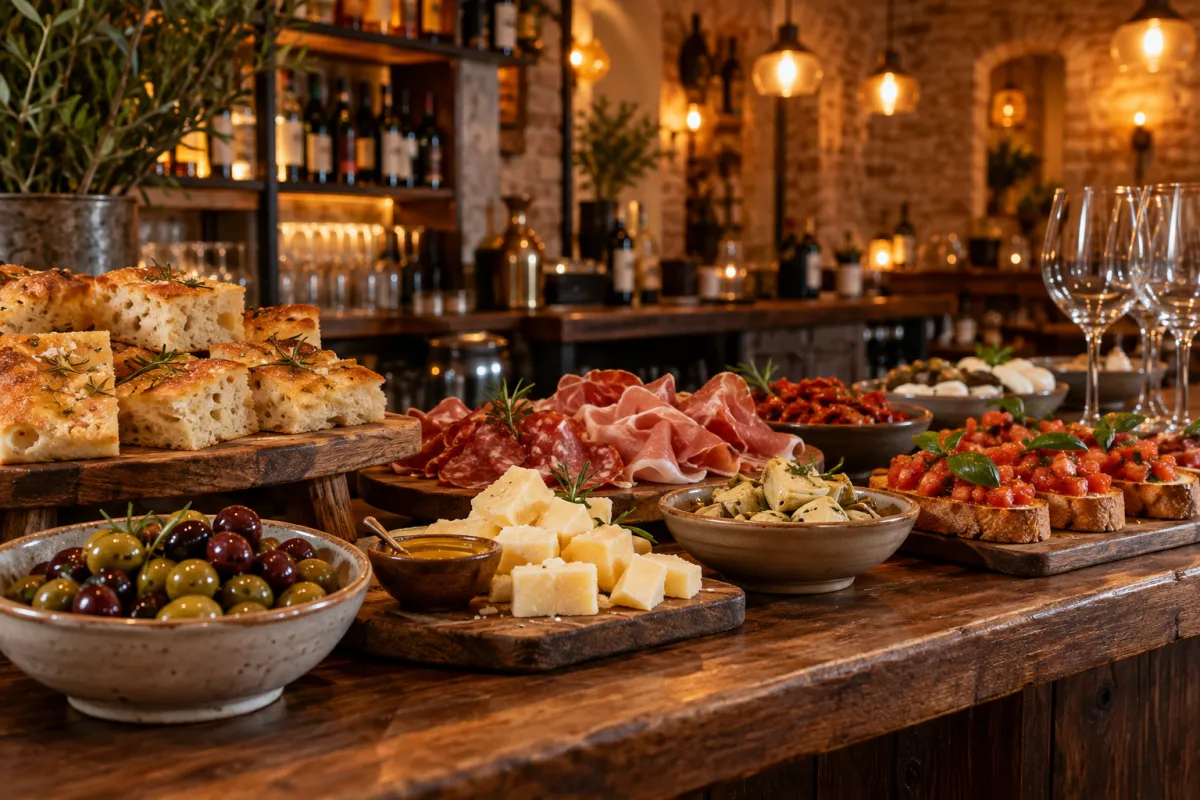
Italian conversation group Rome: verified 2026 directory
I only list events here that I could verify on the organiser’s own pages. That keeps the list short, but it means you will not travel across the city to find that a group stopped meeting last year. Prices and venues change, so always open the event page before you go.
| Event | When | Where | Cost | How to join | Source |
|---|---|---|---|---|---|
| Tuesday Language Exchange & International Social | Every Tuesday, 19:30 to 23:00 | Treefolk’s Public House, Viale di Trastevere 192, or another central Rome venue | €18 per person, including one drink and food/buffet | RSVP online in advance; space is limited | Expats Living in Rome |
| Language Exchange & International Social at Hummustown | Every first Tuesday of the month | Hummustown | Check the event page | RSVP through the event page | Expats Living in Rome |
| All language exchange events from the same organiser | Varies | Varies | Check each listing | Browse the category page and RSVP per event | Expats Living in Rome |
The standard Tuesday event costs €18 per person and covers a drink plus food from the buffet (Expats Living in Rome), which in Rome effectively means your aperitivo is dinner. If you are budgeting, think of it as a night out that includes the meal rather than as a fee for language practice.
Checking the venue each week
The Tuesday exchange does not always happen in the same place. The event page names Treefolk’s Public House on Viale di Trastevere 192 or other central Rome venues, and asks you to check the page weekly for updates (Expats Living in Rome). Make that check part of your routine on the day you RSVP, and again before you leave home. On the first Tuesday of the month there is a dedicated edition at Hummustown, so that is the week you are most likely to find yourself somewhere different.
Finding other conversation groups
Rome has more than one way to practise Italian socially, but groups come and go, and I would rather send you to the right search than to a stale listing. A few honest approaches:
- Ask at the Tuesday table. Regulars almost always know about smaller groups, book clubs or one-off conversation evenings that never make it online.
- Ask your language school or university. Many run social activities for students, and international offices often know which student associations organise conversation evenings.
- Search event platforms and local expat groups. Look for recent posts and recent photos from actual meetings before you commit an evening to a group.
- Check the date of the last event. If a group has not met for months, treat it as closed until someone confirms otherwise.
Your first visit, step by step
Walking into a room full of strangers on your own is the hardest part, and it is also the only part you cannot skip. Here is what a first visit to a language exchange Rome-style tends to look like, and how to make it easier on yourself.
- RSVP first. The organiser states that space is limited and asks you to RSVP in advance to secure your spot (Expats Living in Rome). Do it as soon as you decide to go, not on the way there.
- Confirm the venue. Re-open the event page on the day to make sure you are heading to the right place.
- Arrive early rather than late. Arriving near the start is easier than walking into a room where every table is already deep in conversation. Early on, people are still looking for someone to talk to.
- Sort out the basics. Check in with the organisers, pay if needed, get your drink and take a plate from the buffet. Having something in your hands helps more than you would think.
- Pick a table by language, not by looks. Join a table where your target language is being spoken, or where people are visibly switching. A simple Posso unirmi? (Can I join?) is all you need.
- Say your level out loud. Something like Sto imparando, parlo un po’ piano (I’m learning, I speak a bit slowly) instantly lowers the pressure for everyone.
- Play the icebreakers. If the organisers run language icebreakers, join in. They feel silly for about a minute and then they make everything easier.
- Move at least once. Change table or join a new group partway through. You will meet more people, and it stops one conversation from carrying the whole evening.
- Leave with one name. Before you go, swap contacts with at least one person you got on with. One name is a success on a first visit.
Etiquette that keeps you welcome
- Share the airtime. If you are the stronger speaker at a table, ask questions instead of monologuing.
- Swap languages fairly. If an Italian helped you with Italian for a while, switch to English for them without being asked.
- Correct only when invited. Ask Vuoi che ti corregga? (Do you want me to correct you?) before fixing someone’s English.
- It is not a dating event. People come to practise and make friends. Keep it friendly and read the room.
- Do not treat locals as free tutors. The exchange is mutual: give as much as you take.

Tandem language exchange tips that work
Group tables are brilliant for meeting people, but if you want your Italian to improve properly, you will eventually want a regular one-to-one partner. Often the best tandem partners come straight out of a Tuesday table: you click with someone, they want English, you want Italian, and you agree to meet for a coffee. These tandem language exchange tips come from doing it badly first and then doing it better.
- Agree on a split before you start. Decide how you will divide the time between Italian and English, and stick to it. A clean halfway switch works better than drifting.
- Bring a topic. A news story, a recipe, a weekend plan, a problem with your landlord. Open-ended small talk runs out quickly; a topic keeps you going.
- Keep a phrase list. Write down the expressions your partner uses that you did not know. Reuse them in the next session so they stick.
- Meet somewhere public and easy. A café or a bar with a quiet corner is ideal. Neutral ground keeps it relaxed for both of you.
- Pay for your own. Unless you have agreed otherwise, each person covering their own coffee avoids any awkwardness about who owes whom.
- Set a rhythm. Weekly or fortnightly meetings at the same time do far more than occasional marathon sessions.
- Let it end gracefully. Tandems sometimes fade, and that is fine. Some turn into friendships, others run their course.
If you want a deeper walkthrough on finding and keeping a partner, our guide to finding a tandem partner in person in Europe covers how to ask, what to agree on and how to handle mismatched levels.
Hobby groups for expats beyond the language table
Language exchanges are a superb first step, but the friendships that last usually grow around something you do together repeatedly. Once you have a few Tuesdays behind you, add one activity-based group. The best hobby groups for expats are the ones where you would happily go even if nobody talked to you, because the activity carries you through the awkward early weeks.
I am not going to list specific clubs I could not verify, but here is how to look for each type in Rome:
- Running and walking groups. Rome’s parks and riverside paths attract regular runners and walkers. Ask at the Tuesday table, check local sports shops and look for groups that post recent run photos and clear meeting points.
- Choirs and music groups. Churches, cultural associations and universities often host choirs and amateur ensembles. Singing in Italian is also a sneaky way to fix your pronunciation.
- Board games and quiz evenings. Games are perfect for newcomers because the rules give you something to say. Ask in local expat groups which cafés or bars run open game evenings.
- Volunteering. Food banks, environmental clean-ups and community associations put you alongside Italians with a shared purpose, and they almost always need extra hands.
- Cooking and food groups. In a city where so much of social life revolves around the table, a cooking class or food walk can be a natural way to connect.
A good rule: one language exchange plus one hobby group, both weekly, for a couple of months. That combination gives you two overlapping circles, and overlapping circles are where invitations start to happen.
From a Tuesday table to actual friends
Here is the honest part: one evening rarely produces a friend. What it produces is a familiar face. The second time you see that person, you skip the introductions. By the third or fourth time, you are the regular who knows where the buffet is and you start introducing newcomers. That is the moment the exchange stops being an event and starts being your social life.
The step most people skip is moving a conversation outside the event. If you got on well with someone, suggest something small and specific: a coffee near their office, a walk on a Sunday, a museum you both mentioned. Our guide on how to ask someone to hang out as a friend has scripts for exactly this, and it helps more than you would expect to have the words ready. Once you have met a couple of times, the next steps in turning acquaintances into friends come down to repetition and follow-up.
If you are not staying in Rome forever, the same approach travels well. The format is similar across Europe, and our guides to the intercambios worth trying in Madrid and language exchange meetups in Paris follow the same first-visit logic if your next move is already on the horizon.
Be patient with yourself. Some weeks you will click with nobody, and you will wonder why you paid for the aperitivo. Keep going anyway. The people who make friends at language exchanges are rarely the most fluent or the most outgoing; they are simply the ones who keep coming back.
Meeting new people safely
Language exchanges are friendly, social environments, but the usual common sense applies whenever you meet someone new, especially when you move from a group event to a one-to-one meeting:
- Meet in public places. Cafés, bars, parks and museums are ideal for first meetings with a new tandem partner or friend.
- Tell a friend. Let someone know where you are going and who you are meeting.
- Plan your own way home. Know your route and how you will get back before you set off.
- Leave if you feel uncomfortable. You do not owe anyone an explanation. A polite goodbye is enough, and the organisers are there if something at an event feels wrong.
Want to turn this into an actual plan? MeetNow is a free app for meeting people in person: a host posts a plan at a public place, says who pays (host pays, split, pay your own or free) and picks who joins. It is live on the web and works in your browser, starting in Malta. The Android app is on Google Play; the iPhone app is not in the App Store yet. Open MeetNow and see the plans posted in Malta.
Frequently asked questions
Do I need to speak Italian before joining an Italian conversation group in Rome?
No. Language exchanges welcome every level, from complete beginners to near-fluent speakers. Tell your table you are learning and that you speak slowly, and people will adjust. Many Italians at the table also want to practise English, so you always have something to offer.
How much does the Tuesday language exchange in Rome cost?
The standard Tuesday event has a per-person entry price that includes a drink and food from the aperitivo buffet. Prices can change, so check the current amount on the Expats Living in Rome event page before you go.
Do I need to book in advance?
Yes, you should. The organiser says space is limited and asks attendees to RSVP in advance to secure a spot. Book through the event page as soon as you decide to go, and check the venue again on the day because it can rotate.
Is it awkward to go to a language exchange alone?
Most people arrive alone, especially newcomers, so you will not stand out. Arrive near the start, get a drink, join a table where your target language is spoken and ask if you can join. Aim to leave with one contact, and treat that as a successful first visit.
How do I find a one-to-one tandem partner in Rome?
The easiest route is to meet someone at a group exchange whose target language is yours, then suggest a regular coffee. Agree how you will split the time between languages, bring a topic, meet somewhere public and pay for your own drinks unless you agree otherwise.