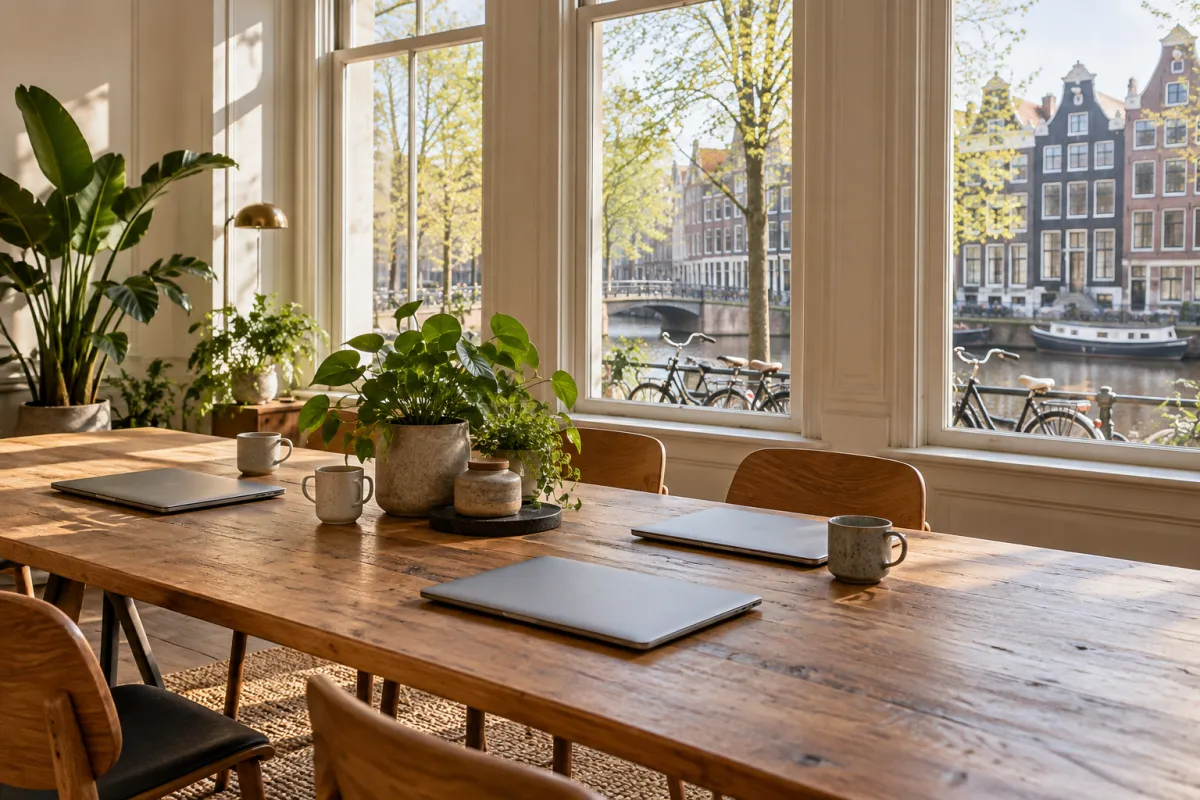
Most freelancers who land in Amsterdam work out the same thing within a few weeks. The city is friendly and English is everywhere, yet your calendar stays empty because a lot of Dutch social life runs on plans made well in advance. That is why coworking Amsterdam for freelancers is less about the Wi-Fi and more about having familiar faces you see several days a week, which is the raw material every friendship needs.
I have moved countries twice. Both times, the people who became real friends were not the ones I met at a big one-off event. They were the ones I kept bumping into at the coffee machine, in the lunch queue and at the same weekly talk. A good coworking space builds that repetition for you. A bad one is just an expensive library with nicer chairs.
This guide covers verified Amsterdam spaces with a genuine community, what desks typically cost, how to choose one, a weekly plan you can copy and how to turn coworkers into people you actually see at weekends. If you are still on the move, there is a short section on coworking in Berlin for nomads, and in Lisbon, near the end.
Why coworking is the best social shortcut in Amsterdam
Friendship research and common sense agree on one thing: you need repeated, low-pressure contact with the same people. Freelancing removes almost all of that. You have no team stand-up, no office birthday cake and no colleague who drags you to the pub on a Friday. In a city where many people already have full diaries, nobody will notice you are new unless you put yourself somewhere they see you regularly.
A coworking membership fixes three problems at once:
- Repetition. You see the same people on the same days, so the fifth hello turns into a conversation without any effort.
- Hosted structure. Community lunches, talks and drinks organised by the space mean someone else has done the hardest part, which is creating an excuse to talk.
- A shared context. Everyone is self-employed, remote or building something. That gives you an instant topic that is more interesting than the weather.
A desk will not make friends for you, though. Plenty of members arrive with headphones on, sit in the silent zone and leave at five. The tactics later in this guide are what turn proximity into friendship. If you want the wider picture beyond desks, our guide to making friends in Amsterdam, with expat clubs covers sports teams, volunteering and other routes.
Coworking Amsterdam for freelancers: spaces with a real community
The spaces below were chosen because their community side is documented on their own site or in the city’s official guide, not because they have the trendiest coffee. Opening hours, member events and prices change, so check each space’s website before you visit.
B. Amsterdam (Nieuw-West)
B. Amsterdam operates across three large buildings in Nieuw-West and works more like a startup and creative campus than an office, with a rooftop restaurant, a gym, padel courts and regular community events (B. Amsterdam). For friendship purposes, the padel courts and gym are the hidden asset. Asking someone for a game is a far easier first invitation than asking them for a coffee out of nowhere. The main drawback is location. If you live in Oost or Noord, test the commute before committing, because a space you dread travelling to is a space you stop visiting.
Best for: startup people, freelancers who want a campus feel and anyone who likes sport as a social icebreaker.
StartDock (Prins Hendrikkade and Singel)
The official city guide I amsterdam describes StartDock as known for a strong community feel, with locations near Central Station on Prins Hendrikkade and on Singel, and a focus on networking, community lunches and regular business events for entrepreneurs and freelancers. Community lunches are the single most useful format for a newcomer. You sit down, the person next to you is also self-employed, and twenty minutes later you have a name, a project to ask about next time and possibly a client lead.
Best for: freelancers who want business contacts and friends at the same table, and anyone who wants a central location close to the station.
The Social Hub Collab (formerly The Student Hotel)
The Social Hub, which used to be called The Student Hotel, blends flexible workspaces with hotel amenities and gyms, and it attracts a young, international crowd of digital nomads, freelancers and entrepreneurs. Because guests and students pass through, the atmosphere is more fluid than at a classic coworking space. That suits you if you are only in town for a few months, or if you are an international student who wants to mix with people outside your course.
Best for: nomads on shorter stays, international students and people who want gym, work and social life under one roof.
A Lab (Amsterdam-Noord)
A Lab is a creative hub and living lab in Amsterdam-Noord. If your work is design, media, tech prototyping or anything hands-on, a creative hub gives you something a corporate business club cannot: people who are happy to look at your work in progress and show you theirs. Conversations start naturally when someone is building something visible.
Best for: creatives, makers and freelancers who want a less corporate, more experimental community.
Spaces (IWG) in the centre and Zuidas
Spaces, part of IWG, runs several design-led business club locations across central Amsterdam and the Zuidas financial district, including Spaces Herengracht and Vijzelgracht, with hot-desk Business Club memberships, shared lounges and dedicated desks. The vibe is polished and professional. That is ideal if you meet clients, but you may need to take more initiative socially because people often treat the lounge as a place to work rather than to chat. The advantage of a network is flexibility: you can work from different locations as your week demands.
Best for: consultants and client-facing freelancers who value a professional setting and multiple locations.
Quick comparison
| Space | Area | Social style | Best for |
|---|---|---|---|
| B. Amsterdam | Nieuw-West | Campus: events, rooftop restaurant, padel, gym | Startups, sport lovers |
| StartDock | Prins Hendrikkade, Singel | Community lunches, business events | Freelancers wanting a network |
| The Social Hub Collab | Hotel-based workspaces | Young, international, mixed with hotel guests | Nomads, students |
| A Lab | Amsterdam-Noord | Creative hub, living lab | Makers, creatives |
| Spaces (IWG) | Centre, Zuidas | Business club, professional lounges | Client-facing professionals |
What coworking costs in Amsterdam
Individual spaces set their own prices and change them regularly, so treat the figures below as typical market ranges rather than quotes. They are useful for budgeting before you start touring spaces.
| Option | Typical range | Source |
|---|---|---|
| Day pass | Between €24 and €35 per day, according to One Coworking | One Coworking |
| Flexible hot desk (monthly) | Between €100 and €250 per month depending on network and location, per One Coworking | One Coworking |
| Business club hot desk (monthly) | Typically from around €150 to €250+ per month, per Rent Office Today | Rent Office Today |
| Dedicated desk (monthly) | Between €350 and €450+ per month, per One Coworking | One Coworking |
Typical ranges, last checked May 2026. Always confirm current prices on each space’s own website.
Two practical points matter more than the headline price. First, check whether community events and lunches are included in a flex membership or only open to dedicated-desk members. Second, ask about notice periods. Many freelancers overpay because they sign for a dedicated desk on day one, when a flexible membership would have given them the same social access. Buying a few day passes at different spaces is the cheapest way to find out where you fit.
How to choose a space for your social goals
The right choice of coworking in Amsterdam for freelancers depends less on design and more on whether you will actually show up and talk to people. Use this checklist on every trial day:
- Commute. Can you cycle there in a time you will tolerate on a rainy February morning? Proximity beats prestige every time.
- Social formats. Ask the community manager what is on this month. Lunches, talks, sport and skill-shares are good signs. A single quarterly party is not enough.
- Who is there. Students, founders, corporate consultants and creatives produce very different conversations. Pick the crowd you would happily have dinner with.
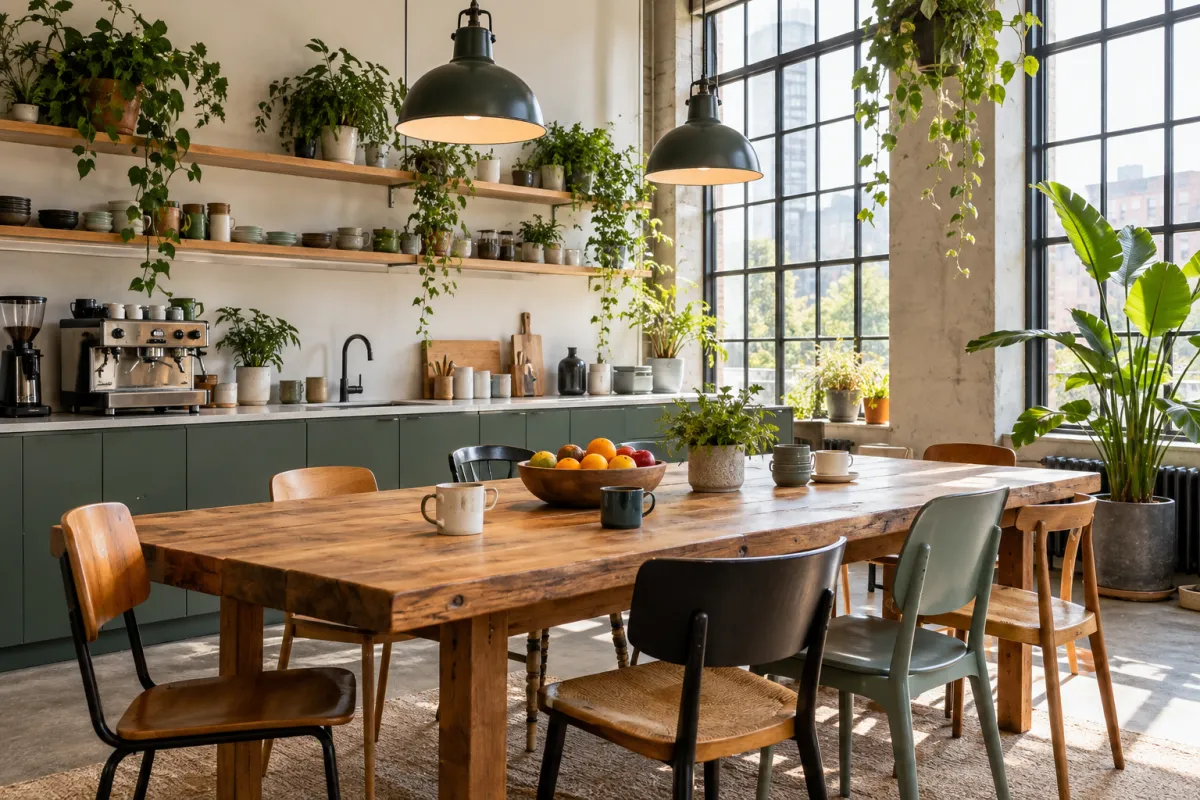
- Kitchen design. A shared kitchen with one big table creates more friendships than any networking event. Small, scattered coffee points do not.
- Quiet versus social balance. You need both. A space with no focus zone will hurt your work, and one with no social zone will hurt your friendships.
- Flexibility. If you are not sure how long you will stay in Amsterdam, avoid long commitments until you have done a full month.
A useful test: on your trial day, eat lunch in the communal area rather than at your desk. If nobody looks up or says hello in an hour, that tells you more than the brochure ever will.
How to make friends as a digital nomad from a coworking desk
Knowing how to make friends as a digital nomad comes down to turning repeated sightings into one deliberate plan. Here is the sequence that has worked for me and for most freelancers I know.
1. Pick fixed days and a fixed zone
Come in on the same days and sit in roughly the same area. People get used to seeing you, and familiarity does the early work. Floating between locations every day is great for productivity variety but terrible for friendship.
2. Treat the kitchen as the real network
Take your breaks away from your desk. Simple openers work best: “What are you working on?”, “How long have you been a member here?” or “Any good lunch spots around here?” You are not pitching anything. You are just becoming a known face.
3. Say yes to everything in your first month
Go to every community lunch, talk and hosted drink for your first four weeks, even the ones that sound dull. The topic matters less than who else turns up. Regulars at hosted events are usually the most socially open members in the building.
4. Offer something
Volunteer for a short lunch-and-learn on your specialism, or offer to review someone’s CV, website or pitch deck. Helping someone creates a reason for them to come back and find you.
5. Move one connection outside the building
This is the step most people skip. Once you have chatted with someone three or four times, suggest a specific plan with a day attached. Try something like “I’m going to the market on Saturday morning, want to come?” or “Fancy a proper lunch out on Thursday instead of the kitchen?” Our 25 scripts for asking someone to hang out as a friend take the awkwardness out of it. Once you have had that first plan, our guide on how to turn acquaintances into friends covers the follow-up that makes it stick.
Do not rely on one space alone. Pair your desk with one outside group, such as a running club, a language exchange or one of the English-speaking meetup groups in Amsterdam we have checked, so your social life does not collapse if your membership ends.
A weekly social plan you can copy
This is an illustrative example of how one freelancer might structure a week. It is not a schedule published by any space, so slot in your own space’s actual events wherever they fall.
| Day | Work base | Social move |
|---|---|---|
| Monday | Main coworking space | Eat lunch in the shared kitchen and say hello to two people you saw last week. |
| Tuesday | Day pass at a different space | Scout a new community and pick up any event flyers or newsletters. |
| Wednesday | Main space | Attend whatever hosted lunch, talk or skill-share your space runs this week. |
| Thursday | Main space | Invite one coworker to a specific plan: lunch out, a coffee walk along the canals or a game of padel if your space has courts. |
| Friday | Café or home | Join an outside group, such as a sports session or language exchange. |
| Saturday | Day off | A daytime plan with someone new: a market, a museum or a bike ride. |
| Sunday | Rest and admin | Message the people you met this week and suggest one plan for next week. |
The rhythm matters more than the details. Aim for one new conversation and one follow-up plan each week. After a couple of months, you will notice that you no longer need to plan your social life from scratch.
Freelancer admin: the KvK and your workspace address
If you work as a freelancer in Amsterdam as an eenmanszaak (sole trader, often called a ZZP’er), you need to register with the Dutch Chamber of Commerce, the Kamer van Koophandel (KvK). According to I amsterdam, setting up a proper workspace is part of that initial compliance checklist, and official municipal guides set out what counts as a legal workspace if you plan to register your business address there.
In practice, do not assume a hot-desk membership automatically gives you a valid registered business address. Before you sign, ask the space directly whether it offers address registration for KvK purposes, and check the official KvK and municipal guidance yourself. This is general orientation rather than legal advice. If your situation is unusual, speak to an accountant who works with expat freelancers.
Moving on: coworking in Berlin for nomads, and in Lisbon
Plenty of freelancers use Amsterdam as one stop of several. The good news is that the playbook travels. Whether you are looking at coworking in Berlin for nomads or a beach-adjacent desk in Portugal, follow the same pattern. Test with day passes, choose the space with the busiest community calendar, take lunch in the kitchen and move one connection outside the building each week.
For Portugal, our guide to coworking spaces in Lisbon with a real community, and their prices applies the same lens to Lisbon. Berlin’s social scene works differently, and many newcomers lean heavily on apps. Our look at whether Bumble BFF works in Berlin and what else to try is a useful companion to a coworking membership there.
Safety box: meeting coworkers outside the office
Before you meet someone new outside your coworking space:
- Meet in a public place for the first few plans: a café, a market, a park or a restaurant, not someone’s flat.
- Tell a friend where you are going and who you are meeting.
- Arrange your own way home, whether that is your bike, public transport or a taxi you book yourself.
- Leave if you feel uncomfortable. You do not owe anyone an explanation, and a polite “I need to head off” is enough.
- Keep your home address and financial details private until you know someone well, even if you share a desk with them every week.
Want to turn this into an actual plan? MeetNow is a free app for meeting people in person: a host posts a plan at a public place, says who pays (host pays, split, pay your own or free) and picks who joins. It is live on the web and works in your browser, starting in Malta. The Android app is on Google Play; the iPhone app is not in the App Store yet. Open MeetNow and see the plans posted in Malta.
Coworking will not give you a best friend in your first week, and anyone who promises that is selling memberships. What it gives you is a steady stream of familiar faces in a city where those are hard to come by. Pick a space with a community you like, show up on the same days, eat lunch with other people and make one plan at a time. Within a season, coworking in Amsterdam for freelancers stops being about desks and starts being about the people you would miss if you left.
FAQ
What is the best coworking in Amsterdam for freelancers who want to make friends?
Choose a space with a visible community programme rather than the most stylish interior. B. Amsterdam offers a campus with events, a rooftop restaurant, a gym and padel courts. StartDock is known for community lunches and business events. The Social Hub Collab suits young international nomads and students, and A Lab in Amsterdam-Noord works well for creatives. Test a few with day passes before committing.
How much does coworking in Amsterdam cost for freelancers?
Prices fall into clear bands. Day passes are the cheapest way to try a space, flexible hot-desk memberships sit in the middle, and dedicated desks are the most expensive option. See the price table in this guide for typical ranges, and always confirm current prices on each space’s own website.
Can I use a coworking address to register my business with the KvK?
Not automatically. Freelancers registering as an eenmanszaak with the Dutch Chamber of Commerce must meet official criteria for what counts as a valid workspace address. Ask the coworking space whether it offers address registration for KvK purposes, and check the official KvK and municipal guidance before signing anything.
Is a day pass enough to meet people at a coworking space?
A day pass is good for testing the atmosphere, but friendships come from repetition. Once you find a space you like, switch to a flexible membership and come in on the same days each week so people get used to seeing you and conversations can build naturally.
How do I make friends as a digital nomad if I only stay a few weeks?
Pick a space with frequent hosted events, go to all of them and eat lunch in the communal area every day. After a few conversations, invite one person to a specific daytime plan. Add one outside group, such as a language exchange or sports session, so you meet more people in less time.